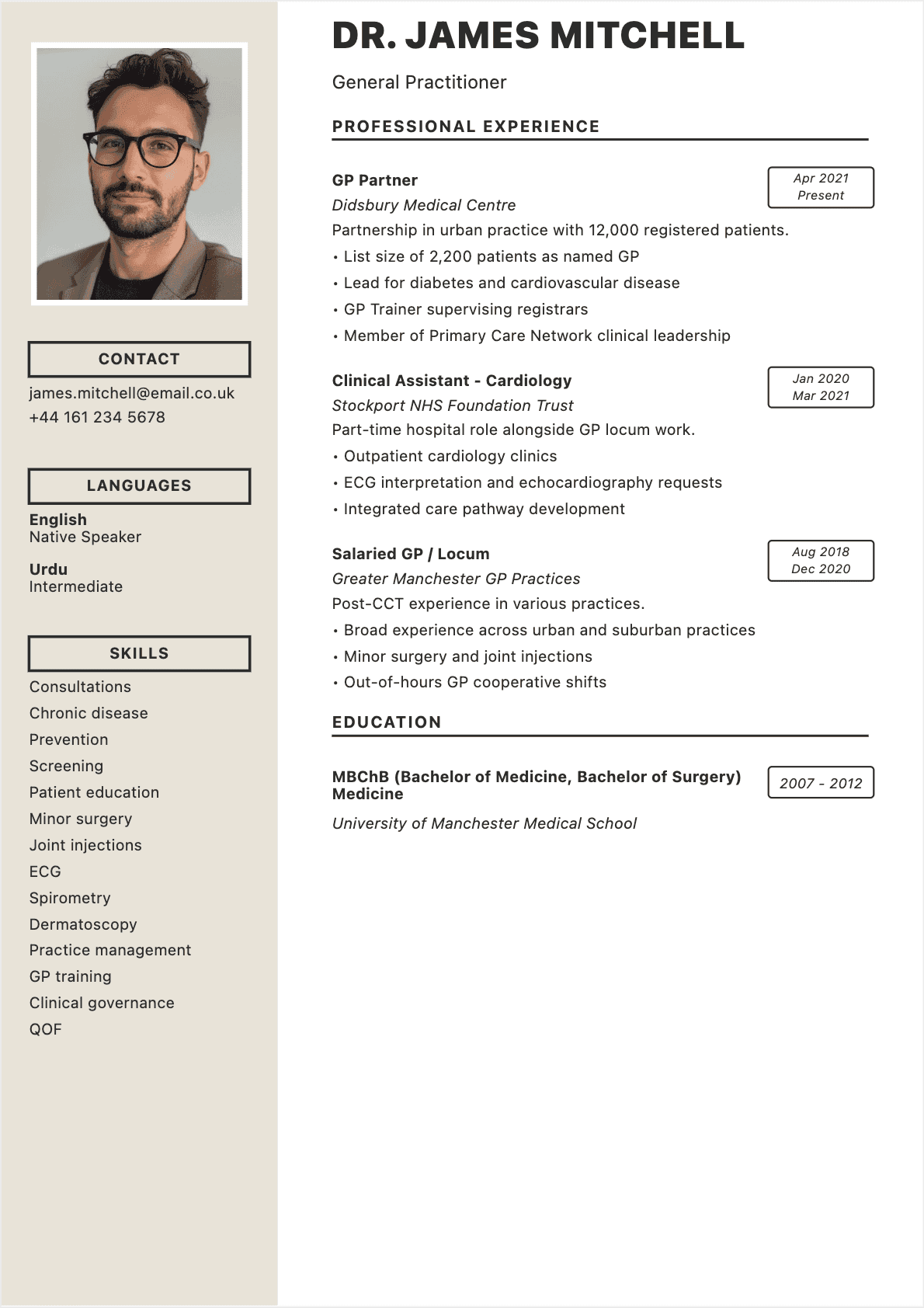

A few years ago, I was reviewing applications for a senior product manager role at a Fortune 500 tech company. Two candidates had nearly identical resumes: same caliber universities, overlapping skill sets, comparable years of experience. One included a cover letter. The other did not. The candidate who wrote a cover letter got the interview. Not because her resume was stronger, but because her letter told us why she wanted this specific role and what she would bring to it. That context made all the difference in a stack of 300 applications.
I have spent over a decade in talent acquisition, first as a tech recruiter at companies ranging from early-stage startups to household-name enterprises, and more recently as a career strategist helping professionals navigate the increasingly complex hiring landscape. And if there is one document that remains chronically underestimated, it is the cover letter. 📨
In 2026, the job market is more competitive than ever. LinkedIn data shows that the average corporate job posting receives over 250 applications, and applicant tracking systems filter out roughly 75% before a human being ever reads them. Your resume gets you through the ATS. But your cover letter is what gets a hiring manager to pick up the phone. This guide will walk you through exactly how to write a cover letter that stands out, whether you are applying to a Fortune 500 company, a fast-growing startup, or submitting through an online portal. If you need to strengthen your resume first, start with our complete guide to writing a resume. 📝
Why Cover Letters Still Matter in 2026
Every few years, someone declares the cover letter dead. And every few years, hiring data proves them wrong. A 2025 survey by the Society for Human Resource Management found that 83% of hiring managers read cover letters when they are included, and 72% said a strong cover letter has influenced their decision to interview a candidate whose resume alone would not have made the cut.
**Cover letters answer the question resumes cannot. **A resume is a structured list of what you have done. A cover letter explains why you did it, what you learned, and why it matters for this specific role. It is narrative where the resume is data. When a hiring manager is comparing two equally qualified candidates on paper, the one who told a compelling story about their motivation and fit almost always gets the first call.
**ATS systems now parse cover letters too. **Modern applicant tracking systems from Greenhouse, Lever, and Workday do not just scan resumes. They index cover letter content as well, which means keywords, company names, and role-specific language in your letter contribute to your overall match score. Skipping the cover letter means leaving searchable real estate on the table.
**They signal genuine interest. **In an era when AI tools make it trivially easy to spray-and-pray applications to hundreds of postings, a well-crafted cover letter signals that you took the time to research the company and tailor your message. Recruiters notice. A thoughtful letter demonstrates professionalism, communication skills, and the kind of initiative that hiring teams want on their roster. 🎯
**They give you space to address nuance. **Career gaps, industry pivots, relocation, salary expectations, availability, the reason you are leaving your current role: these are things a resume cannot explain, but a cover letter can. Used strategically, the letter preempts concerns and reframes potential red flags as strengths.
The 3 Cover Letter Formats (Email, PDF, Online Form)
Not all cover letters are created equal, and the format you choose depends entirely on how you are submitting your application. Getting the format wrong can undermine even the best-written content.
1. PDF attachment
This is the traditional format and still the most common for formal applications submitted through company career portals or emailed directly to a recruiter. Your cover letter should be a separate PDF file, formatted to match the visual style of your resume (same font, same header with your contact information, consistent margins). Keep it to one page. Name the file professionally: FirstName-LastName-Cover-Letter.pdf.
- **When to use: **Job postings that specifically request a cover letter, applications submitted through company websites, or whenever you are emailing a recruiter directly
- **Formatting: **Standard business letter format with your contact info at the top, date, hiring manager's name and title (if known), company address, salutation, body paragraphs, sign-off
- **Length: **250 to 400 words, never exceeding one page
2. Email body cover letter
When a job posting asks you to "email your resume to hiring@company.com," your cover letter is the email. Do not write a bland two-sentence email and attach a separate cover letter file. The email body serves as your letter, and your resume is the attachment. This format requires a slightly different approach because it needs to work within the constraints of an email inbox. ✉️
- **Subject line matters: **Use a clear, professional subject line like "Application: Senior Product Manager - Jane Smith" or whatever format the posting specifies
- **Keep it tighter: **Email cover letters should be 150 to 300 words. Recruiters reading in their inbox have even less patience for length than those reading a PDF
- **Skip the formal header: **No need for your full address or the company's address. Start with the salutation and dive in
- **Professional signature: **End with your full name, phone number, LinkedIn URL, and portfolio link if applicable
3. Online form text box
Many ATS platforms include a "Cover Letter" or "Additional Information" text box as part of the application form. This is the trickiest format because you lose all control over visual presentation. Your text will be displayed in the system's default font with no formatting options.
- **No formatting available: **Write in plain text. Use line breaks between paragraphs. Do not rely on bold, italic, or bullet points, as they may not render
- **Front-load your strongest point: **Recruiters viewing text box submissions often see only the first few lines in a preview pane. Make your opening sentence count
- **Shorter is better: **200 to 300 words maximum. The text box format does not lend itself to long-form content
The Perfect Cover Letter Structure
After reviewing thousands of cover letters from both sides of the hiring desk, I can tell you that the ones that work follow a remarkably consistent structure. Think of it as a four-part framework that you can adapt to any role, industry, or experience level. 🏗️
Opening paragraph: The hook (2-3 sentences)
Your first paragraph has one job: make the reader want to keep reading. Start with something specific, not generic. Avoid "I am writing to express my interest in..." which is the cover letter equivalent of "Dear Sir or Madam." Instead, lead with:
- A specific achievement relevant to the role
- A genuine reason you are drawn to this company
- A referral or connection ("After speaking with Sarah Chen on your engineering team...")
- A bold statement about what you would bring to the position
"When I led the migration of 4.2 million customer records to a new CRM platform at my current company without a single day of downtime, I learned that the difference between a good operations team and a great one is planning depth. That is exactly why the Operations Director role at Acme Corp caught my attention: your commitment to operational excellence at scale aligns perfectly with what I do best."
Body paragraph 1: Your value proposition (3-5 sentences)
This is where you connect your experience to the specific requirements of the job. Pick two or three key qualifications from the posting and demonstrate how your background matches them. Use concrete metrics and examples, not vague claims.
"In my current role as Operations Manager at TechCorp, I oversee a team of 18 across three time zones, managing an annual budget of $6.8M. Over the past two years, I have reduced operational costs by 22% through process automation and vendor consolidation while maintaining a 99.7% SLA compliance rate. My experience with Lean Six Sigma methodology and cross-functional stakeholder management directly addresses the core requirements outlined in your posting."
Body paragraph 2: Why this company (2-3 sentences)
This paragraph is where most cover letters fail. Candidates either skip the "why this company" section entirely or write generic flattery ("I admire your company's mission..."). Neither works. Instead, reference something specific: a recent product launch, a company value that resonates with your experience, a market challenge you are excited to help solve, or a cultural element that aligns with how you work best.
Closing paragraph: The call to action (2-3 sentences)
End with confidence, not passivity. Express enthusiasm, state your availability, and invite the next step. Avoid "I hope to hear from you" which sounds uncertain. Instead:
"I would welcome the chance to discuss how my experience scaling operations teams can support Acme Corp's growth objectives. I am available for a conversation at your convenience and can be reached at (555) 123-4567 or jane.smith@email.com. Thank you for your time and consideration."
How to Customize Your Cover Letter for Every Job
Here is the uncomfortable truth: a generic cover letter is almost as bad as no cover letter at all. Hiring managers can spot a template letter within seconds, and ATS systems reward specificity over generality. The good news is that customization does not mean writing from scratch for every application. It means having a smart system. 🔧
The master template approach
Create one comprehensive cover letter that includes your strongest material: your best opening, your most impressive achievements, your clearest value proposition. This is your master document. For each application, you customize three elements:
- **The opening hook **(tailored to the specific company and role)
- **The value proposition paragraph **(highlighting the 2-3 achievements most relevant to this posting)
- **The "why this company" paragraph **(referencing something specific about the organization)
This approach takes 10 to 15 minutes per application and produces a letter that feels custom-written every time.
Keyword alignment
Just as you tailor your resume keywords to each job description, your cover letter should mirror the language of the posting. If the job description says "cross-functional collaboration," use that exact phrase in your letter. If it mentions "data-driven decision making," weave that terminology into your examples. This is not keyword stuffing; it is speaking the employer's language. Your resume handles the structured data. Your cover letter demonstrates fluency. For more on aligning your resume keywords, see our guide on the best skills to put on a resume.
Research that takes five minutes but changes everything
Before writing or customizing your letter, spend five minutes on:
- **The company's "About" page and recent press releases **for current priorities and language
- **The hiring manager's LinkedIn profile **for shared connections, interests, or background
- **The company's Glassdoor reviews **for culture signals and team dynamics
- **Recent earnings calls or blog posts **for strategic direction and challenges
This small investment pays enormous dividends. A single specific reference to a company initiative demonstrates more genuine interest than an entire paragraph of generic praise.
Fatal Mistakes That Get Your Application Rejected
In my years of recruiting, I have seen every cover letter mistake imaginable. Some are minor. Others are application-killers that guarantee your materials end up in the rejection pile. Here are the ones that come up most often. ⚠️
- **Addressing it to the wrong company or hiring manager. **This happens more often than you would think, especially when candidates are customizing a template letter and forget to update the company name. One misplaced "Dear Google Team" in a letter to Microsoft is an instant rejection. Always do a final search for the previous company's name before sending.
- **Rehashing your resume in paragraph form. **Your cover letter should complement your resume, not repeat it. If a hiring manager reads your letter and learns nothing new, the letter has failed. Use the letter to provide context, tell stories, and explain motivations that the resume format cannot accommodate.
- **Leading with what you want instead of what you offer. **"I am excited about this opportunity because it would allow me to grow my career in product management" is a sentence about you, not about the employer. Flip it: "My experience launching three B2B SaaS products from concept to $2M ARR directly addresses the product leadership gap your team is looking to fill."
- **Writing more than one page. **A cover letter that exceeds one page signals poor communication skills, not thoroughness. If you cannot articulate your value proposition in 300 to 400 words, you have not done the hard work of identifying what matters most.
- **Using an overly casual or overly formal tone. **"Hey team, I'd be stoked to join your crew!" is too casual for virtually any professional role. "I humbly beseech your esteemed organization to consider my candidacy" is comically stiff. Aim for the tone you would use in a first meeting with a senior colleague: professional, warm, and direct.
- **Apologizing for what you lack. **"Although I don't have experience in project management..." immediately focuses the reader's attention on your weakness. Instead, lead with what you do have and frame transferable skills as assets. Never draw attention to gaps unless you are immediately turning them into strengths.
- **Forgetting to proofread. **A single typo in a cover letter is more damaging than a typo on a resume because the cover letter is supposed to demonstrate your communication ability. Read it aloud. Run it through a grammar checker. Have someone else review it. Then read it one more time. 🔍
- **Including salary expectations unsolicited. **Unless the posting explicitly asks for salary requirements, do not include them. Introducing compensation in your cover letter shifts the conversation from value to cost before you have even had a chance to demonstrate what you bring.
Cover Letter Examples That Work (Before and After)
Theory is useful, but seeing the transformation in practice is what makes the principles stick. Here are two real-world examples from my coaching practice, with details anonymized.
Example 1: Software engineer applying to a fintech company
Before (generic version):
"Dear Hiring Manager, I am writing to express my interest in the Senior Software Engineer position at your company. I have five years of experience in software development and am proficient in Python, Java, and React. I believe my skills would be a great fit for your team. I am a hard worker and a team player who is passionate about technology. I look forward to hearing from you."
After (customized version):
"Dear Ms. Rodriguez, When FinanceFlow announced its real-time fraud detection API last quarter, I spent a weekend reverse-engineering the architecture from your public documentation. The event-driven approach using Kafka streams mirrors a system I designed at my current company that processes 2.3 million transactions daily with a 99.98% accuracy rate and sub-200ms latency. I would love to bring that experience to your engineering team as you scale the fraud detection platform across new markets. In my current role at DataStream, I lead a team of four engineers building high-throughput data pipelines in Python and Java. Last year, I redesigned our batch processing system into a real-time streaming architecture that reduced processing time from 4 hours to 12 minutes and saved the company $380K annually in infrastructure costs. I am drawn to FinanceFlow specifically because of your engineering blog's emphasis on code quality and your team's commitment to open-source contributions. I would welcome the opportunity to discuss how my experience building resilient, high-volume systems aligns with your roadmap. I am available at your convenience."
**What changed: **The generic version could be sent to any company for any role. The customized version references a specific company initiative, quantifies achievements with metrics, names the hiring manager, and demonstrates genuine knowledge of the company's technical approach. The tone is confident without being arrogant.
Example 2: Career changer moving from teaching to corporate training
Before (apologetic version):
"Dear Hiring Team, Although I do not have direct corporate experience, I have been a high school teacher for eight years and I think some of my skills could transfer to a corporate training role. I am a quick learner and I am willing to work hard to make the transition. I hope you will give me a chance."
After (reframed version):
"Dear Mr. Okonkwo, In eight years of teaching advanced placement courses, I have designed and delivered over 1,200 hours of instructor-led training to audiences of 30 to 150 learners with measurably different skill levels, learning styles, and engagement needs. My AP pass rate of 91%, compared to the national average of 60%, reflects my ability to translate complex material into actionable knowledge, which is exactly what the Learning and Development Specialist role at Meridian Corp requires. I bring hands-on experience with instructional design frameworks including ADDIE and Bloom's Taxonomy, curriculum development for technical subjects, LMS administration using Canvas and Google Classroom, and data-driven assessment of learning outcomes. These are the same competencies listed in your posting, applied in a different setting. I have also completed a Corporate Training Certificate from Cornell's ILR School to formalize the bridge between education and L&D."
**What changed: **The apologetic version leads with a weakness and asks for a "chance." The reframed version leads with quantified accomplishments, translates teaching experience into corporate L&D terminology, and positions the career change as a strength rather than a limitation. No apologies, no hedging.
Email Cover Letters: Specific Rules and Best Practices
Email cover letters follow different conventions than attached PDF letters, and getting them wrong is one of the most common mistakes I see from otherwise strong candidates. When a posting says "send your resume to careers@company.com," the email itself is your cover letter. Here is how to make it count. 📧
Subject line
Your subject line is the first thing the recruiter sees, and a bad one can get your email ignored, filtered, or deleted. Follow these rules:
- **Use the format the posting specifies. **If they say "Subject: [Job Title] - [Your Name]," follow it exactly
- **If no format is specified: **"Application: [Job Title] - [Your Full Name]" is the safest default
- **Never leave it blank. **An email with no subject line looks like spam and may be automatically filtered
- **Keep it under 60 characters **so it displays fully on mobile devices
Structure and length
An email cover letter should be shorter than a PDF letter: 150 to 250 words maximum. Recruiters read email on their phones between meetings. Respect their time and screen size.
- **Opening line: **One sentence identifying the role and your strongest qualification
- **Body: **Two to three sentences connecting your most relevant experience to the role's requirements, with at least one specific metric
- **Company-specific sentence: **One sentence explaining why this company specifically
- **Closing: **One sentence with your availability and a thank you
- **Signature: **Full name, phone, LinkedIn URL, portfolio (if applicable)
Common email-specific mistakes
- **Attaching the cover letter AND writing it in the email body. **Pick one. If you write the letter in the email, do not also attach a PDF version. It creates redundancy and suggests you do not understand the format
- **Using your personal email with an unprofessional address. **firstname.lastname@gmail.com works fine. coolguy2003@hotmail.com does not
- **Sending from a work email. **This signals either poor judgment or that you are job hunting on company time. Use a personal email
- **Forgetting to attach the resume. **It happens more often than you would expect. Write "Please find my resume attached" in the email and then actually attach it before hitting send
Cover Letter With No Experience: How to Stand Out
If you are a recent graduate, career changer, or re-entering the workforce, writing a cover letter can feel like trying to sell an empty shelf. But the truth is that "no experience" almost never means "nothing to offer." It means you need to reframe what you have. 🌱
Sources of experience you are probably overlooking
- **Academic projects: **A capstone project where you built something, analyzed data, or solved a real-world problem is professional experience by another name
- **Internships and co-ops: **Even short-term placements demonstrate professional exposure and workplace skills
- **Volunteer work: **Leading a fundraising campaign, organizing events, or managing a nonprofit's social media are all transferable accomplishments
- **Freelance and side projects: **Any paid or unpaid work where you delivered results for someone else counts
- **Certifications and courses: **Completing a Google Data Analytics Certificate or an AWS Cloud Practitioner certification shows initiative and current skills
- **Extracurricular leadership: **Club president, team captain, student government: these roles develop real organizational and leadership skills
The "no experience" cover letter formula
- **Open with enthusiasm and a specific connection to the company. **Your opening should demonstrate that you have researched the organization and understand what they do
- **Highlight 2-3 transferable accomplishments with metrics. **Even academic or volunteer work can be quantified: "Managed a $12,000 event budget," "Increased club membership by 40%," "Completed a data analysis project processing 50,000 records"
- **Address the elephant in the room directly. **One sentence acknowledging that you are early in your career, immediately followed by what you bring: "While I am at the beginning of my professional career, my experience managing a 15-person volunteer team and delivering three client projects during my internship has prepared me for the collaborative, deadline-driven nature of this role"
- **Close with confidence, not apology. **"I am eager to contribute" is better than "I hope you will consider me despite my limited experience"
For a deeper dive into building a compelling application with limited work history, read our guide on how to write a resume with no experience. The principles apply directly to cover letters as well.
Best Tools for Writing Your Cover Letter
Writing a cover letter from a blank page is intimidating. The right tools can help you structure your thoughts, optimize your language, and ensure you are not making formatting mistakes that undermine your content. Here is what I recommend to my clients. 💡
| Tool | Best For | Key Strength |
|---|---|---|
| CVtoWork Cover Letter Builder | Full cover letter creation and customization | AI-powered content suggestions, job-specific tailoring, ATS-friendly output |
| Google Docs | Manual writing with full formatting control | Free, cloud-based, easy to share for review |
| Grammarly | Language clarity and tone | Catches tone mismatches, suggests stronger phrasing, eliminates grammar errors |
| Hemingway Editor | Readability and conciseness | Highlights overly complex sentences, passive voice, and unnecessary adverbs |
| ChatGPT or Claude | Brainstorming and drafting | Useful for generating initial drafts, but always rewrite in your own voice |
My recommended workflow: Start by drafting your cover letter in Google Docs or the CVtoWork cover letter builder. Use Grammarly to clean up grammar and tone. Run it through Hemingway to ensure readability. Then read it aloud to catch anything the tools missed. The entire process takes 20 to 30 minutes per letter, and the quality difference is immediately noticeable.
**A word of caution about AI-generated cover letters: **Using AI to brainstorm or draft is perfectly fine. Submitting an AI-generated letter without significant personalization is not. Recruiters are increasingly skilled at spotting AI-written content, and a generic AI letter undermines the very purpose of writing one. Use AI as a starting point, then inject your specific experiences, voice, and genuine enthusiasm. For more on using AI effectively in your job search, see our guide on AI-powered job application tools.
How to Adapt Your Cover Letter to Different Industries
A cover letter for a software engineering role reads very differently from one for a marketing position or a healthcare job. Industry conventions shape what hiring managers expect, and violating those norms, even with strong content, can cost you. Here is a quick guide to adapting your approach. 🌍
Tech and engineering
- **Tone: **Direct, technical, metrics-heavy
- **Focus: **Technical skills, system architectures, scale metrics, open-source contributions, problem-solving examples
- **Keep it: **Under 250 words. Tech hiring managers are notoriously impatient with long cover letters
- **Name-drop: **Specific technologies, frameworks, and methodologies relevant to the posting
Finance and consulting
- **Tone: **Polished, structured, results-oriented
- **Focus: **Revenue impact, analytical capabilities, client-facing experience, deal sizes, regulatory knowledge
- **Keep it: **Formal and concise. These industries value precision in communication
- **Structure: **Mirror the structured thinking they value. Use clear topic sentences and logical flow
Creative and marketing
- **Tone: **Engaging, slightly less formal, brand-aware
- **Focus: **Campaign results, audience growth, creative strategy, brand storytelling, portfolio highlights
- **Keep it: **Persuasive. Your letter is itself a demonstration of your communication ability
- **Show, don't tell: **If you claim to be a great storyteller, your cover letter should prove it
Healthcare and education
- **Tone: **Professional, empathetic, mission-driven
- **Focus: **Patient or student outcomes, certifications, regulatory compliance, team collaboration, community impact
- **Keep it: **Sincere. These fields value genuine commitment over polished self-promotion
- **Include: **Relevant licenses, certifications, and continuing education
Regardless of industry, the core structure remains the same: hook, value proposition, company-specific paragraph, and confident close. The variables are tone, technical depth, and which accomplishments you lead with. For industry-specific resume guidance that pairs with your cover letter, explore our cover letter builder and our collection of resume tips.
Key Takeaways
Writing a strong cover letter is not about following a rigid template or stuffing in as many keywords as possible. It is about clear, specific communication that demonstrates three things: you understand the role, you have relevant experience, and you are genuinely interested in this particular company. 🏆
Here are the principles to carry forward:
- **Always write one, even when it is optional. **The upside of a strong cover letter is significant. The downside of a missing one is invisible but real. When a posting says "optional," treat it as mandatory.
- **Customize for every application. **A master template with tailored opening, value proposition, and company-specific paragraphs takes 10 to 15 minutes and dramatically increases your response rate.
- **Lead with what you offer, not what you want. **Every sentence should answer the hiring manager's question: "What can this person do for us?"
- **Use the right format. **PDF for formal submissions, email body for email applications, plain text for online forms. Matching the format to the submission method shows professionalism.
- **Show, don't tell. **Replace claims like "I am a strong communicator" with evidence: "I presented quarterly strategy recommendations to a C-suite audience of 12, resulting in the approval of a $2.4M initiative."
- **Keep it to one page, always. **If your cover letter exceeds 400 words, you are including too much. Edit ruthlessly. Every sentence must earn its place.
- **Proofread obsessively. **A single typo in a cover letter is more damaging than anywhere else in your application. It contradicts the communication skills you are trying to demonstrate.
**Ready to write a cover letter that gets results? **Pair your letter with a polished resume using our step-by-step resume writing guide, or use the CVtoWork cover letter builder to create a tailored, ATS-optimized letter in minutes. The next interview is closer than you think. 🚀