Doctor Resume
Example, Template & Expert Tips 2026
Updated on April 18, 2026.
Write a physician resume with the right format: key sections, metrics, and templates to highlight clinical impact and land interviews.
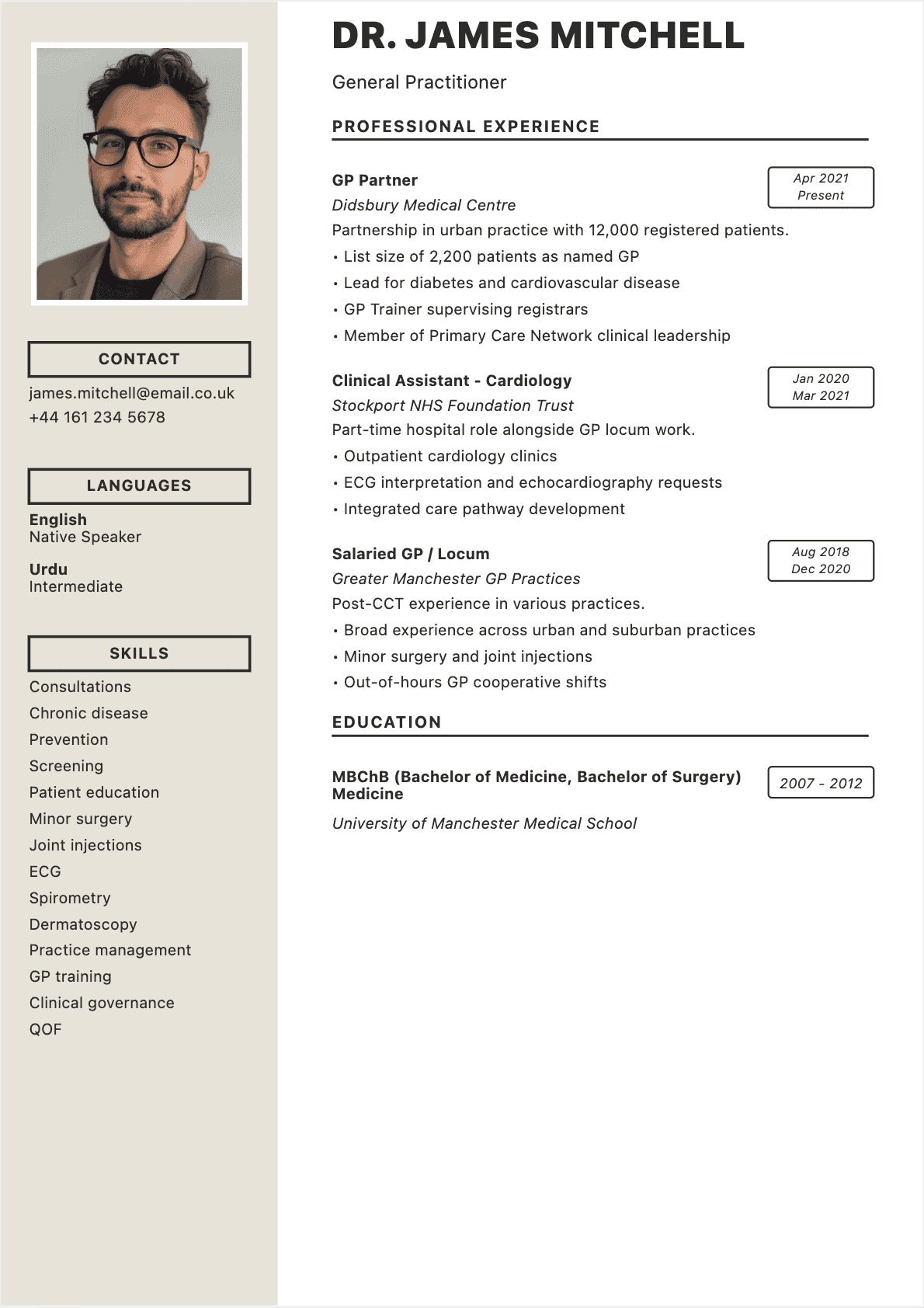
Doctor Resume Templates
8 Templates available
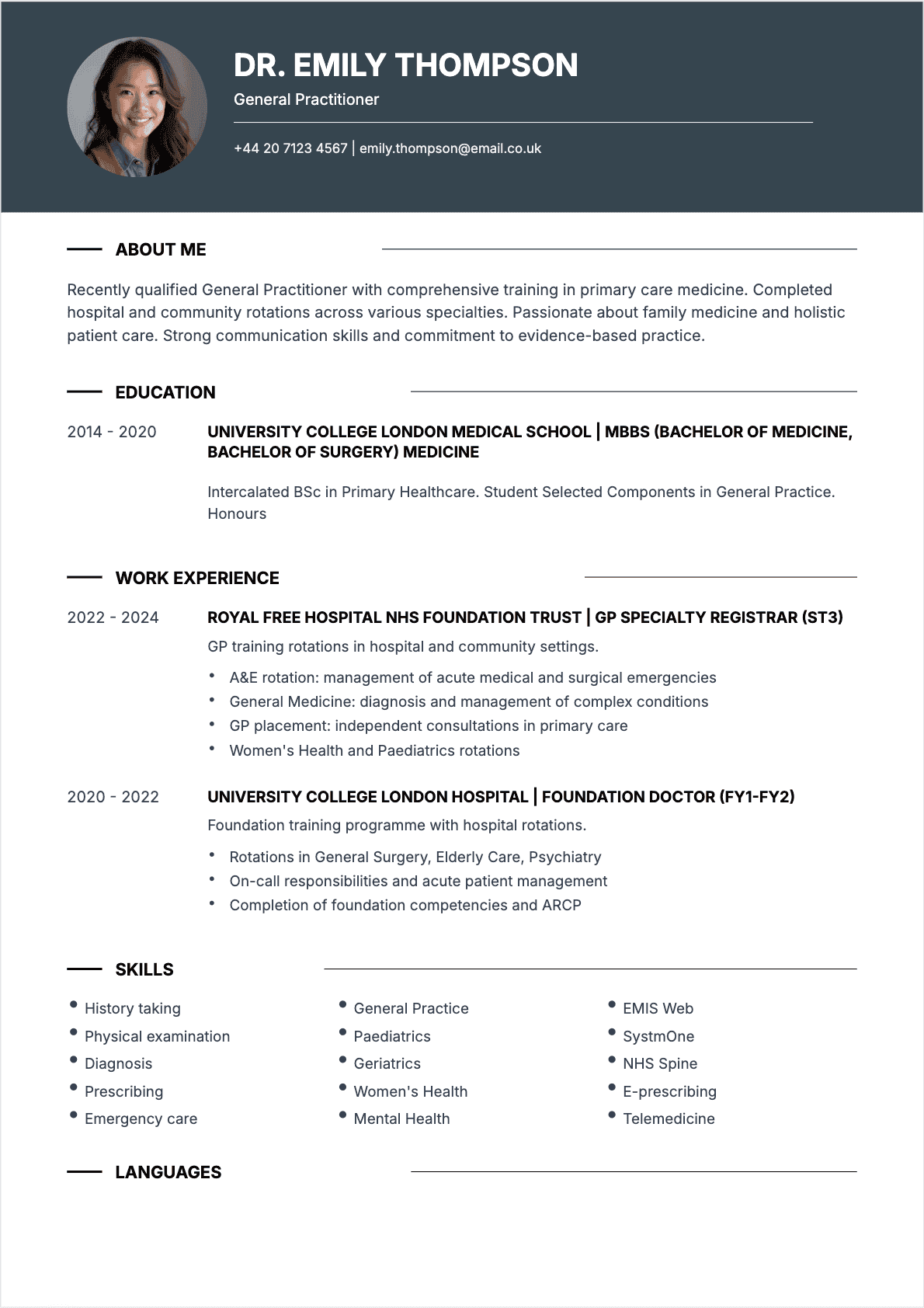
Resume Doctor Junior
Doctor resume template for Junior profile
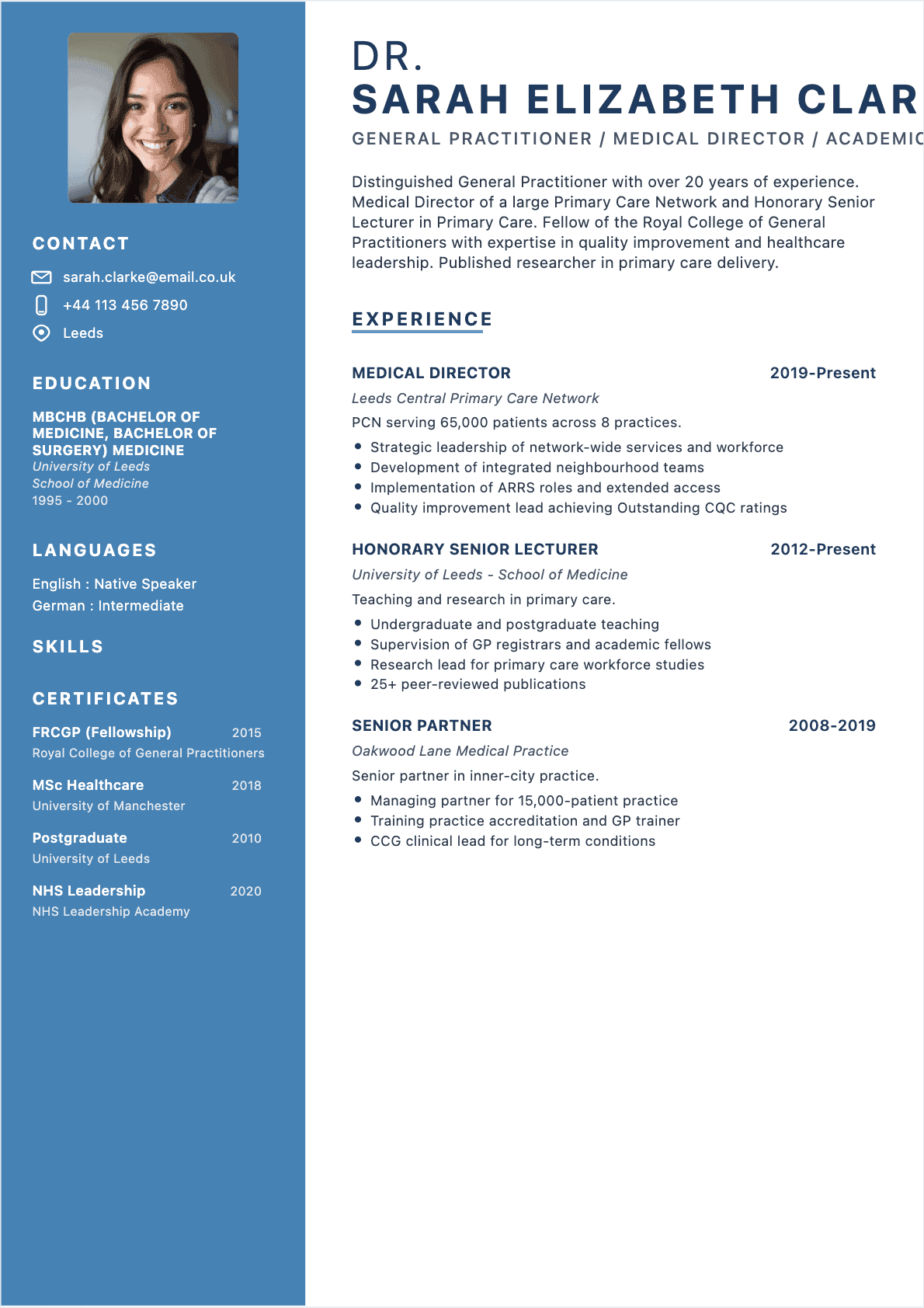
Resume Doctor Senior
Doctor resume template for Senior profile
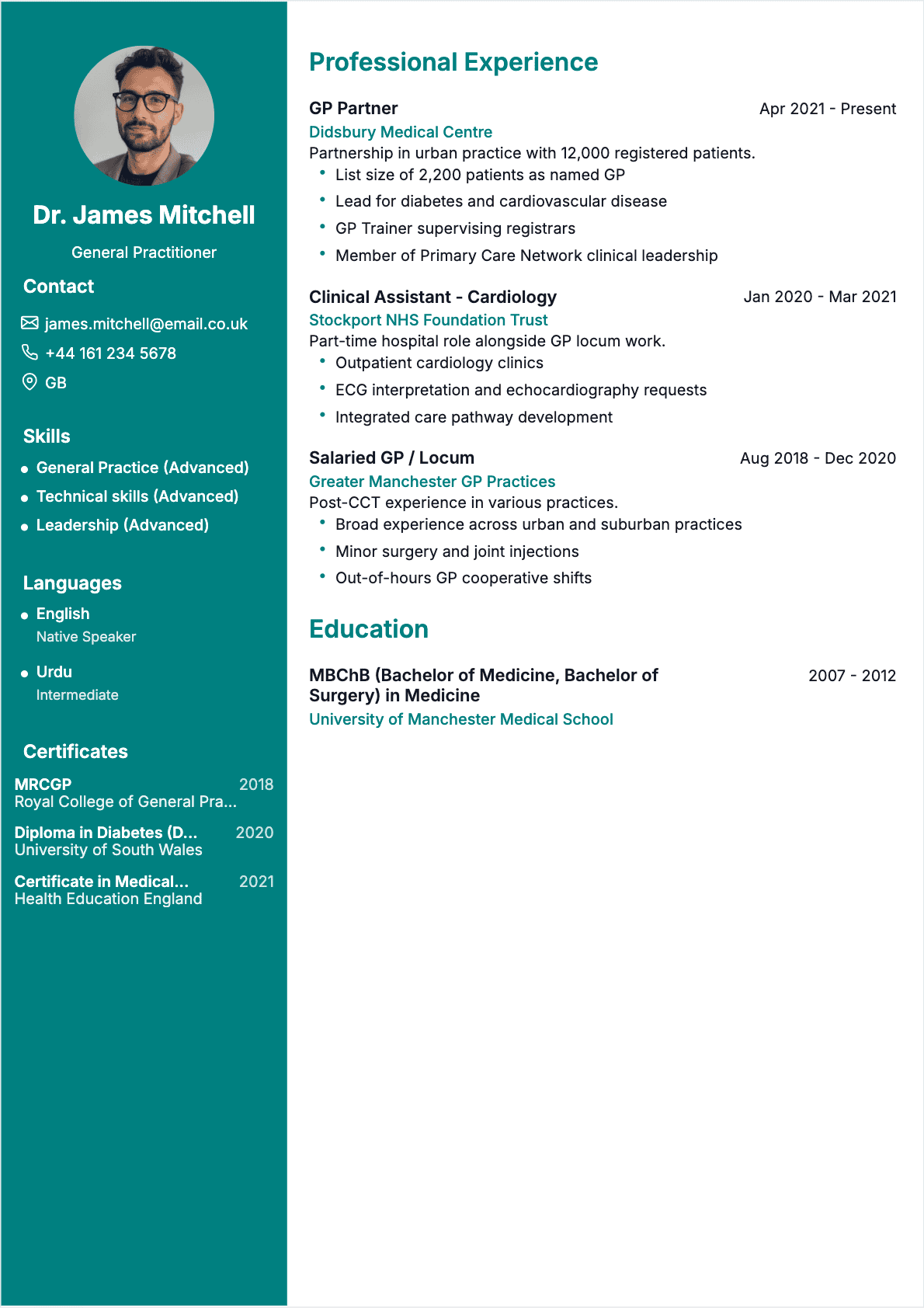
Resume Doctor Confirmé
Doctor resume template for Confirmé profile
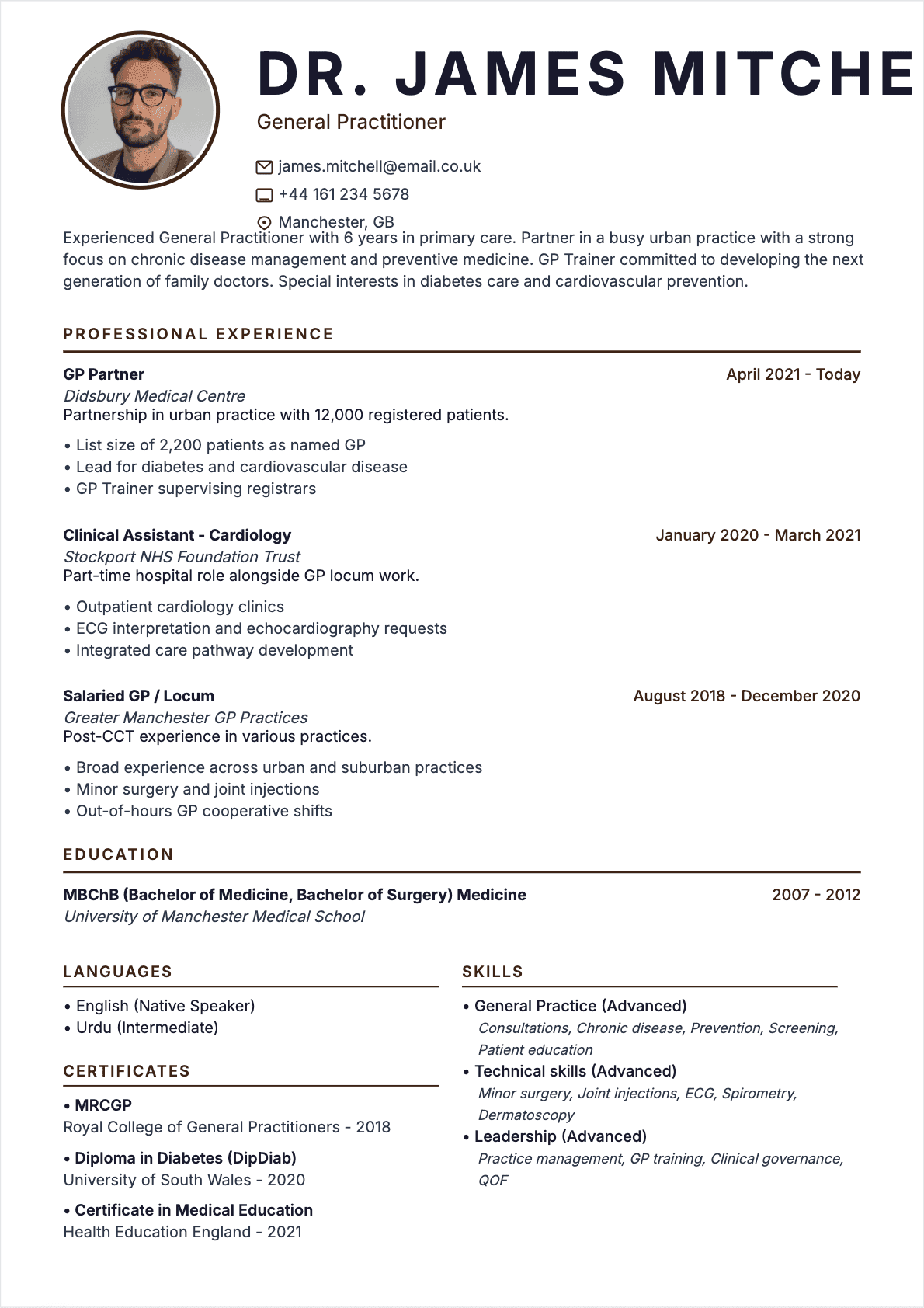
Resume Doctor Confirmé
Doctor resume template for Confirmé profile
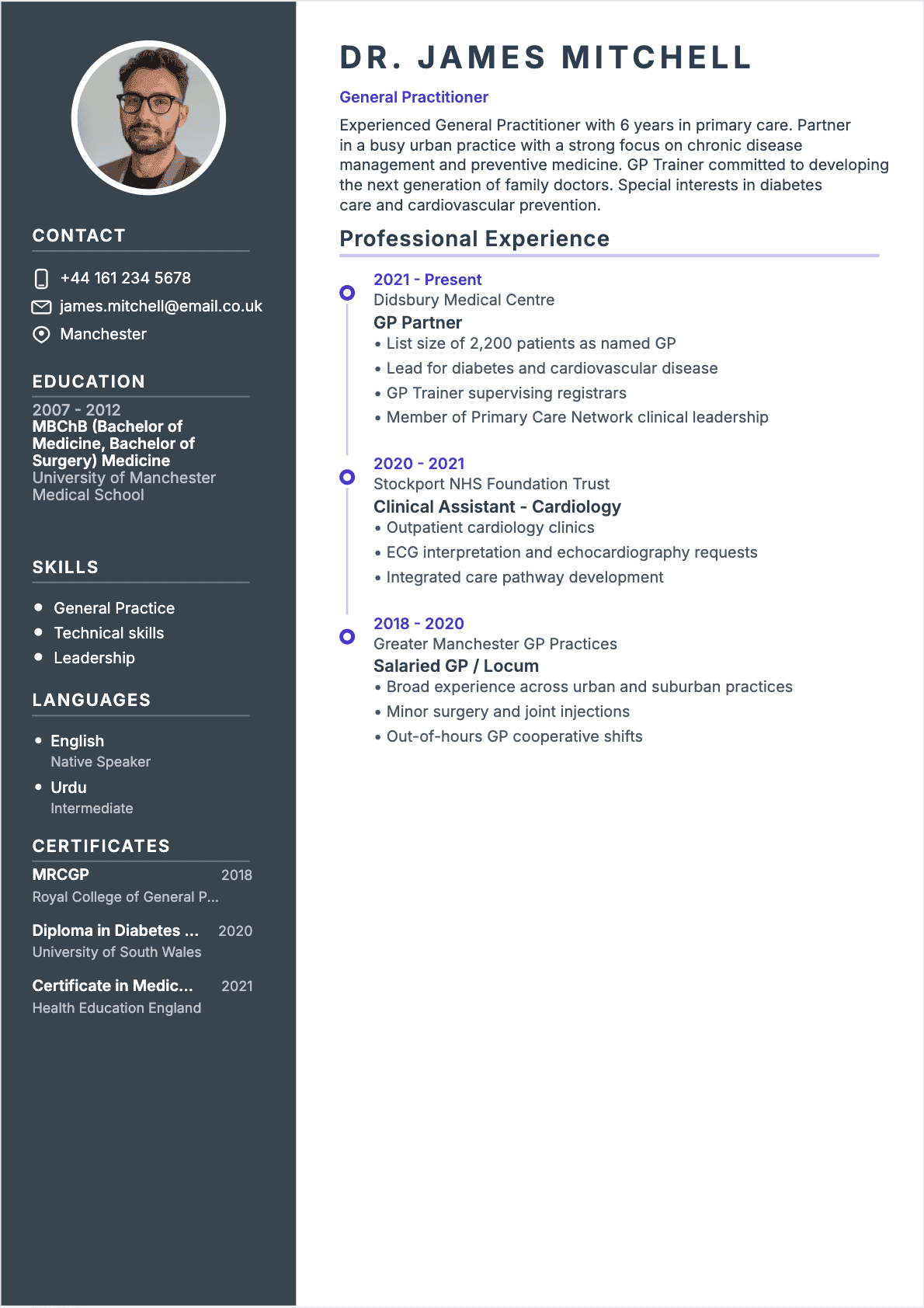
Resume Doctor Confirmé
PopularDoctor resume template for Confirmé profile
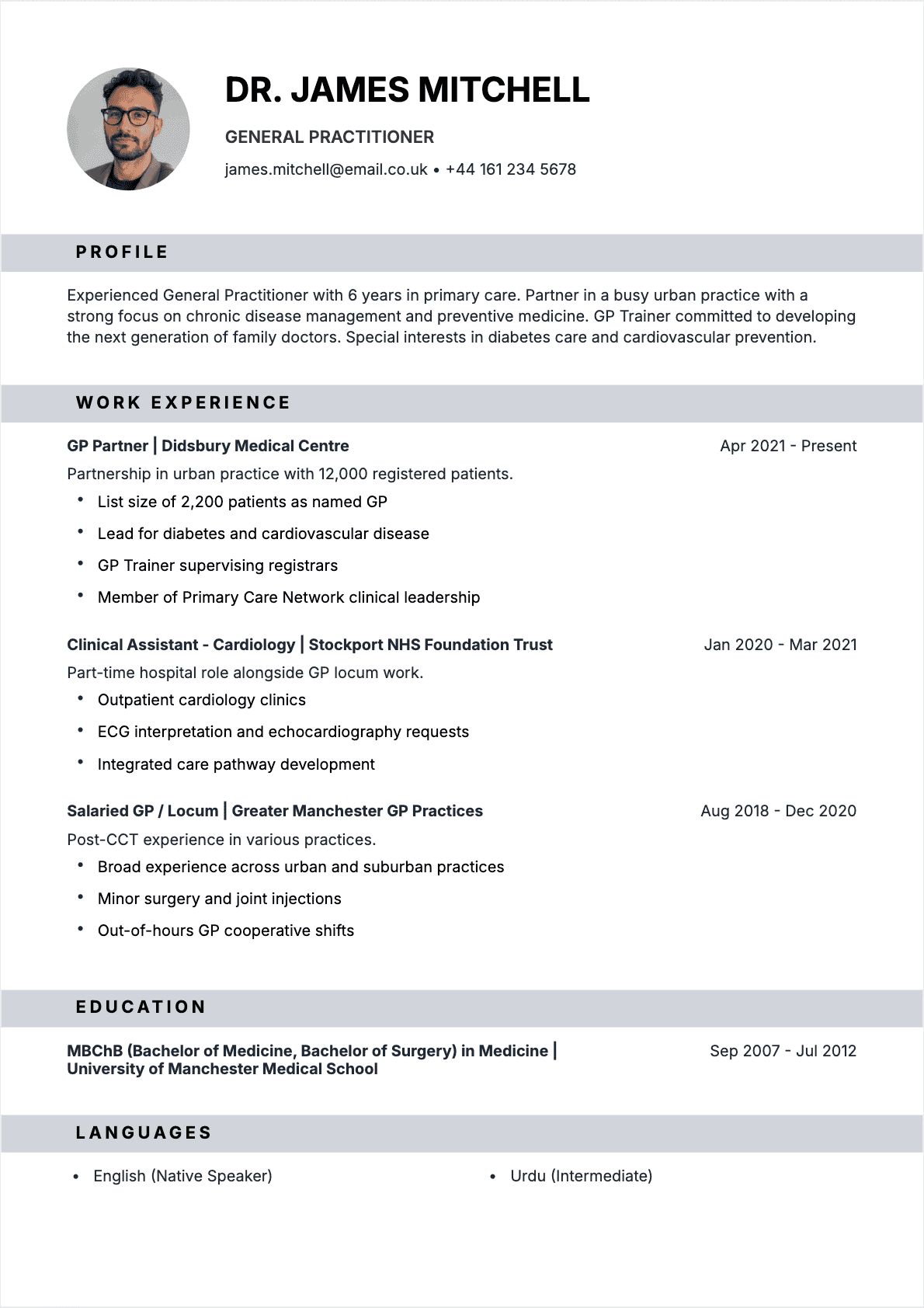
Resume Doctor Confirmé
Doctor resume template for Confirmé profile
Like one of these Doctor resume templates?
Select it, fill in your details and download your resume as PDF.
Doctor Resume Examples
Dr. James Mitchell
General Practitioner
james.mitchell@email.co.uk
+44 161 234 5678
Manchester, GB
Experienced General Practitioner with 6 years in primary care. Partner in a busy urban practice with a strong focus on chronic disease management and preventive medicine. GP Trainer committed to developing the next generation of family doctors. Special interests in diabetes care and cardiovascular prevention.
Work Experience
GP Partner
Didsbury Medical Centre
- ●List size of 2,200 patients as named GP
- ●Lead for diabetes and cardiovascular disease
- ●GP Trainer supervising registrars
Clinical Assistant - Cardiology
Stockport NHS Foundation Trust
- ●Outpatient cardiology clinics
- ●ECG interpretation and echocardiography requests
- ●Integrated care pathway development
Salaried GP / Locum
Greater Manchester GP Practices
- ●Broad experience across urban and suburban practices
- ●Minor surgery and joint injections
- ●Out-of-hours GP cooperative shifts
Education
MBChB (Bachelor of Medicine, Bachelor of Surgery)
University of Manchester Medical School
Skills
Languages
English — Native Speaker
Urdu — Intermediate
Certifications
MRCGPRoyal College of General Practitioners
Diploma in Diabetes (DipDiab)University of South Wales
Certificate in Medical EducationHealth Education England
Doctor role overview
Physicians diagnose and treat patients across diverse medical settings, from emergency departments and operating rooms to outpatient clinics and telemedicine platforms. Your day begins with reviewing patient charts, lab results, and imaging studies before morning rounds or clinic appointments. You'll spend hours conducting physical examinations, ordering diagnostic tests, interpreting results, and developing treatment plans while documenting every interaction in electronic health records. Between scheduled patients, you handle urgent consultations, communicate with specialists, and respond to nursing staff questions about medication orders or patient deterioration.
The clinical workload varies dramatically by specialty. Emergency physicians might see 20-30 patients during a 12-hour shift, making rapid diagnostic decisions under pressure. Primary care doctors typically schedule 20-25 patients daily for 15-20 minute appointments, managing chronic conditions like diabetes and hypertension alongside acute illnesses. Hospitalists round on 15-18 admitted patients, coordinating care teams and planning discharges. Surgeons split time between operating rooms, pre-operative consultations, and post-operative follow-ups. Regardless of specialty, you'll spend 30-40% of your time on documentation, administrative tasks, and quality improvement initiatives.
Career progression typically follows a structured path from residency through attending physician roles. Most doctors complete 3-7 years of residency training after medical school, with some pursuing additional fellowship training for subspecialization. Early-career physicians often join group practices or hospital systems, gradually building patient panels and clinical autonomy. Mid-career doctors may take on leadership roles as medical directors, department chairs, or clinic managers while maintaining clinical duties. Senior physicians often focus on complex cases, teaching responsibilities, or administrative leadership, with some transitioning into healthcare consulting, policy work, or executive medicine roles.
Physician salaries in the United States vary significantly by specialty, geography, and practice setting. Primary care physicians (family medicine, internal medicine, pediatrics) typically earn $200,000-$250,000 annually in their first five years, rising to $230,000-$280,000 at mid-career, and $250,000-$320,000 for senior practitioners. Specialists command higher compensation: emergency medicine physicians average $280,000-$350,000, hospitalists earn $250,000-$310,000, and surgical specialists often exceed $350,000-$500,000 depending on subspecialty. Academic physicians generally earn 10-20% less than private practice counterparts but receive additional benefits like loan forgiveness programs and research support.
Typical daily responsibilities include:
- Conducting comprehensive patient histories and physical examinations to identify symptoms, risk factors, and underlying conditions
- Ordering and interpreting diagnostic tests including laboratory work, imaging studies, EKGs, and specialty consultations
- Developing evidence-based treatment plans, prescribing medications, and explaining diagnoses and prognoses to patients and families
- Documenting patient encounters, updating medical records, and ensuring compliance with regulatory and billing requirements
- Collaborating with nurses, physician assistants, pharmacists, and specialists to coordinate multidisciplinary care
- Participating in quality improvement initiatives, peer review committees, and continuing medical education to maintain board certification
Essential skills for a Doctor resume
Medical recruiters and credentialing committees scrutinize physician resumes for specific clinical competencies and board certifications that demonstrate your ability to deliver safe, effective patient care. Your resume must showcase both technical medical expertise and the interpersonal skills that distinguish exceptional clinicians from merely competent ones. Hospital systems increasingly use applicant tracking systems that scan for specialty-specific keywords, board certification status, and electronic health record proficiencies before human reviewers ever see your application.
Hard skills prove your clinical capabilities and procedural expertise. List your board certifications prominently—American Board of Medical Specialties (ABMS) certification carries significant weight and often determines eligibility for hospital privileges and insurance panel participation. Include specific procedural skills relevant to your specialty: intubation and central line placement for emergency physicians, colonoscopy and endoscopy for gastroenterologists, or joint injections for rheumatologists. Electronic health record systems matter tremendously—Epic, Cerner, and Meditech experience appears in 60-70% of physician job postings. Mention any specialized diagnostic skills like echocardiogram interpretation, dermoscopy, or point-of-care ultrasound that differentiate you from other candidates.
Soft skills separate good doctors from great ones in the eyes of hiring managers. Patient communication directly impacts satisfaction scores, which affect hospital reimbursement under value-based care models. Clinical decision-making under uncertainty demonstrates your ability to handle diagnostic ambiguity and complex cases. Team collaboration matters because modern medicine requires coordinating with nurses, pharmacists, case managers, and multiple specialists. Time management and efficiency show you can maintain productivity without sacrificing quality—critical as healthcare systems face staffing shortages and financial pressures.
Core competencies to highlight:
- Board Certification in your specialty - Required for hospital privileges, insurance credentialing, and demonstrates you've met rigorous national standards for clinical competence
- Electronic Health Records (Epic, Cerner, Meditech) - Hospitals invest millions in EHR systems and prefer physicians who can start documenting efficiently without extensive training
- Diagnostic reasoning and differential diagnosis - Shows your ability to synthesize clinical data, order appropriate tests, and arrive at accurate diagnoses despite incomplete information
- Evidence-based medicine and clinical guidelines - Demonstrates you stay current with medical literature and apply best practices rather than relying solely on anecdotal experience
- Procedural skills specific to your specialty - Quantify your experience (e.g., 'performed 200+ colonoscopies' or 'managed 50+ ventilated patients') to prove proficiency
- Patient communication and shared decision-making - Critical for satisfaction scores, informed consent, and building therapeutic relationships that improve adherence
- Multidisciplinary collaboration - Healthcare delivery involves coordinating with 10+ different professional roles; isolation leads to medical errors and poor outcomes
- Clinical quality improvement and patient safety - Hospitals prioritize physicians who actively reduce complications, readmissions, and preventable adverse events
- Medical coding and documentation - Accurate ICD-10 and CPT coding ensures proper reimbursement and reduces compliance risk for healthcare organizations
- Crisis management and high-acuity care - Especially important for emergency medicine, critical care, and hospital medicine roles requiring rapid response to deteriorating patients
- Cultural competency and health equity - Increasingly prioritized as healthcare systems address disparities and serve diverse patient populations
- Teaching and mentoring - Valued in academic settings and teaching hospitals where you'll supervise residents, medical students, and advanced practice providers

How to write a Doctor resume step by step
1. Lead with a targeted professional summary that quantifies your clinical impact
Skip generic statements like 'dedicated physician with excellent patient care skills.' Instead, open with your specialty, years of experience, and 2-3 measurable achievements that demonstrate clinical excellence. For example: 'Board-certified Emergency Medicine physician with 8 years managing 5,000+ annual patient encounters in Level I trauma center. Reduced door-to-provider time by 23% through triage protocol redesign. Maintained 96th percentile patient satisfaction scores while treating high-acuity cases.' This immediately tells recruiters your specialty, volume, and impact.
2. Structure your experience section with hospital/organization, location, title, and dates
List your clinical positions in reverse chronological order, including the full organization name, city, and state. Specify your exact title (Attending Physician, Hospitalist, Emergency Medicine Physician) rather than just 'Doctor.' Include dates in month/year format. If you've worked at prestigious institutions like Mayo Clinic, Cleveland Clinic, or major academic medical centers, this immediately signals credibility. For locum tenens or per diem work, group similar assignments under one heading rather than listing dozens of short-term positions separately.
3. Write achievement-focused bullets that quantify patient volume, outcomes, and efficiency
Transform basic job duties into compelling achievements with specific metrics. Instead of 'Provided care to emergency department patients,' write 'Evaluated and treated 18-22 patients per 10-hour shift in 45,000-visit annual ED, managing trauma, cardiac emergencies, and acute psychiatric cases.' Instead of 'Participated in quality improvement,' write 'Led sepsis protocol implementation that reduced mortality by 18% and decreased average length of stay from 6.2 to 4.8 days for septic patients.' Quantify patient volumes, panel sizes, procedure numbers, quality metrics, readmission rates, or satisfaction scores wherever possible.
4. Create a prominent credentials section with board certifications, licenses, and DEA
Place this section near the top of your resume, immediately after your summary or contact information. List your board certification status with the certifying body and year (e.g., 'American Board of Emergency Medicine, Board Certified 2018, recertified 2028'). Include all active state medical licenses with numbers and expiration dates—many hospitals verify these immediately. Add your DEA registration, ACLS, ATLS, PALS, and any specialty certifications. If you're board-eligible rather than certified, state your expected examination date. This section often determines whether you proceed in the hiring process, so make it scannable and complete.
5. Detail your education with medical school, residency, and fellowship training
List your Doctor of Medicine or Doctor of Osteopathic Medicine degree with institution name, location, and graduation year. Include your residency program, specialty, institution, and completion year. Add fellowship training if applicable. You can include honors like Alpha Omega Alpha (AOA) or Gold Humanism Honor Society if you're within 10 years of training. For senior physicians, this section can be brief—your clinical experience matters more than where you trained 20 years ago. For early-career physicians, emphasize prestigious programs, chief resident roles, or research accomplishments during training.
6. Showcase academic contributions, publications, and presentations
If you've published research, presented at conferences, or contributed to medical education, create a separate section. List peer-reviewed publications in standard citation format, with your name in bold. Include presentations at national conferences, grand rounds, or CME events. Mention teaching roles like residency program director, clerkship director, or clinical preceptor. Academic medical centers and teaching hospitals heavily weight these contributions. Private practices care less about publications but still value teaching experience as evidence of clinical expertise and communication skills.
7. Add relevant professional memberships, committee work, and leadership roles
Include memberships in specialty societies (American College of Emergency Physicians, American Academy of Pediatrics, etc.) and any leadership positions held. List hospital committee participation—credentials committee, pharmacy and therapeutics, quality improvement, peer review. Mention medical staff leadership like department chair, section chief, or medical director roles. These demonstrate engagement beyond direct patient care and signal your potential for leadership positions. Keep this section concise—list the role and organization without lengthy descriptions unless the position involved significant accomplishments worth quantifying.
8. Optimize for applicant tracking systems with specialty-specific keywords
Many large healthcare systems use ATS software to screen physician resumes before human review. Include exact phrases from job postings: if they want 'Epic EHR experience,' use those exact words rather than just 'electronic medical records.' Spell out acronyms on first use, then use the acronym (e.g., 'Acute Coronary Syndrome (ACS)'). Include your specialty name, common procedure names, and clinical settings (inpatient, outpatient, urgent care) throughout your resume. Avoid tables, graphics, or unusual formatting that ATS software can't parse—stick with a clean, text-based format with clear section headings.
Common mistakes on Doctor resumes
Listing clinical duties without demonstrating impact or patient outcomes
The most frequent error physicians make is describing what they're supposed to do rather than what they've accomplished. Writing 'Responsible for managing hospitalized patients' tells recruiters nothing—that's the basic job description. Instead, quantify your patient volume, acuity, and outcomes: 'Managed daily census of 16-20 hospitalized patients with average case mix index of 1.8, achieving 14% lower readmission rate than hospital average.' Recruiters want evidence that you deliver results, not just show up for shifts. Every bullet point should answer 'so what?'—what was the impact of your work on patients, efficiency, quality metrics, or organizational goals?
Omitting or burying board certification and license information
Some physicians list their credentials in tiny font at the bottom of page two, or worse, assume recruiters will infer certification from their residency completion. Board certification status is often the first screening criterion—if reviewers can't immediately see you're board-certified with active licenses, your resume may be rejected before they read further. Create a prominent 'Certifications & Licenses' section near the top of your resume. Include full details: 'Board Certified, American Board of Internal Medicine, 2019 (recertification 2029)' and 'Medical License: California #A123456 (active, expires 2027).' This information matters more than almost anything else on your resume.
Using vague language instead of specialty-specific terminology
Generic phrases like 'provided excellent patient care' or 'worked with diverse patient populations' waste valuable resume space and fail to demonstrate clinical expertise. Recruiters in your specialty expect precise medical terminology and specific clinical contexts. Instead of 'treated various medical conditions,' write 'managed acute exacerbations of COPD, CHF, pneumonia, and diabetic ketoacidosis in 200-bed community hospital.' Instead of 'performed procedures,' specify 'performed 150+ central line insertions, 200+ intubations, and 75+ lumbar punctures with 98% first-attempt success rate.' Specific language proves you actually do the work and helps your resume pass ATS screening.
Neglecting to quantify patient volumes and clinical productivity
Hospitals and practices need to know you can handle their patient volume and maintain productivity standards. A resume that never mentions how many patients you see daily, how many procedures you perform, or what your panel size includes raises questions about your efficiency and stamina. Always quantify: 'Maintained outpatient panel of 1,800 active patients with 22-25 daily appointments' or 'Evaluated 18-20 patients per shift in 35,000-visit annual emergency department.' Include RVU production if you're in a productivity-based compensation model: 'Generated 5,200 annual wRVUs, 115% of MGMA median for specialty.' These numbers help recruiters assess whether you're a good fit for their practice volume and compensation structure.
Failing to address employment gaps or frequent job changes
Medicine is a small world, and unexplained gaps or a pattern of short tenures raises red flags about clinical competence, professionalism, or interpersonal issues. If you took time off for additional training, research, family reasons, or illness, briefly explain it. If you've had multiple positions in a short period, provide context: 'Completed three 6-month locum tenens assignments while evaluating permanent practice opportunities' sounds much better than three unexplained 6-month jobs. If you left a position due to practice closure, hospital merger, or relocation for a spouse's career, mention it. Recruiters will wonder about gaps anyway—controlling the narrative prevents them from assuming the worst.
Including irrelevant information while omitting key clinical details
Some physicians waste space on high school achievements, hobbies, or outdated skills while omitting critical information like EHR experience, call obligations, or patient satisfaction scores. Your resume should focus on the last 10-15 years of clinical practice unless earlier experience is particularly relevant. Cut anything that doesn't directly support your candidacy for the specific position: your college GPA from 20 years ago doesn't matter, but your Epic certification absolutely does. If you're applying for a position requiring night call, mention your current call schedule. If the job emphasizes patient satisfaction, include your scores. Tailor your resume to the specific opportunity rather than using a generic version for every application.
Underselling quality improvement and leadership contributions
Many physicians mention committee participation or quality projects in passing without explaining their role or the outcomes achieved. Hospitals increasingly seek physicians who contribute beyond direct patient care, so these accomplishments deserve prominent placement with specific results. Instead of 'Participated in quality improvement committee,' write 'Chaired hospital-wide opioid stewardship committee, implementing prescribing guidelines that reduced opioid prescriptions by 32% while maintaining pain management quality scores above 90th percentile.' Instead of 'Served as medical director,' write 'Medical Director for 12-physician hospitalist group, recruited 4 new physicians, implemented team-based rounding model that improved length of stay by 0.8 days.' These achievements distinguish you from clinicians who only see patients.
Doctor resume trends in 2026
Healthcare organizations are prioritizing physicians with proven experience in value-based care models and population health management. The shift from fee-for-service to quality-based reimbursement means hospitals want doctors who can demonstrate outcomes: reduced readmission rates, improved chronic disease control, lower complication rates, and high patient satisfaction scores. Your resume should highlight any experience with accountable care organizations, bundled payments, or quality metrics like HEDIS measures. If you've participated in Medicare Shared Savings Programs or commercial value-based contracts, quantify the results. Mention any experience with care coordination, transitional care management, or chronic care management programs that reduce total cost of care.
Telemedicine competency has evolved from a pandemic necessity to a standard expectation across most specialties. Employers want to see you've successfully adapted clinical skills to virtual platforms and can maintain diagnostic accuracy and patient rapport through video visits. Highlight the volume of telemedicine encounters you've completed, any specific platforms you've used (Zoom for Healthcare, Doxy.me, Epic MyChart Video Visits), and how you've integrated virtual care into your practice. If you've developed protocols for remote patient monitoring, asynchronous consultations, or hybrid care models, emphasize these innovations. Primary care, psychiatry, and certain specialties like dermatology and endocrinology particularly value strong telehealth experience.
Artificial intelligence and clinical decision support tools are changing how physicians work, and recruiters want to see you're comfortable with these technologies rather than resistant to them. Mention experience with AI-powered diagnostic tools, predictive analytics for patient risk stratification, or ambient documentation systems like Nuance DAX or Abridge that reduce charting burden. If you've used sepsis prediction algorithms, stroke detection software, or diabetic retinopathy screening tools, include these on your resume. The goal isn't to show AI is replacing your judgment, but that you can incorporate these tools to improve efficiency and outcomes. Physicians who embrace clinical technology are viewed as forward-thinking and adaptable.
Healthcare systems are actively recruiting physicians with demonstrated cultural competency and health equity focus as they work to reduce disparities and improve outcomes for underserved populations. Highlight any experience providing care to diverse communities, working with interpreter services, or addressing social determinants of health. If you've participated in community health initiatives, mobile clinics, or programs targeting specific populations (refugee health, LGBTQ+ care, rural health), feature these prominently. Mention any training in implicit bias, trauma-informed care, or culturally responsive communication. Many organizations now include health equity goals in physician performance evaluations, so showing this commitment differentiates you from candidates who focus solely on clinical metrics.
The physician shortage and burnout epidemic mean employers are increasingly emphasizing work-life balance and flexible scheduling in job postings. Your resume should address your preferences and experience with different practice models. If you're seeking part-time work, job-sharing arrangements, or compressed schedules, state this clearly in your objective or summary. Highlight any experience with shift-based schedules, locum tenens work, or flexible arrangements that demonstrate you can maintain clinical quality across different scheduling models. Conversely, if you're willing to take call, work weekends, or cover multiple sites, emphasize this flexibility—it's highly valuable to understaffed practices. Remote work options exist for certain specialties like radiology, pathology, and telemedicine-focused roles, so indicate if you're open to fully remote positions.
Employers are placing greater emphasis on physicians who can supervise and collaborate with advanced practice providers (nurse practitioners and physician assistants). Many practice models now use team-based care with physicians overseeing APPs who handle routine cases while physicians focus on complex patients. If you've supervised, mentored, or collaborated with APPs, quantify this experience: 'Supervised team of 3 nurse practitioners managing 60% of urgent care volume, providing consultation on complex cases and ensuring quality standards.' This experience signals you can work effectively in modern care delivery models and potentially increase practice capacity. Mention any experience with collaborative practice agreements, APP onboarding and training, or protocol development for APP-led services.
Further reading:
Frequently asked questions
Find answers to the most frequently asked questions.
A physician cv is typically more detailed than a resume and functions as a professional biography: it documents training, licensure, publications, teaching, and leadership. A resume is shorter and more marketing-focused. For clinical hiring, your cv must support verification, so dates, locations, and board status should be precise and consistent.
Use a clean, one-column format with standard headings and month/year dates. Put contact information at the top, then education and training, then experience, then certifications and licenses. Credentialing teams look for a consistent document structure, clear institutions and cities, and an audit trail that matches primary source verification.
There is no fixed length of a cv, but mid-career physicians are often effective at 3–6 pages depending on publications and leadership scope. Prioritize relevance: keep older training concise, group minor activities, and highlight outcomes and roles tied to the prospective position. Academic candidates may be longer due to scholarship.
Yes, but curate them. Include the most relevant publication items (recent, clinical, guideline-related, or quality improvement work) and keep formatting consistent. One short section is enough. Community employers typically prioritize clinical fit and teamwork, but publications can distinguish you as a candidate and support leadership credibility.
Often, yes—especially when changing specialty focus, relocating, or targeting a faculty appointment. A cover letter can explain the role you want, your clinical niche, and why the organization fits. Keep it one page and align it with your cv accomplishments. See our cover letter resource: /cover-letter.
Update your cv every 3–6 months, or immediately after major events (new certification, committee appointment, presentation, promotion). Maintaining an up-to-date document reduces stress during recruitment and makes credentialing faster. Keep a running list of outcomes, teaching hours, and QI metrics so updates take minutes, not days.
Your career deserves a better resume
With CVtoWork, select a template, fill in the fields and download your resume as PDF.
Start creating