Psychologist Resume
Example, Template & Expert Tips 2026
Updated on April 18, 2026.
Build a psychologist resume/CV with the right format, quantified clinical outcomes, and APA-ready sections. Includes templates, examples, and tips.
Psychologist Resume Templates
8 Templates available
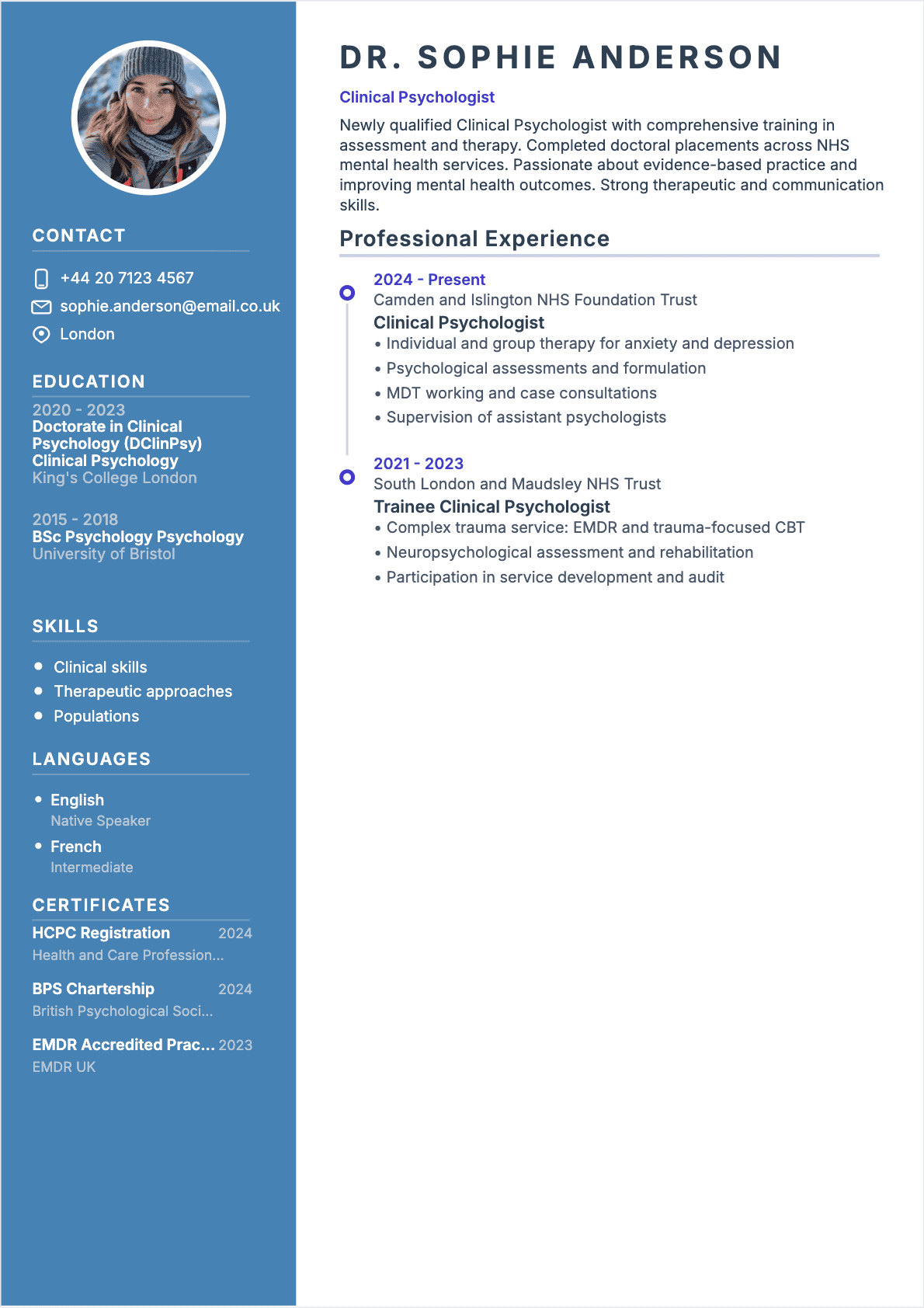
Resume Psychologist Junior
Psychologist resume template for Junior profile
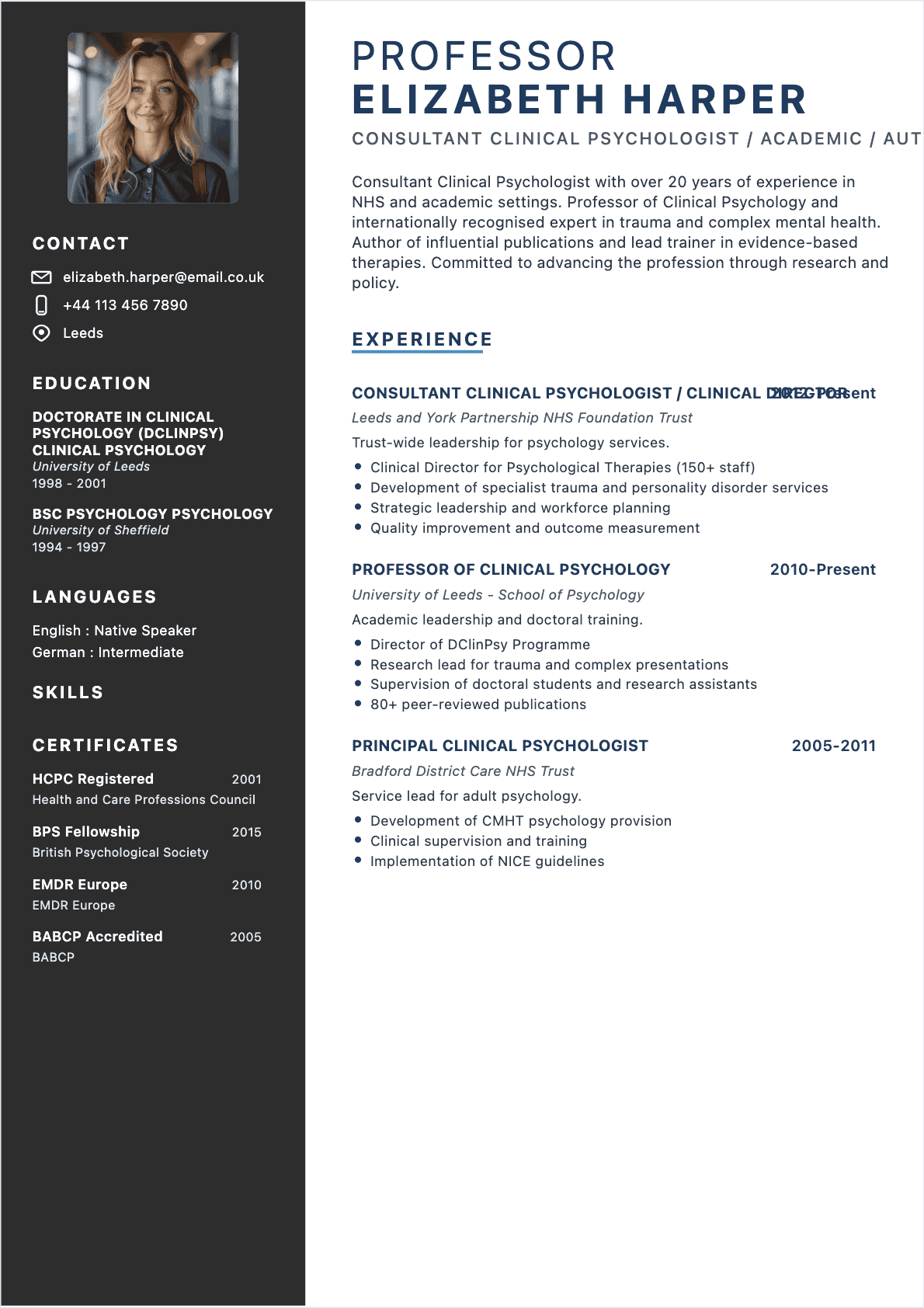
Resume Psychologist Senior
PopularPsychologist resume template for Senior profile
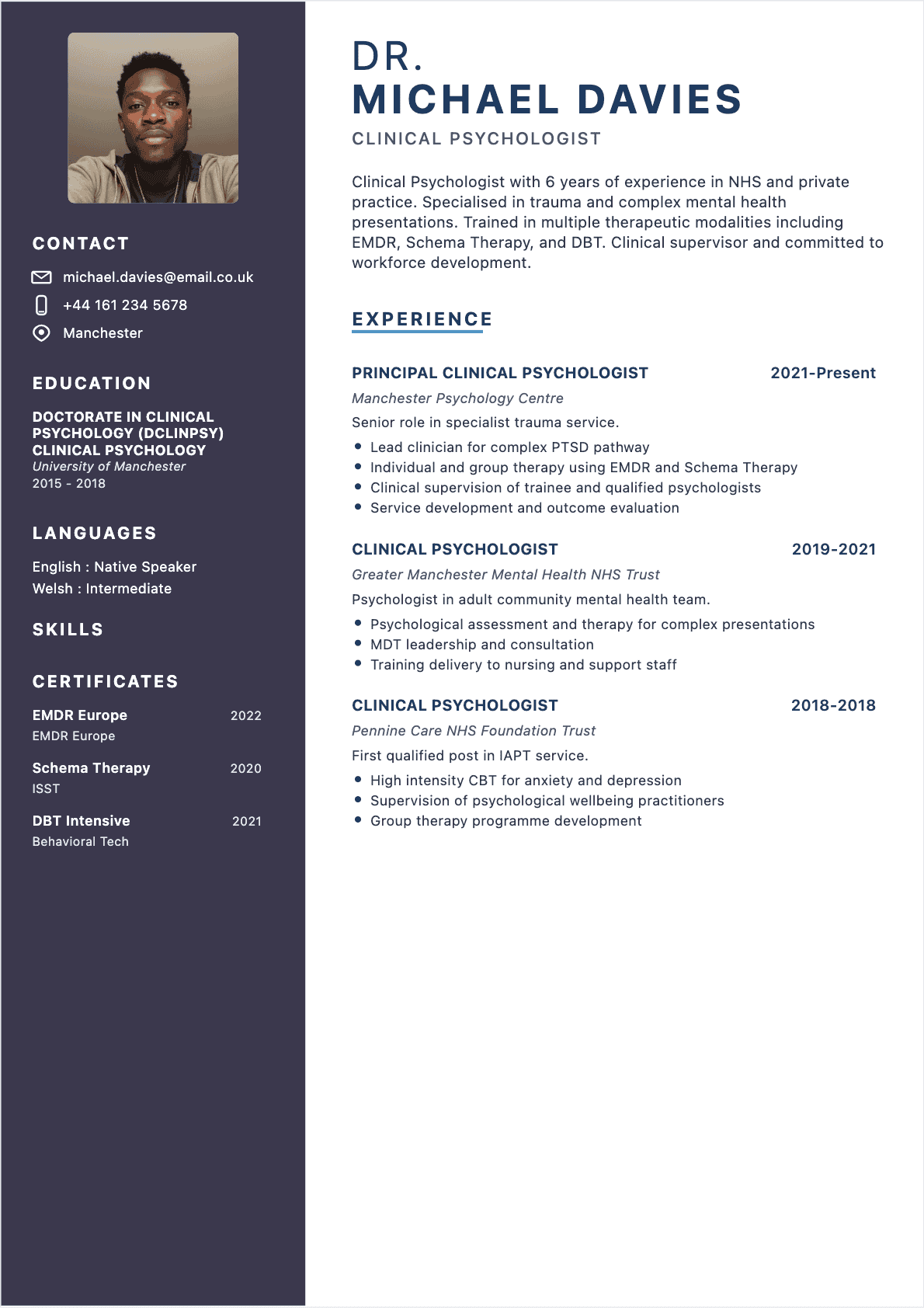
Resume Psychologist Confirmé
Psychologist resume template for Confirmé profile
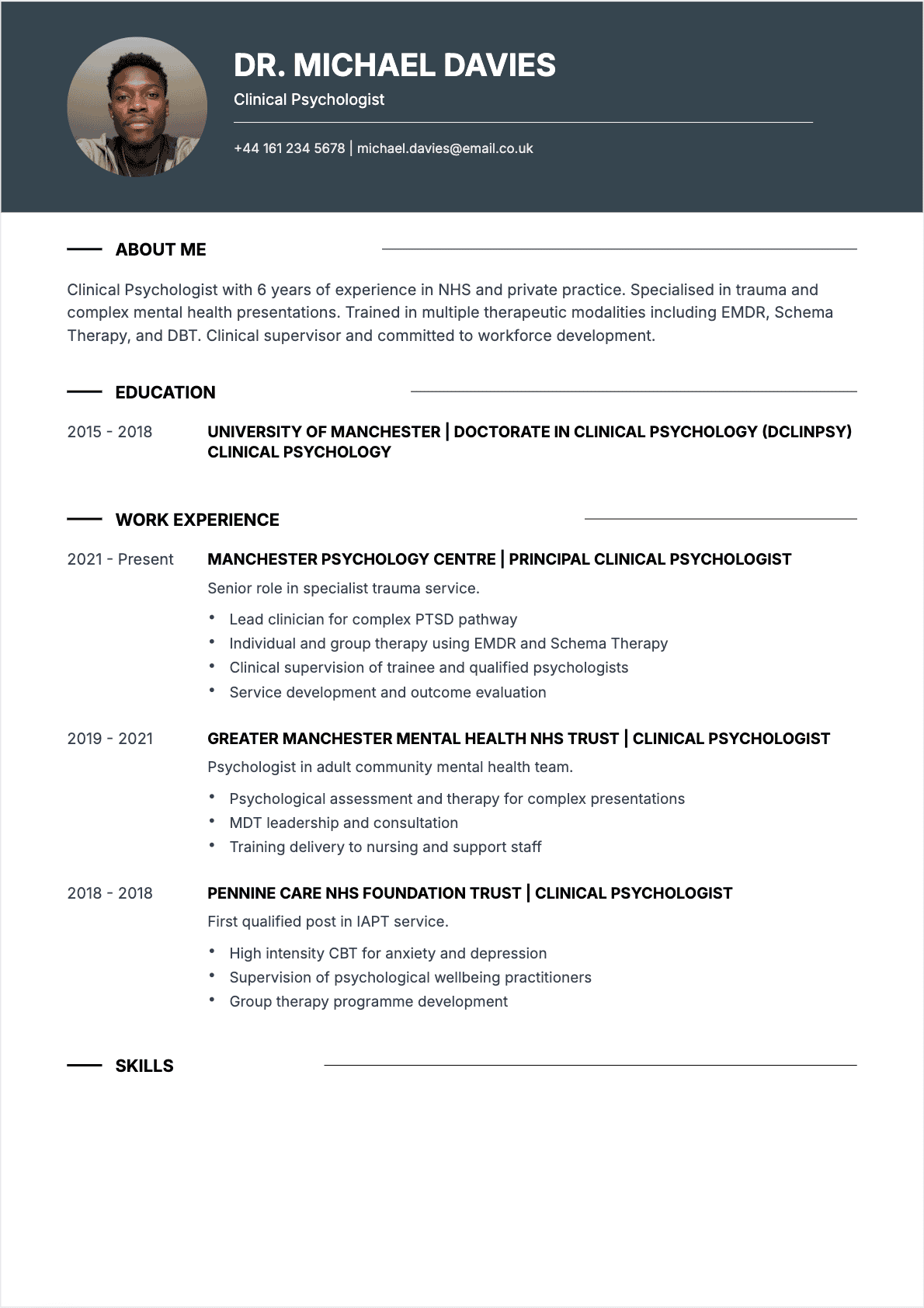
Resume Psychologist Confirmé
Psychologist resume template for Confirmé profile
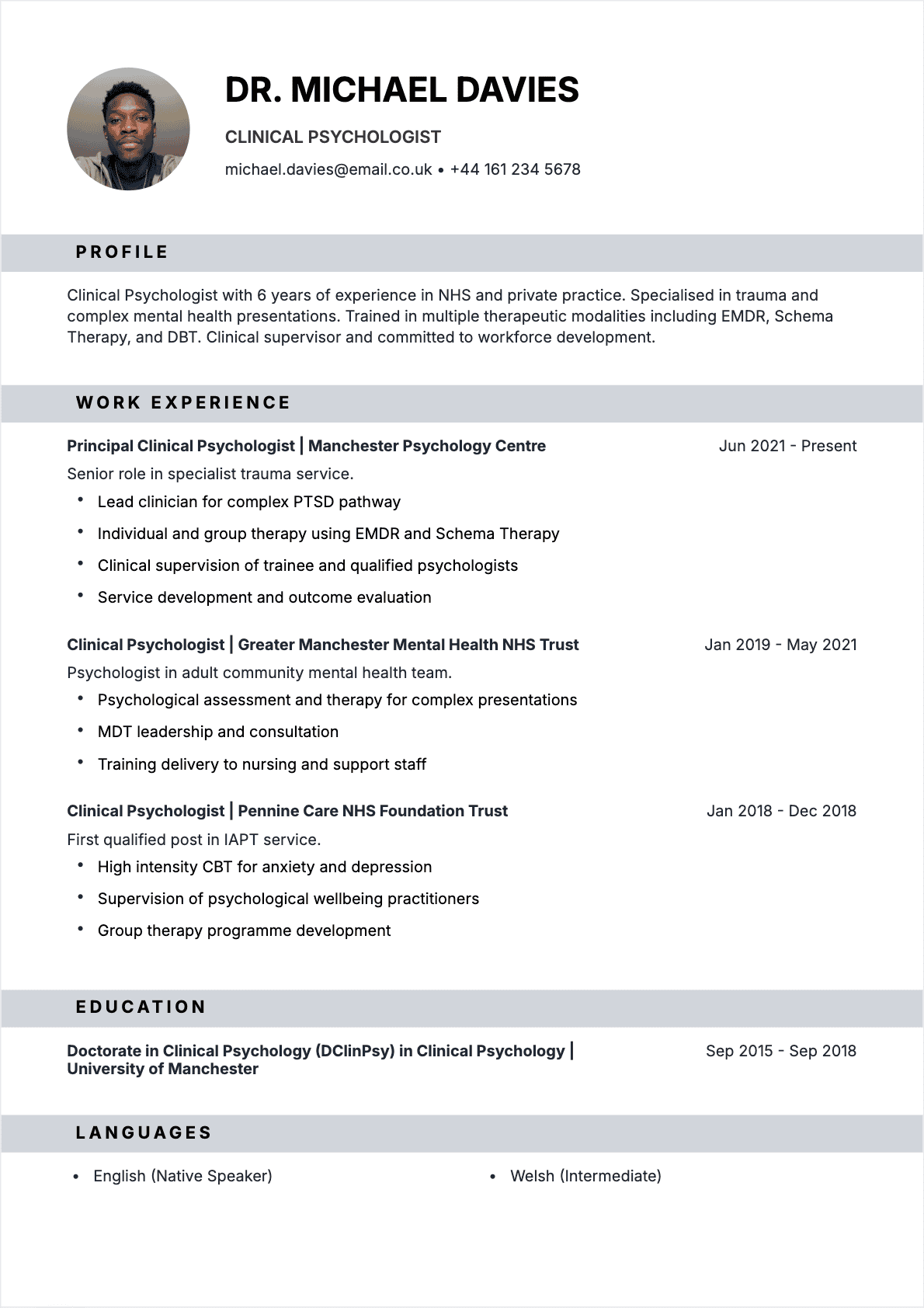
Resume Psychologist Confirmé
Psychologist resume template for Confirmé profile
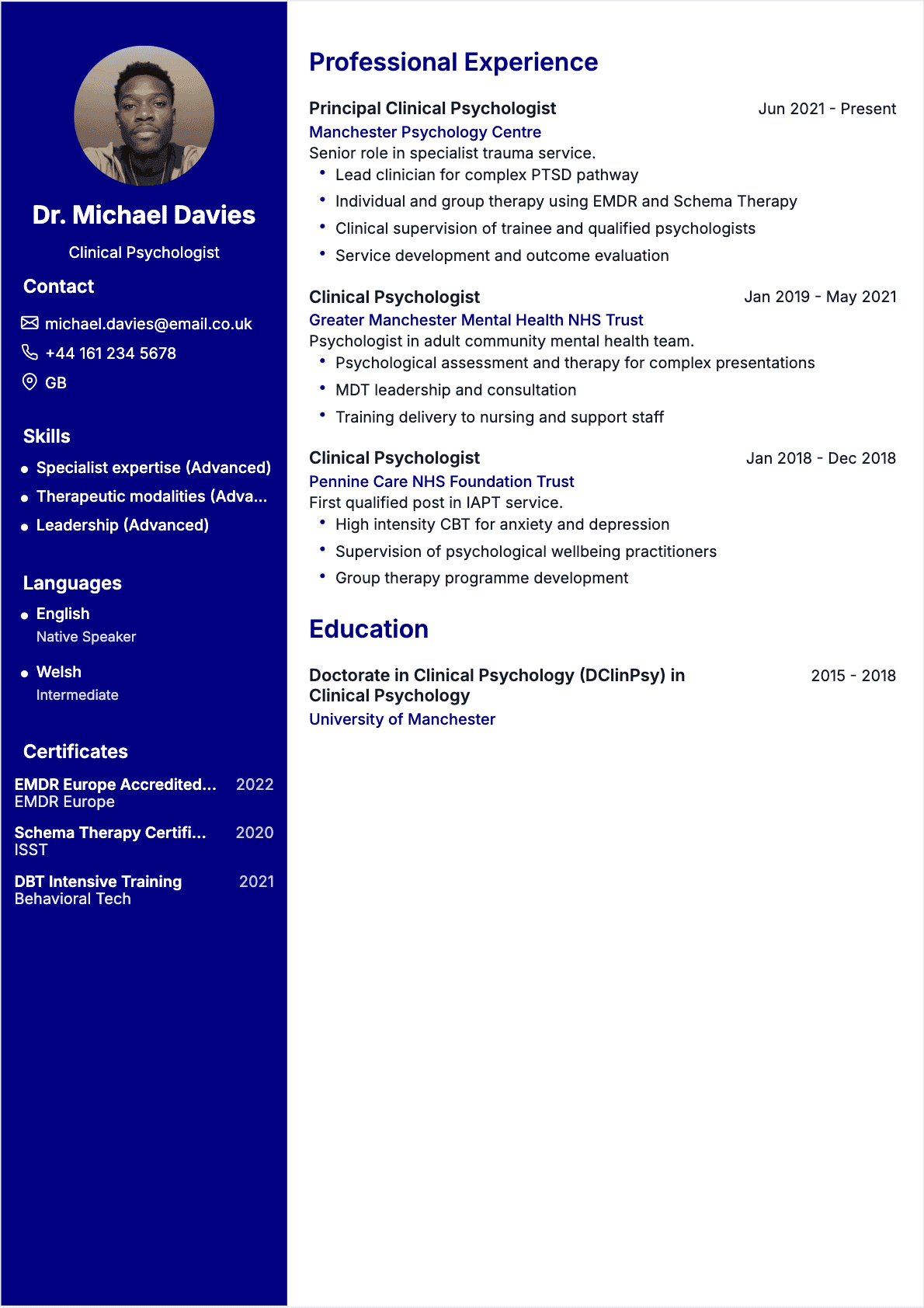
Resume Psychologist Confirmé
Psychologist resume template for Confirmé profile
Like one of these Psychologist resume templates?
Select it, fill in your details and download your resume as PDF.
Psychologist Resume Examples
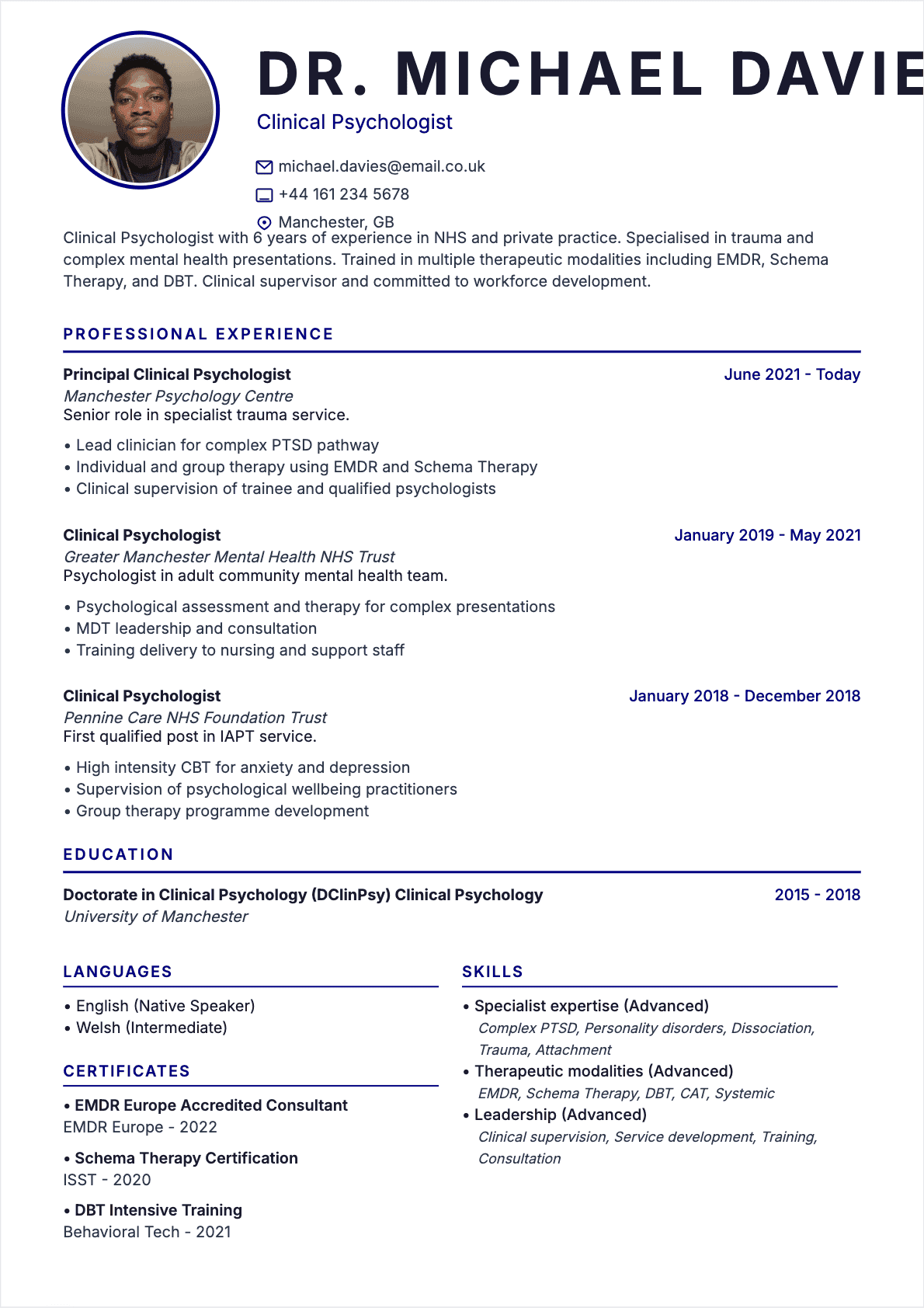
Dr. Michael Davies
Clinical Psychologist
michael.davies@email.co.uk
+44 161 234 5678
Manchester, GB
Clinical Psychologist with 6 years of experience in NHS and private practice. Specialised in trauma and complex mental health presentations. Trained in multiple therapeutic modalities including EMDR, Schema Therapy, and DBT. Clinical supervisor and committed to workforce development.
Work Experience
Principal Clinical Psychologist
Manchester Psychology Centre
- ●Lead clinician for complex PTSD pathway
- ●Individual and group therapy using EMDR and Schema Therapy
- ●Clinical supervision of trainee and qualified psychologists
Clinical Psychologist
Greater Manchester Mental Health NHS Trust
- ●Psychological assessment and therapy for complex presentations
- ●MDT leadership and consultation
- ●Training delivery to nursing and support staff
Clinical Psychologist
Pennine Care NHS Foundation Trust
- ●High intensity CBT for anxiety and depression
- ●Supervision of psychological wellbeing practitioners
- ●Group therapy programme development
Education
Doctorate in Clinical Psychology (DClinPsy)
University of Manchester
Skills
Languages
English — Native Speaker
Welsh — Intermediate
Certifications
EMDR Europe Accredited ConsultantEMDR Europe
Schema Therapy CertificationISST
DBT Intensive TrainingBehavioral Tech
Psychologist role overview
Psychologists assess, diagnose, and treat mental, emotional, and behavioral disorders across diverse settings including hospitals, private practices, schools, research institutions, and corporate environments. Your day-to-day work varies significantly based on your specialization—clinical psychologists conduct therapy sessions and psychological assessments, while organizational psychologists might design workplace interventions or conduct employee evaluations. Research psychologists spend their time designing studies, analyzing data, and publishing findings that advance the field.
The role demands continuous documentation and case management. You'll spend substantial time writing clinical notes, treatment plans, and assessment reports that meet both ethical standards and insurance requirements. Between client sessions, you're reviewing case files, consulting with other healthcare providers, staying current with research literature, and managing administrative tasks. Many psychologists also supervise interns or doctoral students, adding a mentorship component to their responsibilities.
Career progression typically follows a path from supervised practice to independent licensure, then potentially to specialized certifications or leadership roles. Early-career psychologists often work under supervision in group practices or institutional settings, building their clinical hours and expertise. Mid-career professionals might establish private practices, take on supervisory roles, or specialize further in areas like neuropsychology or forensic psychology. Senior psychologists often combine clinical work with training, consultation, program development, or administrative leadership.
Salary ranges in the United States reflect experience and setting: entry-level psychologists with fresh licenses earn $55,000-$70,000 annually, mid-career professionals with 5-10 years experience typically make $75,000-$95,000, and senior psychologists with specialized expertise or private practices can earn $100,000-$150,000 or more. Academic and research positions often pay less than clinical roles, while forensic and organizational psychologists frequently command premium rates.
Typical daily tasks include:
- Conducting 50-minute therapy sessions with individual clients or group therapy with 6-10 participants
- Administering and scoring psychological assessments such as cognitive tests, personality inventories, or diagnostic interviews
- Writing detailed clinical notes and treatment plans that comply with HIPAA and insurance documentation requirements
- Consulting with psychiatrists, social workers, or primary care physicians about client care coordination
- Reviewing current research literature to maintain evidence-based practice standards
- Managing scheduling, billing, and insurance authorization processes for your caseload
Essential skills for a psychologist resume
Your resume must demonstrate both clinical competencies and the interpersonal abilities that make therapeutic relationships effective. Hiring managers scan for specific assessment tools, therapeutic modalities, and technical skills that match their practice needs, but they're equally interested in your capacity for empathy, cultural competence, and ethical judgment. The balance between hard and soft skills signals whether you can handle both the clinical demands and the human complexities of psychological practice.
For applicant tracking systems, prioritize exact matches to the job posting's required skills, particularly specific therapy modalities (CBT, DBT, EMDR), assessment instruments (MMPI-3, WAIS-IV, Rorschach), and population specializations (pediatric, geriatric, trauma). Many ATS programs search for licensure credentials and specialized certifications, so include your full license number and any board certifications prominently.
Core skills to highlight:
- Clinical assessment and diagnosis – Demonstrates your ability to conduct comprehensive psychological evaluations using standardized instruments and DSM-5-TR criteria, essential for treatment planning and insurance reimbursement
- Evidence-based therapeutic modalities – Shows proficiency in specific approaches like Cognitive Behavioral Therapy, Dialectical Behavior Therapy, or psychodynamic therapy that match the employer's treatment philosophy
- Crisis intervention and risk assessment – Proves you can handle acute situations, assess suicide risk, and implement safety protocols that protect clients and limit liability
- Psychological testing administration – Indicates expertise with specific instruments (WAIS-IV, MMPI-3, PAI, neuropsychological batteries) that generate revenue and inform treatment
- Treatment planning and case management – Reflects your ability to develop measurable goals, track progress, and coordinate care across multiple providers
- Clinical documentation and record-keeping – Ensures compliance with legal, ethical, and insurance requirements while protecting against malpractice claims
- Multicultural competence – Shows you can work effectively with diverse populations and adapt interventions to cultural contexts, increasingly required by accreditation bodies
- Statistical analysis and research methodology – Particularly important for academic, research, or program evaluation roles where you'll design studies or analyze outcomes data
- Consultation and collaboration – Demonstrates your ability to work within interdisciplinary teams and communicate psychological concepts to non-psychologists
- Ethical decision-making – Signals your understanding of APA Ethics Code and ability to handle complex boundary issues, confidentiality dilemmas, and dual relationships
- Electronic health records systems – Shows familiarity with platforms like Epic, Cerner, or SimplePractice that most modern practices require
- Supervision and training – Indicates readiness for senior roles where you'll mentor doctoral students, interns, or junior clinicians

How to write a psychologist resume step by step
1. Lead with your licensure and credentials prominently
Place your license information directly under your name or in a dedicated credentials section at the top. Write "Licensed Psychologist, State of California (PSY12345)" rather than burying this information. Include your doctoral degree, any board certifications (ABPP), and active status. Hiring managers need to verify licensure immediately, and missing or unclear credential information causes delays or disqualification.
2. Create a clinical summary that quantifies your experience
Replace generic objective statements with a 3-4 line summary that includes your years of experience, specializations, and measurable outcomes. Instead of "Experienced psychologist seeking new opportunities," write "Licensed clinical psychologist with 6 years providing evidence-based therapy to 200+ clients with anxiety and mood disorders, achieving 78% symptom reduction rates using CBT and ACT modalities in outpatient settings."
3. Structure your experience with clinical metrics and outcomes
For each position, include your caseload size, client demographics, treatment modalities used, and measurable results. Transform "Provided therapy to clients" into "Conducted individual therapy with caseload of 25-30 clients weekly, specializing in trauma treatment using EMDR, with 82% of clients reporting significant improvement on PCL-5 scores within 12 sessions." Include administrative achievements like "Reduced no-show rate from 23% to 11% by implementing text reminder system and flexible scheduling."
4. Detail your assessment and diagnostic expertise
Create a separate section or integrate into experience descriptions your proficiency with specific psychological tests. Write "Administered and interpreted 150+ comprehensive psychological assessments including WAIS-IV, MMPI-3, PAI, and Rorschach for diagnostic clarification and treatment planning" rather than simply listing "psychological testing." Specify populations tested (forensic evaluations, pre-surgical assessments, learning disability evaluations) and the referral sources.
5. Highlight specialized training and continuing education
Psychology requires ongoing professional development, so dedicate space to specialized certifications, post-doctoral training, and relevant workshops. Instead of listing "Attended various trainings," specify "Completed 200-hour DBT intensive training program (Behavioral Tech, 2023); EMDR Basic Training and Certification (EMDRIA-approved, 2022); Gottman Method Couples Therapy Level 1-2 (2024)." This shows commitment to evidence-based practice and specialized competencies.
6. Include research, publications, and presentations
Even in clinical roles, research contributions demonstrate critical thinking and expertise. List publications in APA format, presentations at professional conferences, and research projects. Write "Published first author in Journal of Clinical Psychology: 'Efficacy of mindfulness-based interventions for chronic pain' (2024, IF: 3.8)" or "Presented 'Adapting CBT for refugee populations' at APA Annual Convention (2025, attended by 200+ clinicians)."
7. Demonstrate supervision and leadership experience
As you advance, supervisory roles become critical. Quantify your mentorship: "Supervised 4 doctoral practicum students and 2 pre-doctoral interns, providing 100+ hours of clinical supervision and didactic training in assessment and therapy" rather than "Supervised students." Include program development: "Developed and implemented 8-week anxiety management group protocol adopted across 3 clinic locations, serving 60 clients annually."
8. Tailor your resume to the specific practice setting
A resume for hospital-based positions should emphasize interdisciplinary collaboration, medical terminology, and acute care experience. Private practice roles need business skills, insurance credentialing, and client retention metrics. Academic positions require teaching, research productivity, and grant funding. Adjust your bullet points: for hospitals, write "Collaborated with medical team on integrated behavioral health consultations for 40+ patients monthly"; for private practice, write "Built independent practice from 0 to 35 regular clients within 18 months through community outreach and professional referral network."
Common mistakes on psychologist resumes
Vague descriptions of therapeutic work without specific modalities or outcomes
Writing "Provided counseling to diverse clients" tells hiring managers nothing about your actual competencies. They need to know which evidence-based treatments you practice, with which populations, and with what results. A clinical director reviewing 50 resumes will immediately discard generic descriptions. Instead, specify "Delivered Prolonged Exposure therapy to 18 veterans with combat-related PTSD, with 72% achieving clinically significant reduction in CAPS-5 scores after 12-15 sessions." This demonstrates both technical expertise and clinical effectiveness.
Omitting or incorrectly formatting licensure information
Burying your license number in a skills section or writing "Licensed in multiple states" without specifying which ones creates unnecessary barriers. Hiring managers verify licensure before interviews, and unclear information wastes their time. List each license with full details: "Licensed Psychologist, New York (#012345, active since 2020); Licensed Psychologist, New Jersey (#67890, active since 2022)." Include your license status (active, inactive, in good standing) and any restrictions or limitations.
Listing psychological tests without demonstrating interpretation skills
Simply writing "Proficient in MMPI-2, WAIS-IV, Rorschach" suggests you can administer tests but not necessarily interpret results or integrate findings into treatment recommendations. Assessment interpretation requires sophisticated clinical judgment that separates qualified psychologists from technicians. Improve this by writing "Conducted 80+ comprehensive psychological evaluations integrating MMPI-3, PAI, WAIS-IV, and clinical interview data into detailed diagnostic reports for forensic, disability, and treatment planning purposes, with 95% of referring attorneys rating reports as highly useful."
Neglecting to address gaps in clinical practice or supervision hours
Career interruptions are common in psychology—parental leave, additional training, relocation for a partner's career—but unexplained gaps raise questions about license maintenance and clinical currency. Address gaps directly: "Career pause (2021-2022): Maintained active license through continuing education while providing primary care for family member; returned to practice with 40-hour CBT refresher course." This demonstrates professionalism and proactive skill maintenance.
Using jargon or acronyms without context
While psychology has specialized language, overusing acronyms alienates non-psychologist reviewers (HR staff, administrators) who screen resumes first. Writing "Provided EBT including CBT, DBT, ACT, and MI for pts with MDD, GAD, and PTSD per DSM-5 dx" is unreadable. Balance technical precision with accessibility: "Delivered evidence-based treatments (Cognitive Behavioral Therapy, Dialectical Behavior Therapy, Acceptance and Commitment Therapy) for clients diagnosed with depression, anxiety, and trauma disorders."
Failing to differentiate between psychological and counseling roles
Many resumes blur the distinction between doctoral-level psychological services and master's-level counseling, which undermines your advanced training. Emphasize doctoral-level competencies: psychological assessment, diagnosis using complex differential processes, supervision of other clinicians, and integration of research into practice. Instead of "Provided mental health counseling," write "Conducted comprehensive diagnostic evaluations using semi-structured interviews (SCID-5) and psychological testing to differentiate between bipolar disorder, borderline personality disorder, and complex PTSD, informing treatment recommendations for psychiatrists and therapists."
Ignoring the business and administrative aspects of practice
Even in clinical roles, psychologists manage caseloads, handle insurance authorization, maintain productivity standards, and contribute to program development. Resumes that focus exclusively on direct clinical work miss opportunities to demonstrate business acumen. Include metrics like "Maintained 92% insurance authorization approval rate through thorough documentation and proactive peer-to-peer reviews" or "Exceeded productivity target of 20 billable hours weekly while maintaining 4.8/5.0 client satisfaction rating." These details matter especially for group practices and healthcare systems focused on financial sustainability.
Psychologist resume trends in 2026
The psychology job market in 2026 reflects significant shifts toward integrated care models, where psychologists work embedded within primary care clinics, hospitals, and specialty medical practices rather than in standalone mental health centers. Employers increasingly seek psychologists who can provide brief, focused interventions in medical settings, consult with physicians about behavioral health factors affecting medical conditions, and communicate psychological concepts to non-mental-health providers. Your resume should highlight any experience with integrated behavioral health, consultation-liaison work, or collaborative care models. Specify metrics like "Provided same-day behavioral health consultations for 15-20 primary care patients weekly, reducing psychiatric emergency department visits by 31% among high-utilizers."
Telehealth competency has transitioned from pandemic necessity to standard practice expectation. Most positions now assume you can deliver effective therapy via video platforms, manage the unique challenges of remote assessment, and maintain therapeutic rapport across digital channels. Beyond simply stating "telehealth experience," demonstrate sophistication: "Adapted evidence-based protocols for virtual delivery, maintaining 89% client retention rate and equivalent outcomes to in-person treatment across 300+ teletherapy sessions." Address your familiarity with HIPAA-compliant platforms, interstate licensure compacts (PSYPACT), and remote crisis management protocols.
Measurement-based care and outcome tracking have become non-negotiable expectations rather than optional enhancements. Employers want psychologists who routinely use standardized measures (PHQ-9, GAD-7, PCL-5, OQ-45) to track client progress, adjust treatments based on data, and demonstrate clinical effectiveness to payers and administrators. Your resume should include specific outcome metrics: "Implemented routine outcome monitoring using PHQ-9 and GAD-7 at every session, achieving average 52% symptom reduction across caseload and identifying 8 clients requiring treatment modification due to lack of progress." This data-driven approach aligns with value-based care models that tie reimbursement to outcomes.
Specialized expertise in underserved populations commands premium compensation and expanded opportunities. The mental health workforce shortage is most acute for psychologists who work with children and adolescents, Spanish-speaking communities, LGBTQ+ populations, and individuals with serious mental illness. If you have these specializations, feature them prominently with specific cultural adaptations you've made to standard treatments. Write "Delivered culturally adapted CBT to 40+ Latinx clients, incorporating familismo values and collaborating with curanderos when appropriate, achieving 81% treatment completion rate compared to 64% clinic average."
Artificial intelligence and digital therapeutics are reshaping the psychologist's role rather than replacing it. Forward-thinking employers seek psychologists who can integrate AI-assisted tools—chatbots for between-session support, algorithm-driven treatment recommendations, virtual reality exposure therapy—while maintaining the human judgment and therapeutic relationship that technology cannot replicate. Demonstrate your comfort with technology: "Incorporated Limbix VR exposure therapy platform into treatment for 12 clients with specific phobias, reducing average treatment length from 16 to 11 sessions while maintaining 85% success rate." Avoid technophobia; embrace tools that enhance rather than replace clinical judgment.
Workplace mental health and organizational psychology roles are expanding rapidly as employers recognize the business impact of employee wellbeing. Companies are hiring psychologists to design mental health benefits, train managers in psychological safety, conduct fitness-for-duty evaluations, and develop resilience programs. These roles often offer better work-life balance and higher compensation than traditional clinical positions. If you're interested in organizational work, emphasize relevant experience: "Designed and delivered mental health training to 200+ managers on recognizing distress, having supportive conversations, and making appropriate referrals, resulting in 43% increase in Employee Assistance Program utilization."
Remote and hybrid work arrangements are now standard for many psychology positions, particularly in private practice, telehealth companies, and organizational consulting. However, training roles, hospital positions, and work with certain populations (children, forensic clients, severe mental illness) still require substantial in-person presence. Be explicit about your work arrangement preferences and experience: "Maintained successful hybrid practice with 60% telehealth and 40% in-office sessions, offering clients flexibility while preserving in-person options for assessment, complex cases, and client preference." Demonstrate that you've thoughtfully considered the clinical implications of different modalities rather than simply preferring remote work for convenience.
Further reading:
Frequently asked questions
Find answers to the most frequently asked questions.
A psychologist CV for clinical roles should prioritize licensure, clinical experience, and outcomes. Use a clean format with reverse chronological order, list populations and settings, and quantify scope (e.g., 25 sessions/week, 8 assessments/month). Add validated tools (PHQ-9, WAIS-IV), EHR experience, and any relevant certification or supervision credentials.
A resume is typically 1–2 pages focused on role fit: clinical impact, skills, and recent experience. A curriculum vitae is a fuller record used more often in academia and research, including publications, posters, teaching, grants, and professional affiliations. Many psychologists keep both and customize the resume for each job.
Most psychologist resumes perform best at one page for early to mid-career candidates and up to two pages for senior clinicians with leadership or program work. Use space for quantified achievements (sessions delivered, outcomes, satisfaction). If you’re applying for faculty roles, use a longer CV and keep the resume concise.
Include coursework when it adds job-relevant proof, usually for a resume with no experience or when changing specialties. List 4–6 advanced courses (e.g., Psychological Evaluation, Trauma, Health Psychology) and connect them to clinical skills. For experienced clinicians, coursework is less valuable than outcomes and clinical experience.
A cover letter is strongly recommended for psychologist roles because it clarifies setting fit, licensure timeline, and scope of practice. Use 3 short paragraphs: why this employer, how your clinical experience matches the job description, and what outcomes you achieved. Keep it aligned to the same keywords as your resume.
Use standard section headings (Summary, Experience, Education, Skills), avoid text boxes, and keep formatting simple. Save as PDF unless the employer requests Word. Mirror role keywords such as clinical psychology, treatment planning, crisis intervention, and outcome measurement, and support each with metrics to satisfy both ATS parsing and human review.
Your career deserves a better resume
With CVtoWork, select a template, fill in the fields and download your resume as PDF.
Start creating