Pharmacist Resume
Example, Template & Expert Tips 2026
Updated on April 18, 2026.
Write a pharmacist resume that passes ATS and wins interviews. Proven format, quantified achievements, key skills, and examples for 2026.
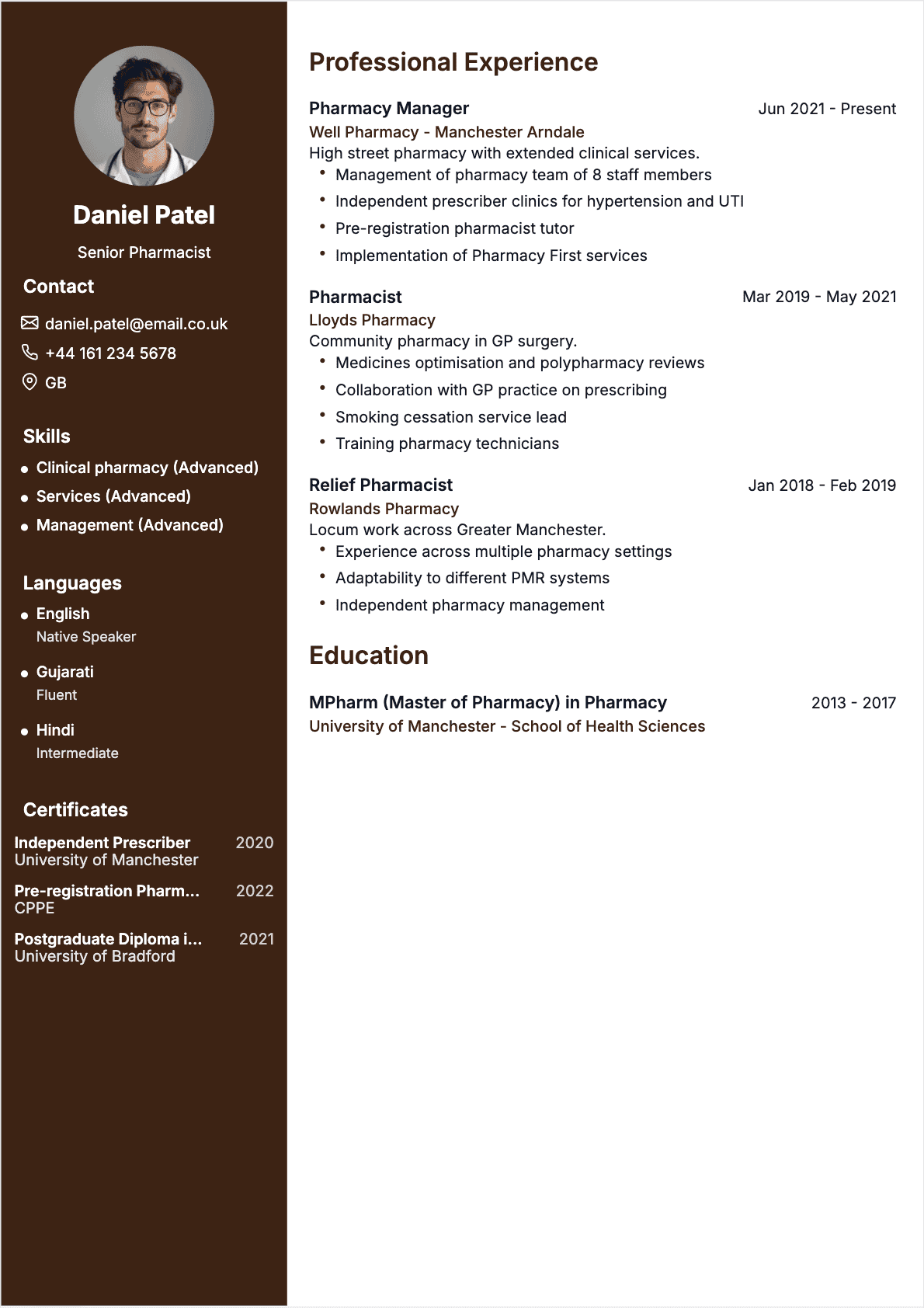
Pharmacist Resume Templates
8 Templates available
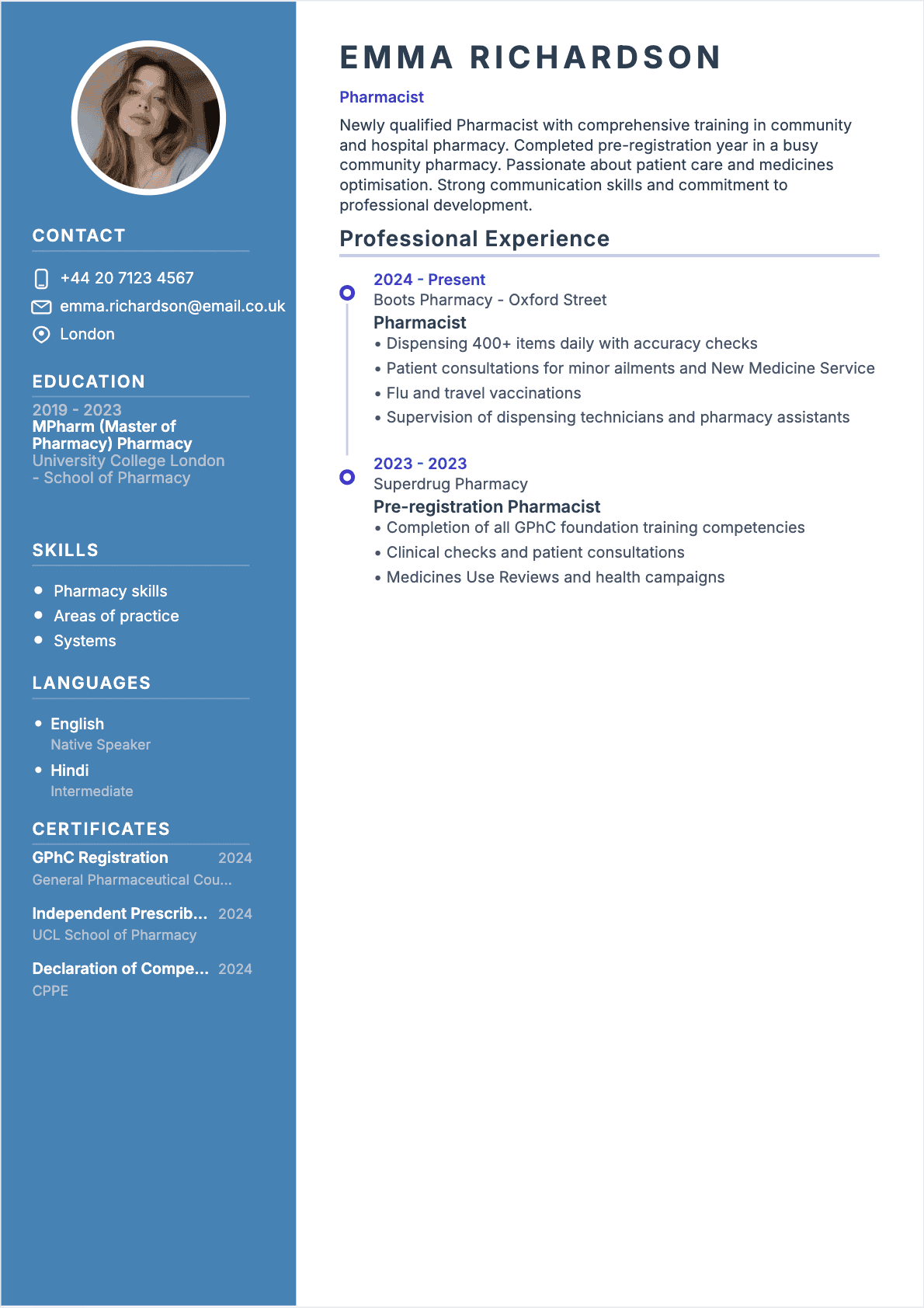
Resume Pharmacist Junior
Pharmacist resume template for Junior profile
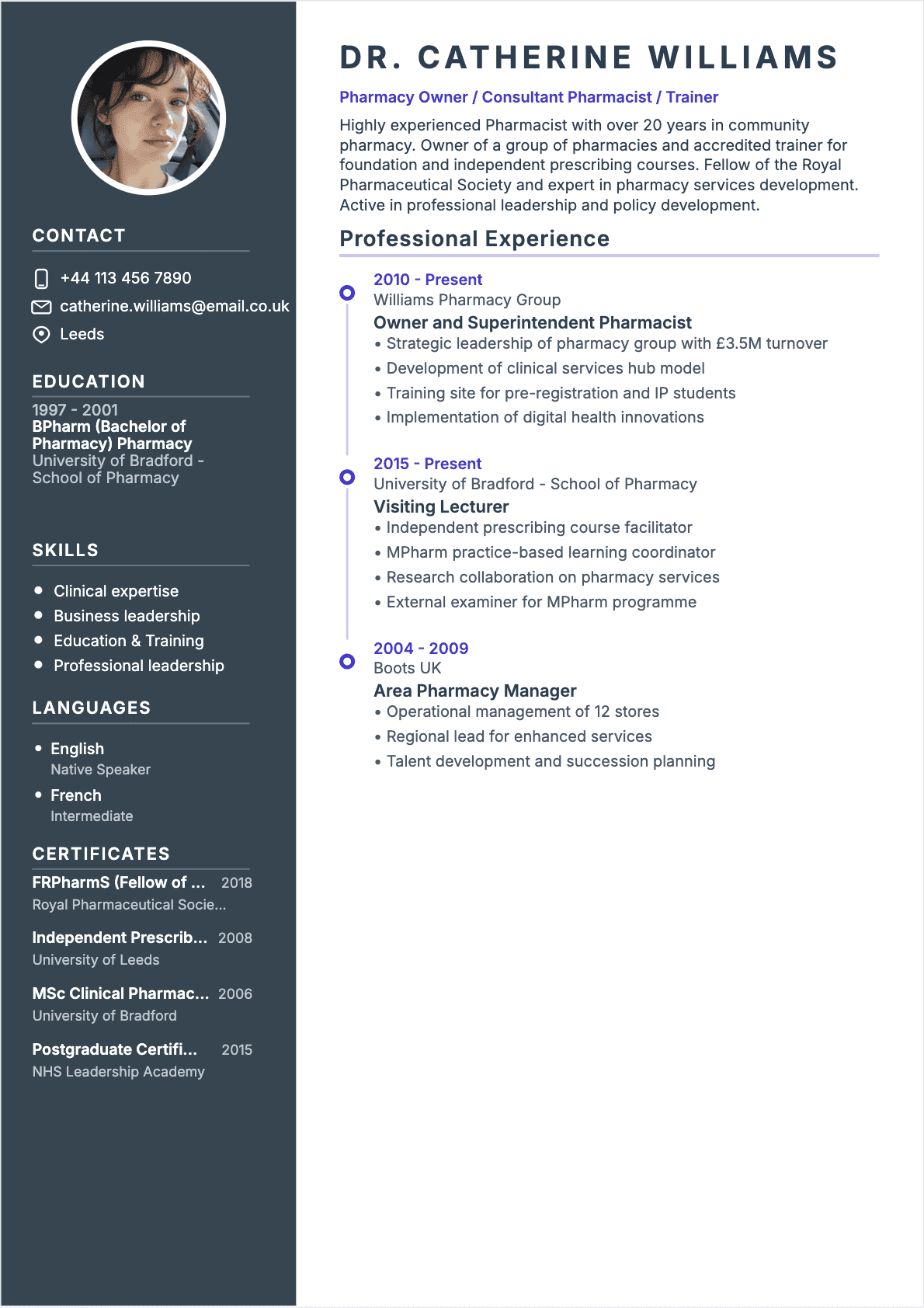
Resume Pharmacist Senior
Pharmacist resume template for Senior profile
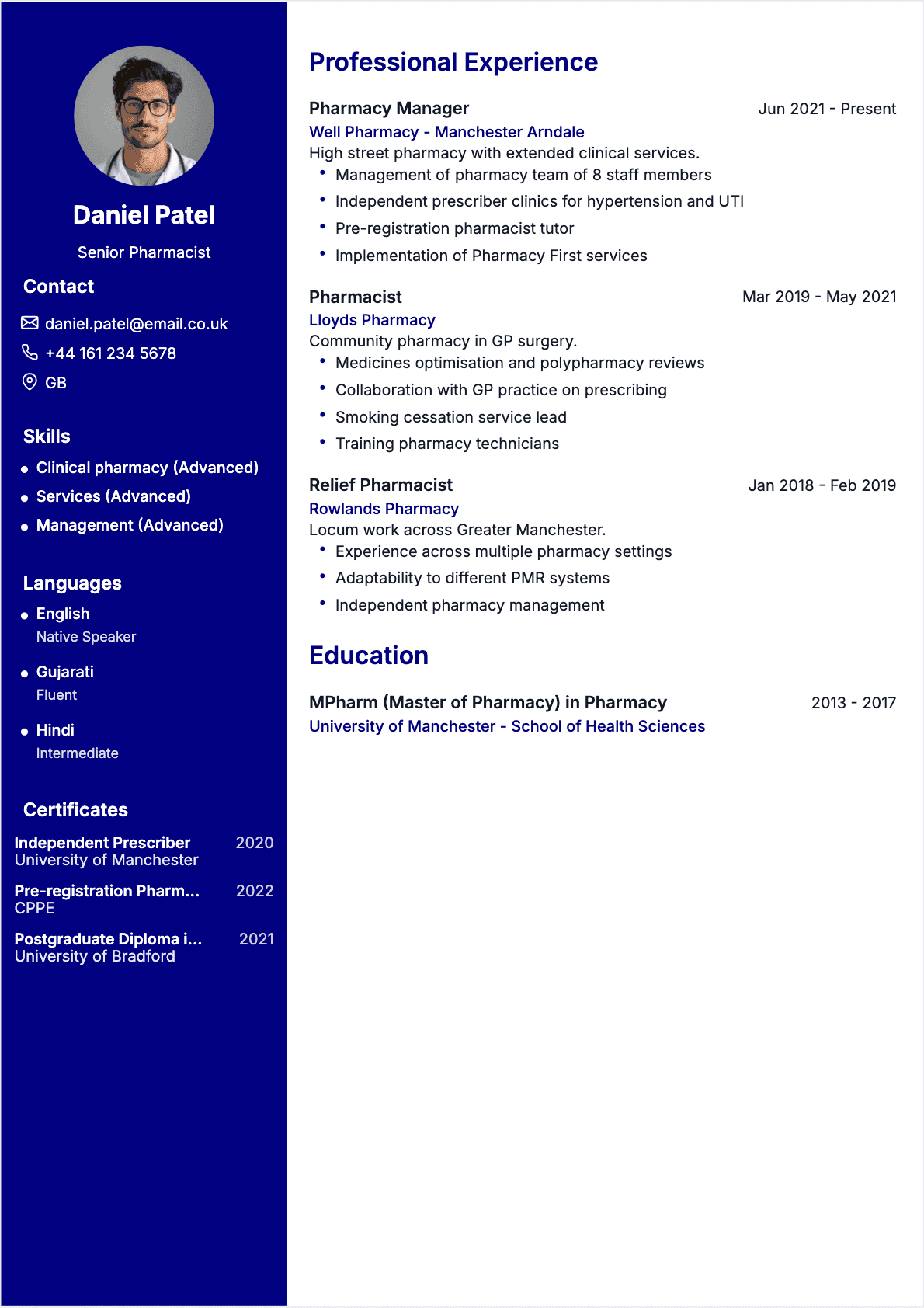
Resume Pharmacist Confirmé
Pharmacist resume template for Confirmé profile
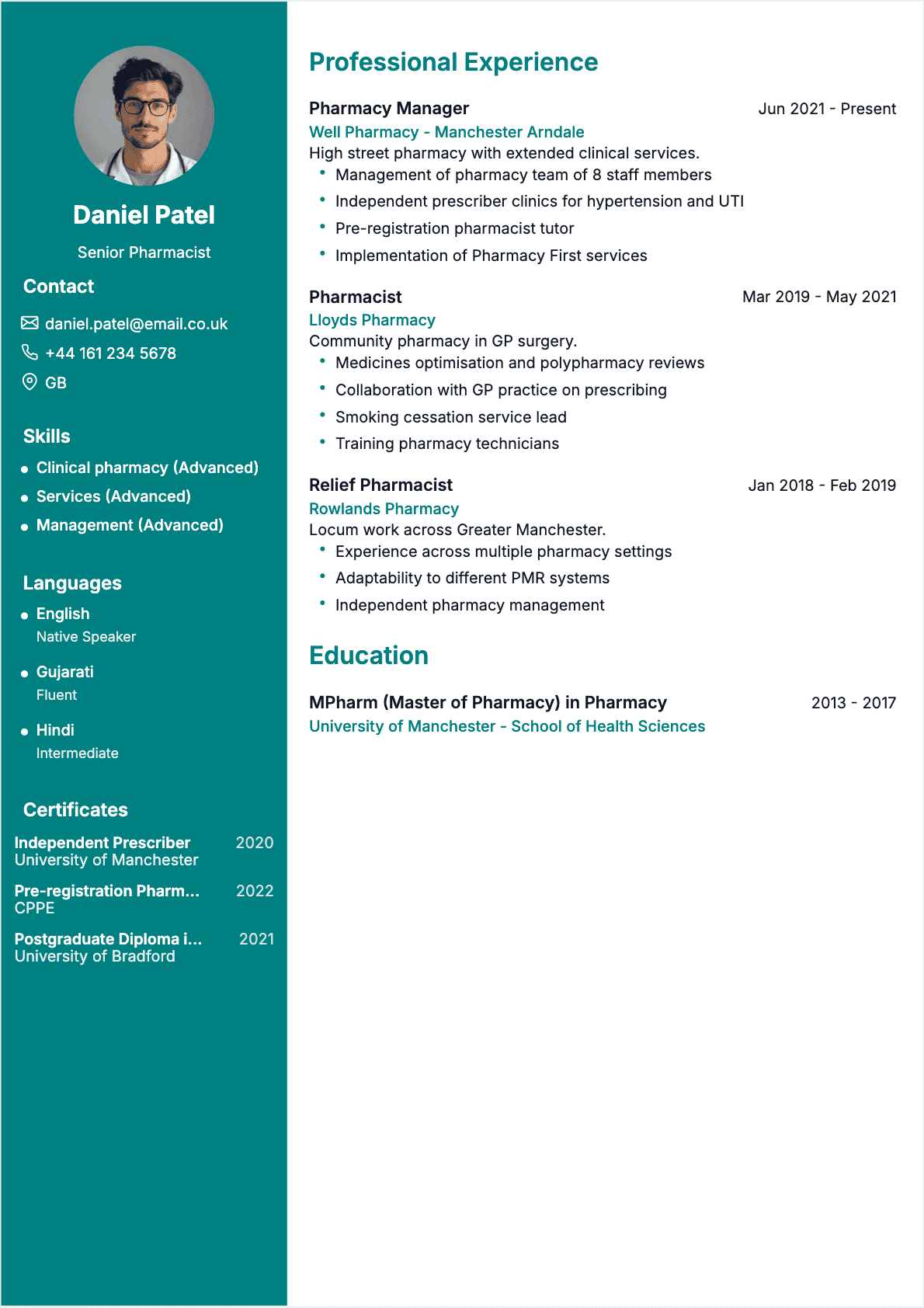
Resume Pharmacist Confirmé
Pharmacist resume template for Confirmé profile
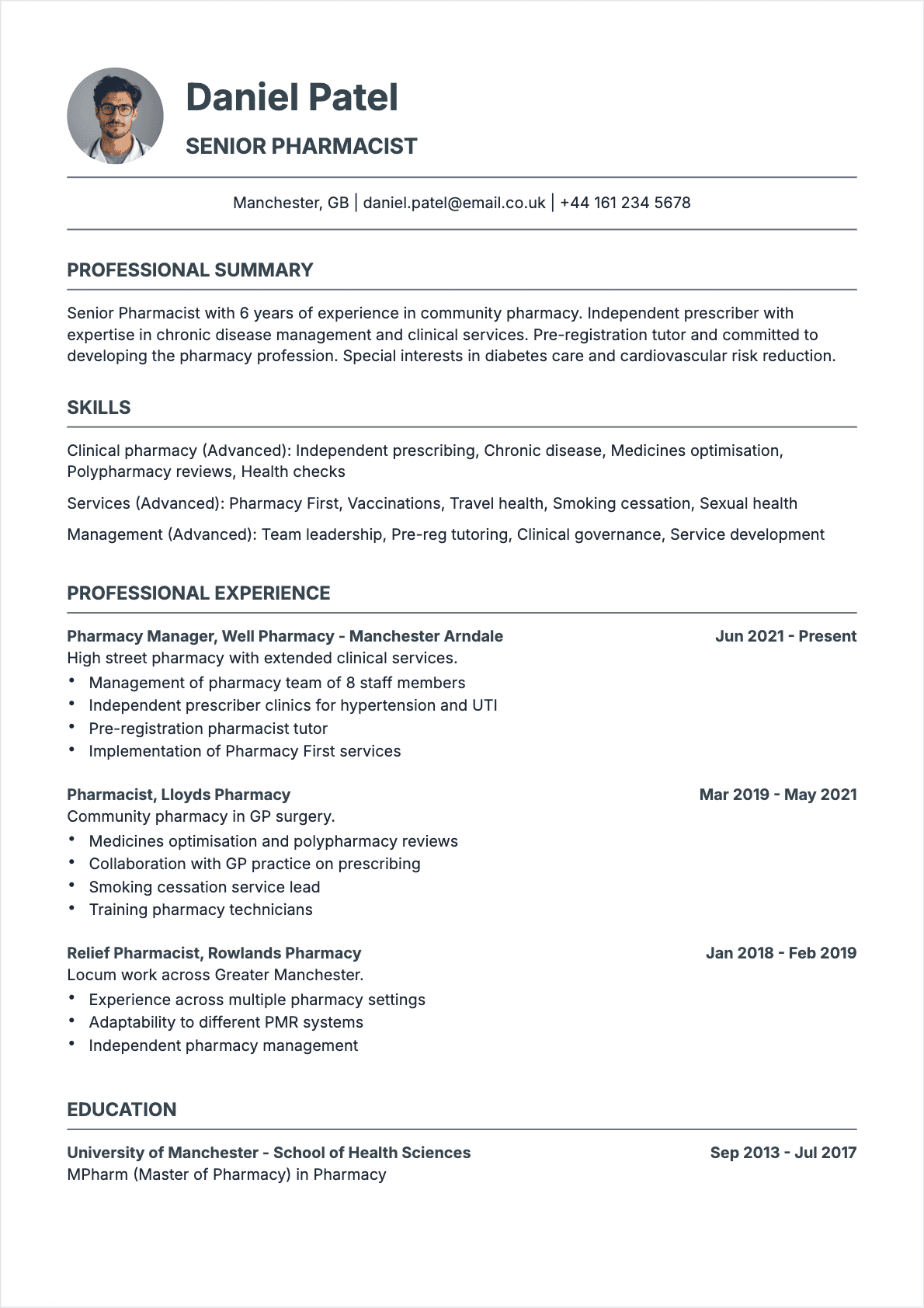
Resume Pharmacist Confirmé
Pharmacist resume template for Confirmé profile
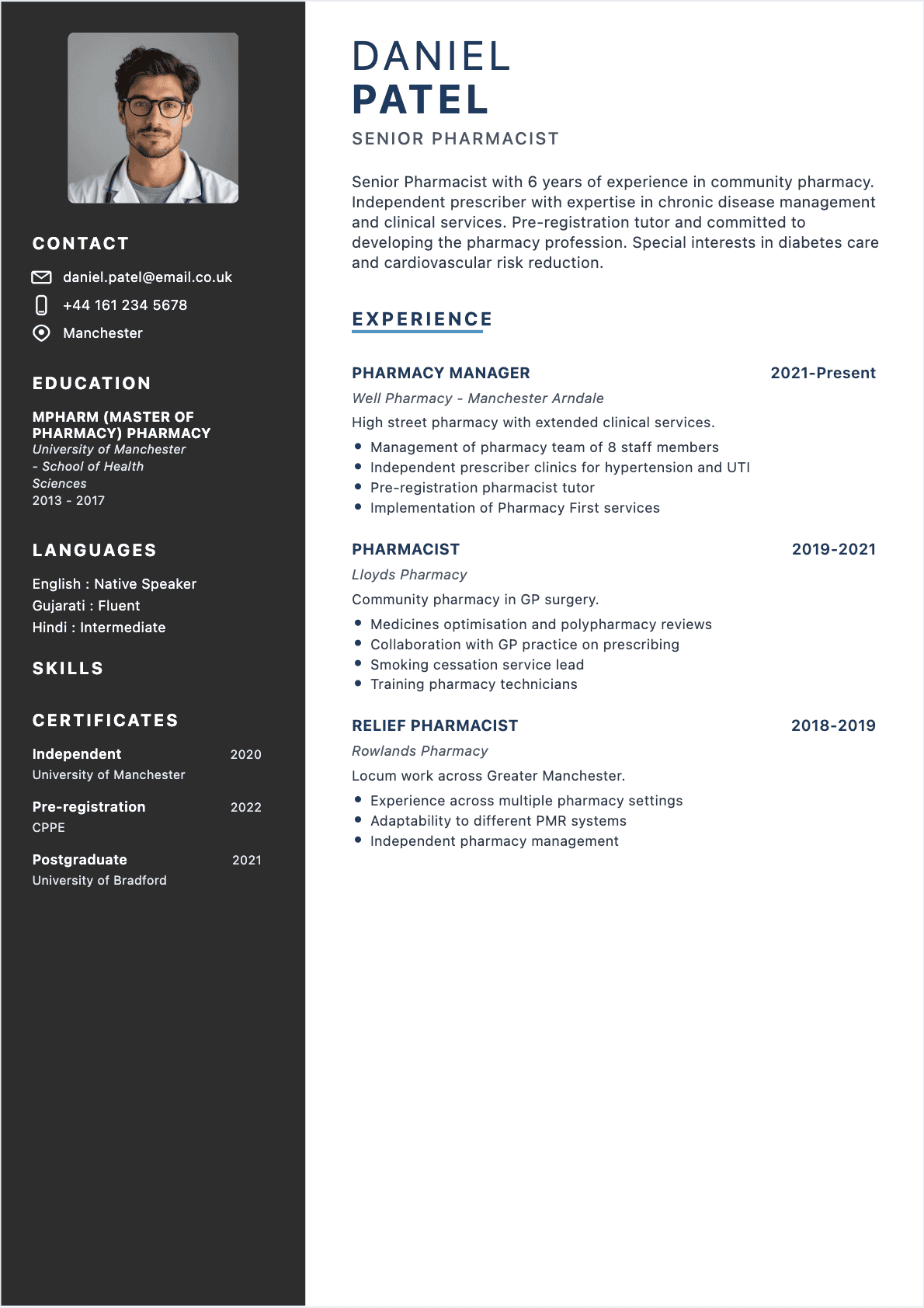
Resume Pharmacist Confirmé
PopularPharmacist resume template for Confirmé profile
Like one of these Pharmacist resume templates?
Select it, fill in your details and download your resume as PDF.
Pharmacist Resume Examples
Daniel Patel
Senior Pharmacist
daniel.patel@email.co.uk
+44 161 234 5678
Manchester, GB
Senior Pharmacist with 6 years of experience in community pharmacy. Independent prescriber with expertise in chronic disease management and clinical services. Pre-registration tutor and committed to developing the pharmacy profession. Special interests in diabetes care and cardiovascular risk reduction.
Work Experience
Pharmacy Manager
Well Pharmacy - Manchester Arndale
- ●Management of pharmacy team of 8 staff members
- ●Independent prescriber clinics for hypertension and UTI
- ●Pre-registration pharmacist tutor
Pharmacist
Lloyds Pharmacy
- ●Medicines optimisation and polypharmacy reviews
- ●Collaboration with GP practice on prescribing
- ●Smoking cessation service lead
Relief Pharmacist
Rowlands Pharmacy
- ●Experience across multiple pharmacy settings
- ●Adaptability to different PMR systems
- ●Independent pharmacy management
Education
MPharm (Master of Pharmacy)
University of Manchester - School of Health Sciences
Skills
Languages
English — Native Speaker
Gujarati — Fluent
Hindi — Intermediate
Certifications
Independent PrescriberUniversity of Manchester
Pre-registration Pharmacist TutorCPPE
Postgraduate Diploma in Clinical PharmacyUniversity of Bradford
Pharmacist role overview
Pharmacists serve as medication experts and patient safety advocates, bridging the gap between prescribers and patients. Your day revolves around dispensing medications accurately, counseling patients on proper use and potential side effects, and collaborating with physicians to optimize treatment outcomes. Beyond the counter, you verify prescriptions for accuracy, check for dangerous drug interactions, and maintain controlled substance records in compliance with federal and state regulations.
The role demands constant vigilance and clinical judgment. You'll spend significant time reviewing patient medication histories, identifying potential problems like duplicate therapies or contraindications, and making recommendations to healthcare providers. In community pharmacy settings, you're often the most accessible healthcare professional, answering questions about over-the-counter products, administering immunizations, and providing health screenings. Hospital and clinical pharmacists participate in rounds with medical teams, adjust medication dosages based on lab results, and manage complex IV therapies.
Career progression typically moves from staff pharmacist to pharmacy manager or clinical specialist roles, then to director of pharmacy services or specialized positions like oncology pharmacist or ambulatory care pharmacist. Some pharmacists transition into pharmaceutical industry roles, regulatory affairs, or academia. Salaries vary by setting and experience: entry-level pharmacists earn $110,000-$125,000 annually, mid-career professionals with 5-10 years make $125,000-$145,000, and senior pharmacists or pharmacy directors command $145,000-$165,000 or more, with additional compensation in hospital and specialty settings.
Typical daily responsibilities include:
- Reviewing and verifying 150-300 prescriptions for accuracy, appropriate dosing, and potential drug interactions
- Counseling 20-40 patients on new medications, side effects, and proper administration techniques
- Communicating with physicians and nurse practitioners to clarify prescriptions or recommend therapeutic alternatives
- Managing inventory, ordering medications, and ensuring proper storage of temperature-sensitive and controlled substances
- Administering vaccinations and conducting medication therapy management sessions
- Training and supervising pharmacy technicians and interns on workflow processes and safety protocols
Essential skills for a Pharmacist resume
Your resume must demonstrate both clinical expertise and operational competency. Hiring managers scan for specific technical skills that prove you can handle the pharmaceutical and regulatory demands of the position, while also looking for interpersonal abilities that indicate you'll excel in patient care and team collaboration. The balance between these skill categories varies by setting—retail pharmacies emphasize customer service and efficiency, while hospital systems prioritize clinical decision-making and interdisciplinary communication.
ATS systems typically screen for hard skills first, so include exact terminology from the job posting. Pharmacy management software names, specific clinical certifications, and regulatory compliance keywords should appear in your skills section and throughout your experience descriptions. However, don't neglect soft skills entirely; many modern ATS platforms now parse for competencies like 'patient counseling' and 'interdisciplinary collaboration' as healthcare employers recognize these as critical success factors.
Core skills to highlight on your resume:
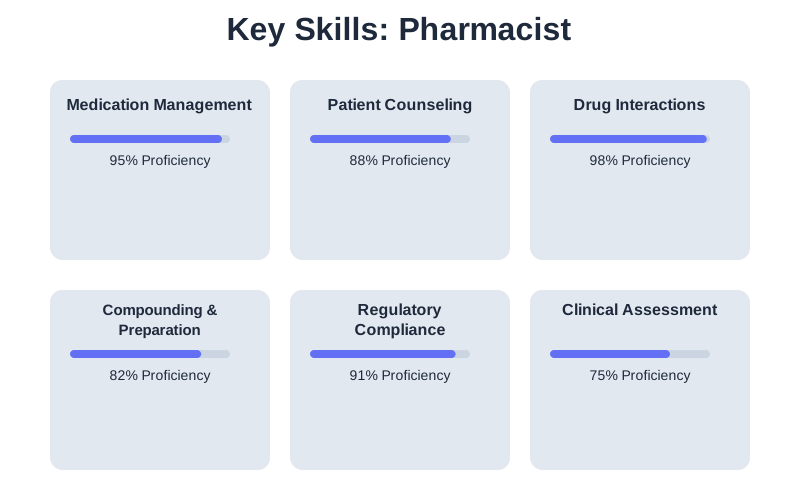
- Pharmacotherapy knowledge - Demonstrates your ability to evaluate medication appropriateness, identify drug interactions, and recommend evidence-based alternatives to prescribers
- Pharmacy management systems (PioneerRx, QS/1, Epic Willow) - Proficiency with dispensing software is essential for workflow efficiency and reduces training time for new employers
- Clinical assessment and medication therapy management - Shows you can conduct comprehensive medication reviews, identify drug-related problems, and develop care plans
- Regulatory compliance (DEA, state boards, HIPAA, USP 797/800) - Proves you understand controlled substance handling, sterile compounding standards, and patient privacy requirements
- Immunization administration and certification - Increasingly important as pharmacists expand into preventive care services and public health roles
- Drug utilization review and prior authorization processing - Indicates experience managing insurance requirements and advocating for patient access to medications
- Patient counseling and health literacy communication - Critical for ensuring patients understand complex medication regimens and improving adherence rates
- Sterile and non-sterile compounding - Valuable for hospital, specialty, and compounding pharmacy positions requiring customized medication preparation
- Inventory management and formulary optimization - Shows business acumen and ability to control costs while maintaining adequate medication supplies
- Interdisciplinary collaboration - Demonstrates ability to work effectively with physicians, nurses, and other healthcare providers in team-based care models
- Quality assurance and medication error prevention - Highlights commitment to patient safety through systematic review processes and continuous improvement
- Clinical documentation in electronic health records - Essential for hospital and clinical pharmacists who document interventions and patient encounters
How to write a Pharmacist resume step by step
1. Lead with a focused professional summary
Write 3-4 lines that immediately establish your pharmacy credentials and specialization. Include your years of experience, practice setting, and one quantifiable achievement. Instead of 'Experienced pharmacist seeking new opportunities,' write 'Licensed pharmacist with 6 years in high-volume retail settings, averaging 250+ prescriptions daily with 99.8% accuracy rate and reducing medication therapy problems by 34% through proactive patient counseling.'
2. Structure your experience with measurable outcomes
For each position, provide 4-6 bullet points that combine your responsibilities with concrete results. Start with action verbs specific to pharmacy practice: verified, counseled, collaborated, optimized, reduced, implemented. Quantify everything possible—prescription volume, patient interactions, cost savings, error reduction rates, immunization numbers. Transform 'Responsible for patient counseling' into 'Conducted 40+ patient consultations weekly on new medications, achieving 92% patient satisfaction scores and reducing callback inquiries by 28%.'
3. Highlight clinical interventions and cost savings
Pharmacy is increasingly about demonstrating value beyond dispensing. Include specific examples where you identified drug therapy problems, recommended alternatives that saved costs, or improved patient outcomes. For example: 'Identified 15-20 clinically significant drug interactions monthly, collaborating with prescribers to modify therapy and prevent 8 hospital readmissions over 12 months' or 'Recommended therapeutic substitutions that reduced medication costs by $47,000 annually while maintaining clinical efficacy.'
4. Feature specialized certifications and training prominently
Create a dedicated certifications section immediately after your education. List your pharmacy license with state and number, board certifications (BCPS, BCACP, BCOP), immunization certification, and specialized training like anticoagulation management or diabetes education. These credentials are often ATS keywords and immediate credibility markers for hiring managers.
5. Tailor your skills section to the job description
Read the posting carefully and mirror the exact terminology used. If they mention 'medication therapy management,' use that phrase rather than 'pharmaceutical care.' If they specify software like Epic or Cerner, list your proficiency level. Divide skills into categories: Clinical Skills, Technical Proficiencies, and Professional Competencies. This organization helps both ATS parsing and human readability.
6. Include relevant professional activities
Membership in professional organizations (APhA, ASHP, state pharmacy associations), preceptorship of pharmacy students, participation in quality improvement committees, or community health initiatives demonstrate ongoing professional development. These activities differentiate you from candidates who only list job duties.
7. Address employment gaps or career transitions strategically
If you've moved between retail, hospital, and specialty settings, frame these as intentional career development rather than job-hopping. For example: 'Transitioned to hospital pharmacy to develop clinical skills in acute care and interdisciplinary collaboration.' If you have gaps, briefly note continuing education, volunteer pharmacy work, or license maintenance activities.
Before and after examples:
Weak: 'Filled prescriptions and talked to customers about their medications'
Strong: 'Dispensed average of 220 prescriptions daily with 99.6% accuracy rate while providing comprehensive counseling to 35+ patients on medication administration, side effects, and adherence strategies'
Weak: 'Worked with doctors on patient medications'
Strong: 'Collaborated with 12-member care team to optimize anticoagulation therapy for 45 patients, reducing INR out-of-range occurrences by 41% and preventing 3 bleeding complications through proactive monitoring'
Common mistakes on Pharmacist resumes
Listing only dispensing duties without clinical impact
Many pharmacist resumes read like job descriptions: 'Filled prescriptions, counseled patients, answered phones.' This undersells your clinical expertise. Hiring managers assume you can dispense medications—they want to know how you improved patient outcomes, caught significant errors, or contributed to healthcare team decisions. Always connect your activities to results. Instead of 'Performed drug utilization reviews,' write 'Conducted prospective drug utilization reviews identifying 25+ clinically significant interactions monthly, with 89% of recommendations accepted by prescribers.'
Failing to quantify prescription volume and accuracy metrics
Pharmacy is a numbers-driven profession, yet many resumes omit the metrics that demonstrate competency and efficiency. Hiring managers need context: Are you comfortable with high-volume retail (300+ prescriptions daily) or specialized clinical work with lower volume but complex cases? Include your average daily prescription count, accuracy rates, patient counseling numbers, and immunizations administered. These figures immediately communicate your experience level and practice setting.
Omitting software and technology proficiencies
Every pharmacy uses different management systems, and training new staff on unfamiliar software costs time and money. Failing to list specific platforms (QS/1, PioneerRx, Pharmacy OneSource, Epic Willow, Cerner) can eliminate you from consideration. Also mention experience with e-prescribing systems, automated dispensing cabinets (Pyxis, Omnicell), and telepharmacy platforms if applicable. These technical skills are often ATS keywords that determine whether your resume reaches human reviewers.
Using vague language about regulatory compliance
Writing 'Maintained compliance with pharmacy regulations' tells hiring managers nothing about your actual knowledge. Be specific about which regulations you've implemented: 'Ensured DEA compliance for Schedule II-V controlled substances including perpetual inventory, biennial counts, and theft/loss reporting' or 'Implemented USP 797 sterile compounding protocols including environmental monitoring, media fill testing, and beyond-use dating.' This specificity proves genuine expertise rather than superficial familiarity.
Neglecting to showcase specialty knowledge
If you have experience in oncology, anticoagulation, infectious disease, or other specializations, make this prominent. Generic pharmacist resumes get lost in applicant pools, but specialized expertise commands attention and often higher compensation. Create a 'Clinical Specialties' section or weave your specialty work throughout your experience: 'Managed chemotherapy preparation and clinical monitoring for 60+ oncology patients, including dose adjustments based on renal function and drug-specific toxicity protocols.'
Ignoring the business side of pharmacy
Pharmacy directors and hiring managers care about operational efficiency and financial performance. If you've contributed to inventory optimization, reduced medication waste, improved workflow efficiency, or increased immunization revenue, quantify these business outcomes. For example: 'Restructured inventory management reducing expired medication waste by $12,000 annually' or 'Implemented appointment-based immunization model increasing vaccination revenue by 156% over flu season.'
Listing outdated or irrelevant information
Your resume doesn't need your pharmacy school coursework, undergraduate GPA (unless you're a new graduate), or every job you've held. Focus on the most recent 10-15 years of pharmacy experience. Remove ancient technology (if you're still listing 'proficient in fax machines,' that's a problem) and outdated practices. Keep your resume to two pages maximum, prioritizing recent, relevant experience that aligns with your target position.
Pharmacist resume trends in 2026
The pharmacist role continues expanding beyond traditional dispensing into comprehensive patient care services. Employers increasingly seek pharmacists who can document clinical interventions, bill for cognitive services, and demonstrate measurable impact on patient outcomes. Your resume should reflect this evolution by emphasizing medication therapy management, chronic disease state management, and value-based care contributions. Hospitals and health systems particularly want pharmacists who can articulate their role in reducing readmissions, improving quality metrics, and supporting population health initiatives.
Technology integration has become non-negotiable. Telepharmacy capabilities expanded dramatically and aren't retreating—many health systems now operate hybrid models with both physical and virtual pharmacy services. Highlight any experience with remote patient monitoring, video counseling platforms, or digital health tools. Artificial intelligence is entering pharmacy workflow through automated prescription verification systems and clinical decision support, but rather than replacing pharmacists, these tools are shifting your role toward complex clinical judgment and patient interaction. Emphasize your ability to work alongside automation while providing the critical thinking and empathy that technology cannot replicate.
Immunization and point-of-care testing services have become major revenue streams and public health contributions. The most competitive candidates document not just immunization certification but actual numbers: vaccines administered, testing services provided, and patient outcomes achieved. If you've participated in community health initiatives, COVID-19 response efforts, or public health campaigns, feature this prominently. Employers view these activities as evidence of adaptability and commitment to expanded pharmacy practice.
Specialized certifications carry increasing weight as pharmacy practice becomes more differentiated. Board certification (BCPS, BCACP, BCOP, BCGP) distinguishes you in competitive markets and often correlates with higher compensation. Ambulatory care pharmacy is particularly hot right now, with health systems building pharmacist-led clinics for diabetes, hypertension, and anticoagulation management. If you have or are pursuing board certification in ambulatory care, make this prominent—it's one of the fastest-growing pharmacy specialties.
Remote and hybrid work options exist but remain limited compared to other healthcare professions. Clinical pharmacy positions in hospitals typically require on-site presence, though some health systems offer flexible scheduling. Telepharmacy, pharmacy benefit management, utilization review, and pharmaceutical industry roles offer more remote opportunities. If you're targeting remote positions, emphasize your experience with digital communication tools, electronic health record documentation, and independent clinical decision-making. However, don't assume remote work is available—most pharmacist positions still require physical presence for medication handling and patient interaction.
Employers are scrutinizing soft skills more carefully, particularly communication and collaboration abilities. The days of the pharmacist working in isolation behind a counter are gone. Your resume should demonstrate experience working in interdisciplinary teams, presenting at case conferences, educating other healthcare providers, and building relationships with physician practices. Use specific examples: 'Presented 6 clinical case studies at monthly medical staff meetings, resulting in formulary additions and protocol changes' or 'Partnered with 8 primary care practices to provide embedded clinical pharmacy services, conducting 200+ comprehensive medication reviews annually.'
Further reading:
Frequently asked questions
Find answers to the most frequently asked questions.
In pharmacy, a CV (curriculum vitae) is a detailed record of education, training, publications, and clinical experience, often used for academic, residency, or hospital roles. A resume is shorter and optimized for a specific pharmacist job. If the posting “requires a CV,” include full training, rotations, and professional development.
Start from the job description, then choose an ATS-friendly format and add your license at the top. Build sections in this order: summary, licenses/certifications, key skills, work experience, education, and professional development. Use specific examples with metrics such as Rx/day, immunizations/month, or MTM cases/quarter.
A healthcare CV is a comprehensive document that tracks your clinical training, credentials, and contributions over time (education, residencies, certifications, research, and presentations). It is common for clinical pharmacist roles, hospital pharmacy, and academic settings. A resume is typically a targeted 1–2 page document for hiring.
For most pharmacist roles in retail or general practice, a resume is usually 1–2 pages. A true CV for residency, academic, or research-focused clinical pharmacy can be 2–5+ pages depending on publications and presentations. Keep it readable: prioritize recent, relevant experience and remove duplicates.
If the application allows it, a tailored cover letter can improve response rates, especially for competitive clinical pharmacist or specialty pharmacy openings. Use it to connect your skills and experience to the employer’s needs: patient safety, therapy management, or pharmacy operations. Keep it to 200–300 words and reference 1–2 measurable wins.
Copy core keywords from the job listing into your skills section and work experience bullets, without stuffing. Match terminology (e.g., “medication therapy management” vs “MTM”) and include the pharmacy software they name. Use standard headings and a simple resume template so applicant tracking systems can parse your CV accurately.
Your career deserves a better resume
With CVtoWork, select a template, fill in the fields and download your resume as PDF.
Start creating