Nurse Resume
Example, Template & Expert Tips 2026
Updated on April 18, 2026.
Build a nurse resume that gets interviews: ATS-ready template, key skills, quantified bullets, and tips for registered nurses in 2026.
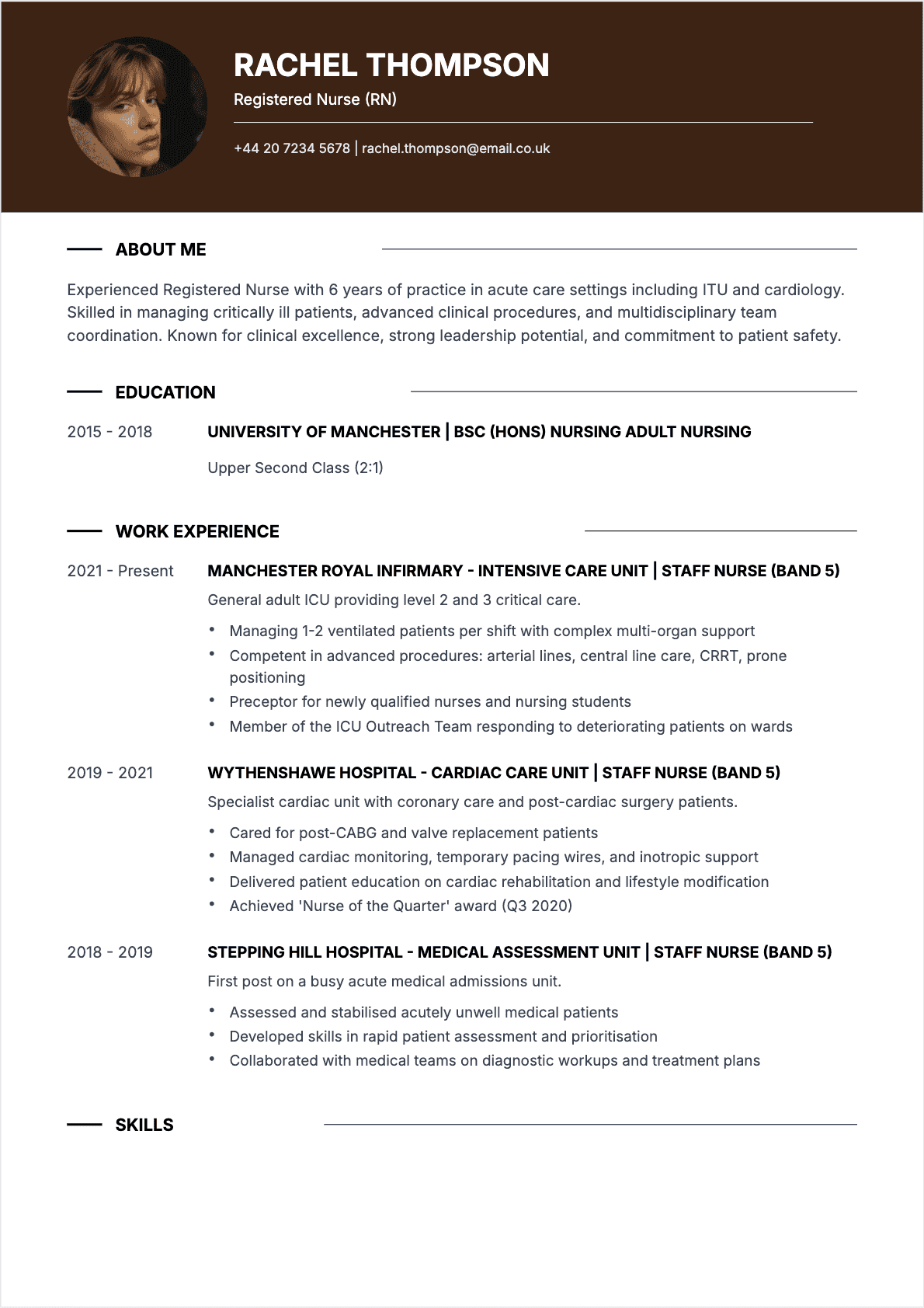
Nurse Resume Templates
8 Templates available
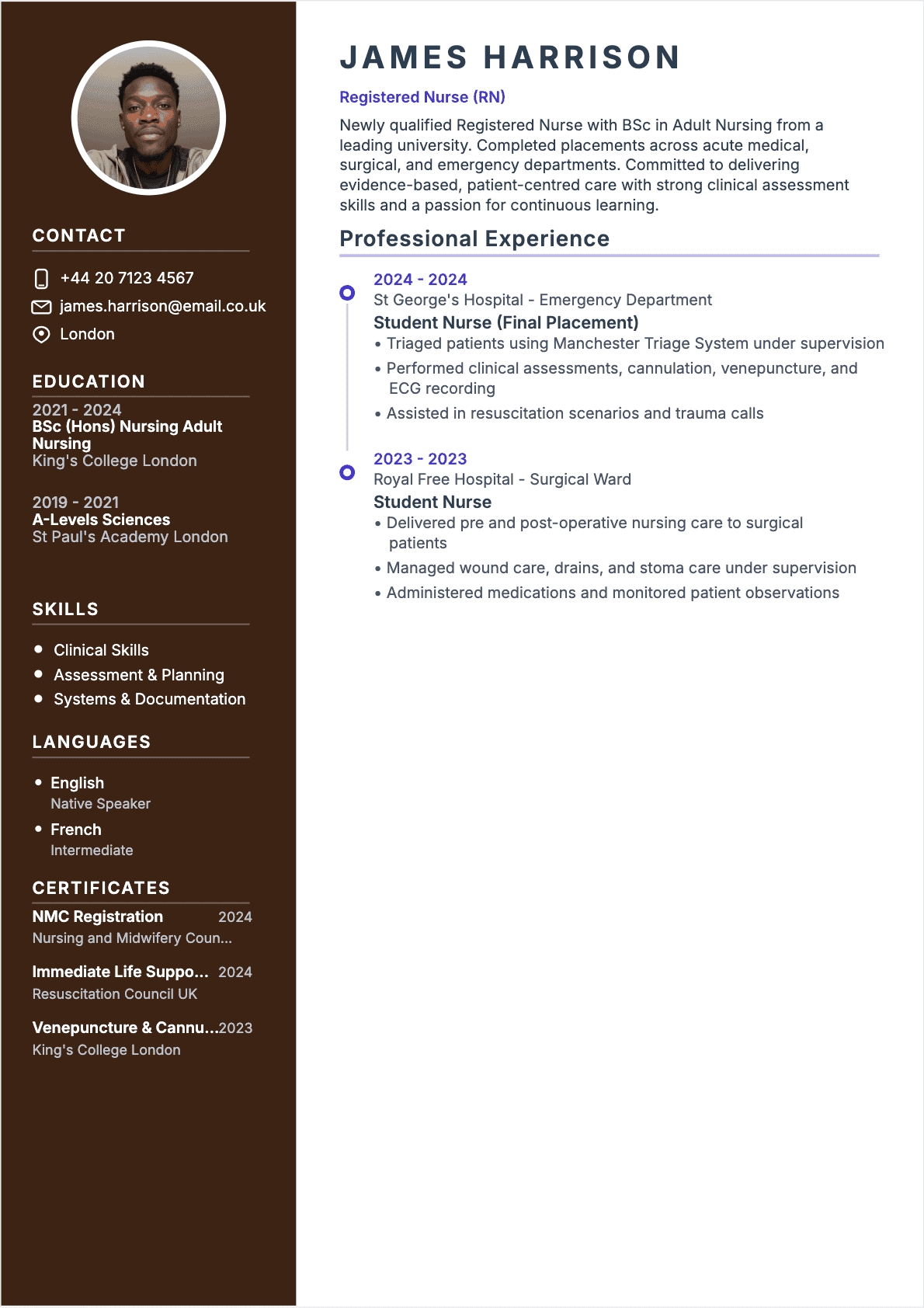
Resume Nurse Junior
Nurse resume template for Junior profile
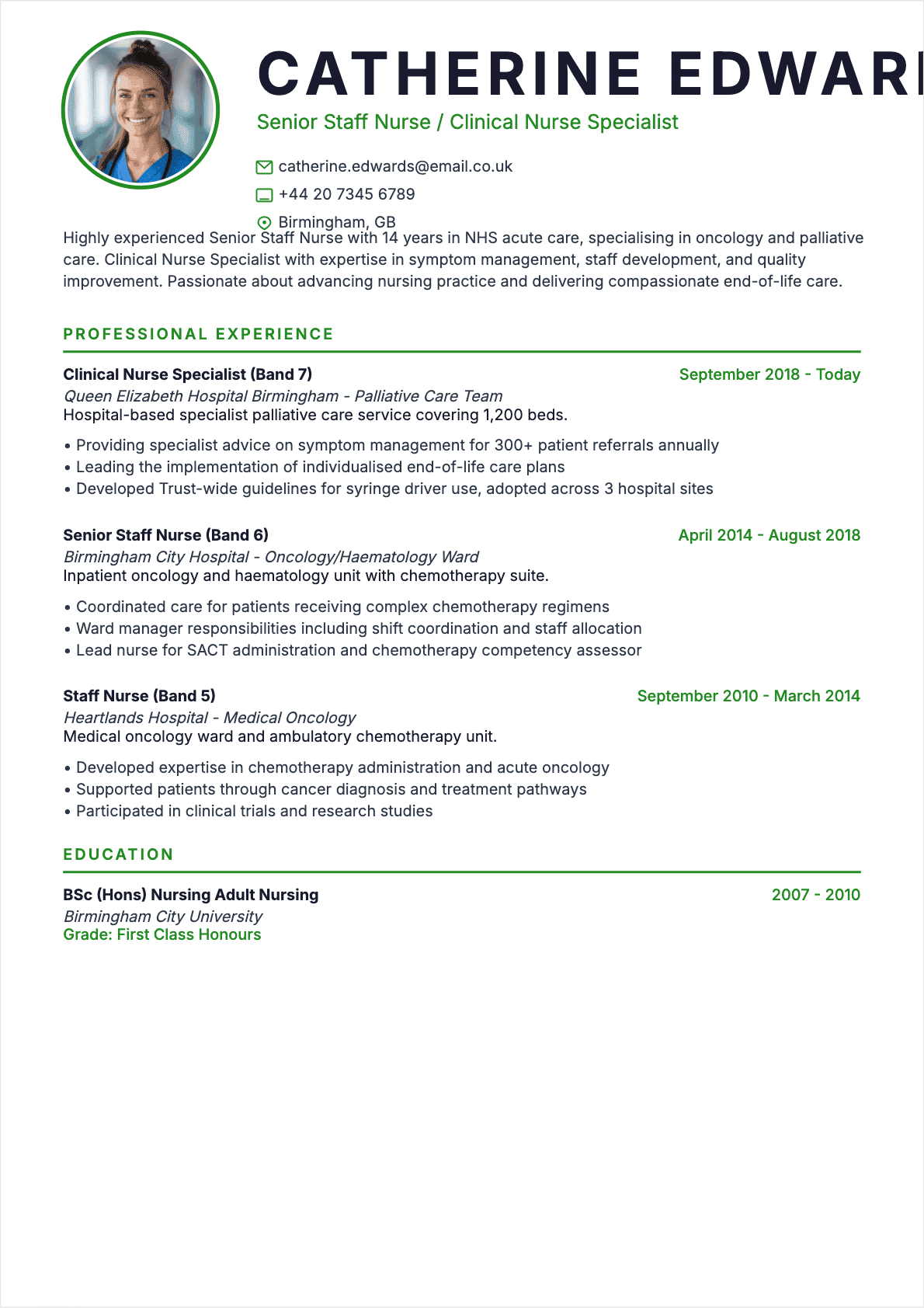
Resume Nurse Senior
Nurse resume template for Senior profile
Resume Nurse Confirmé
Nurse resume template for Confirmé profile
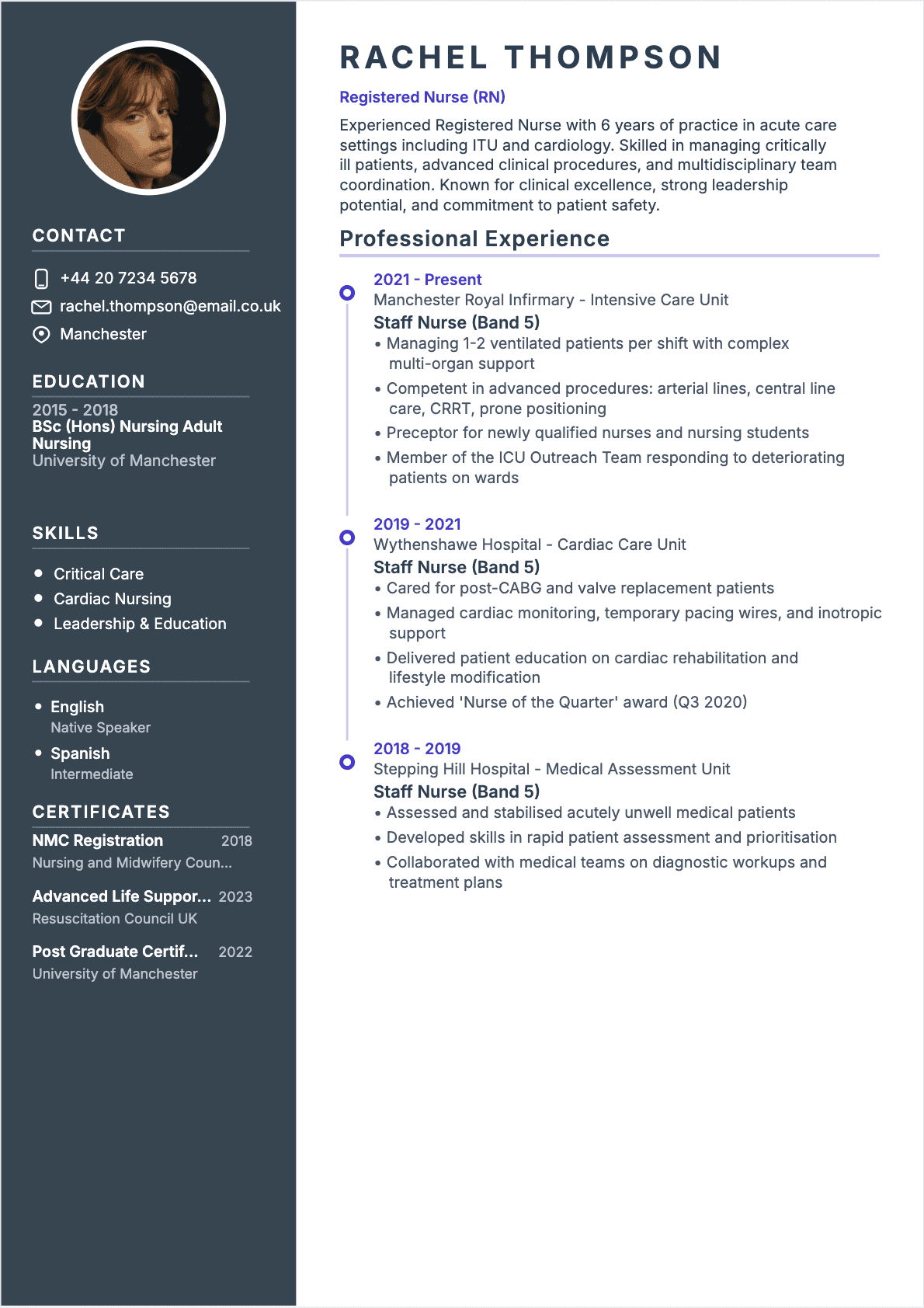
Resume Nurse Confirmé
Nurse resume template for Confirmé profile
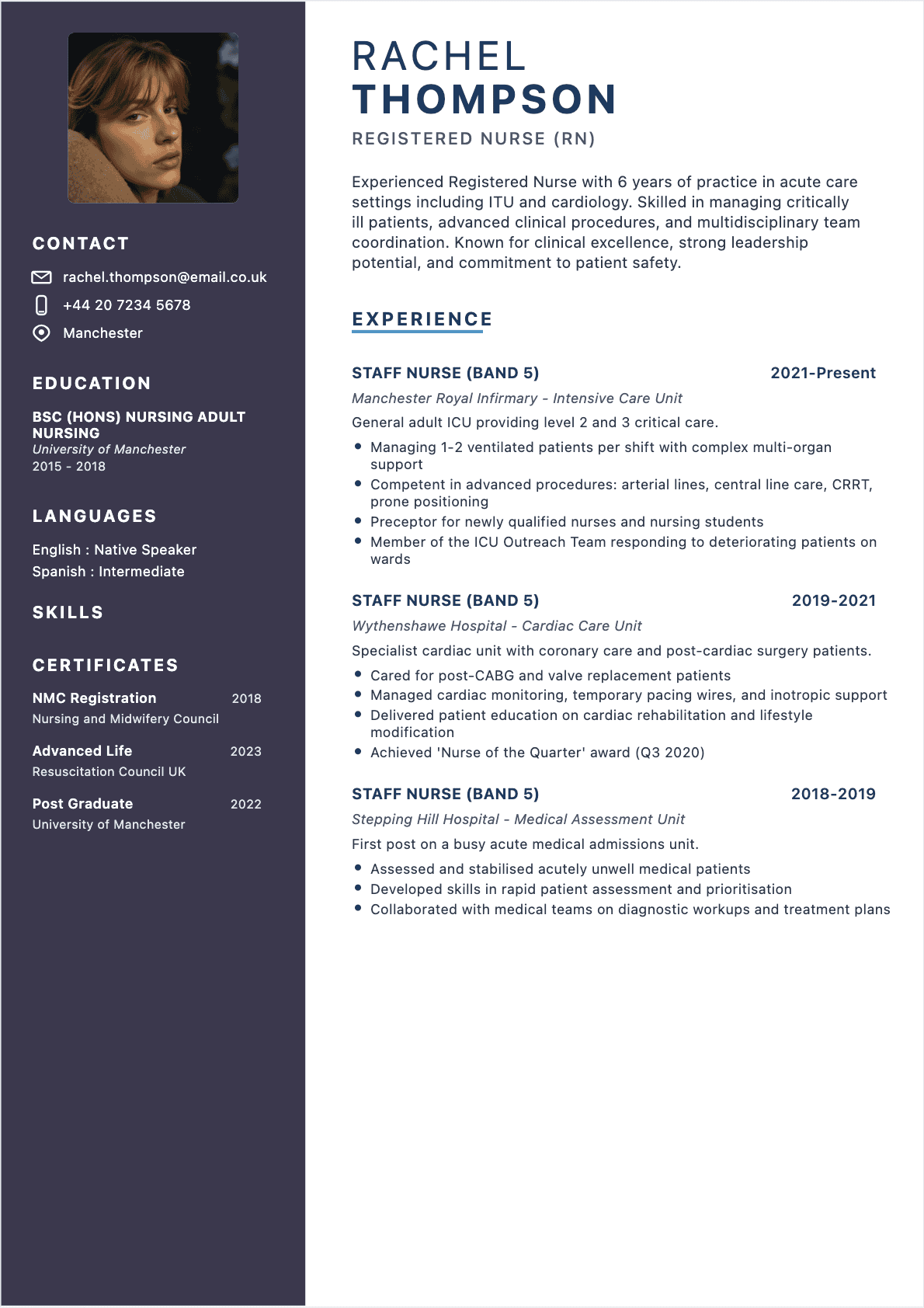
Resume Nurse Confirmé
Nurse resume template for Confirmé profile
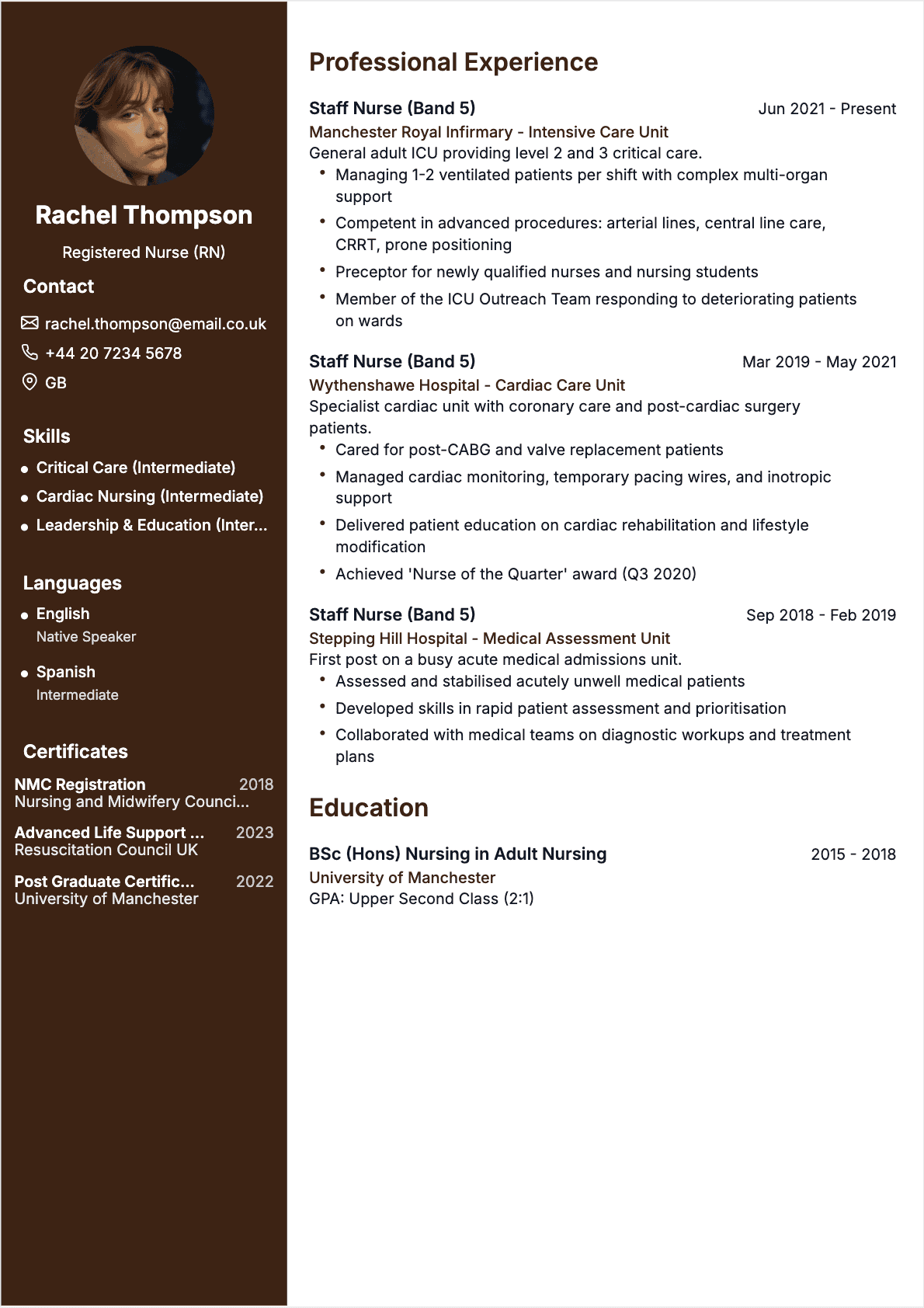
Resume Nurse Confirmé
Nurse resume template for Confirmé profile
Like one of these Nurse resume templates?
Select it, fill in your details and download your resume as PDF.
Nurse Resume Examples
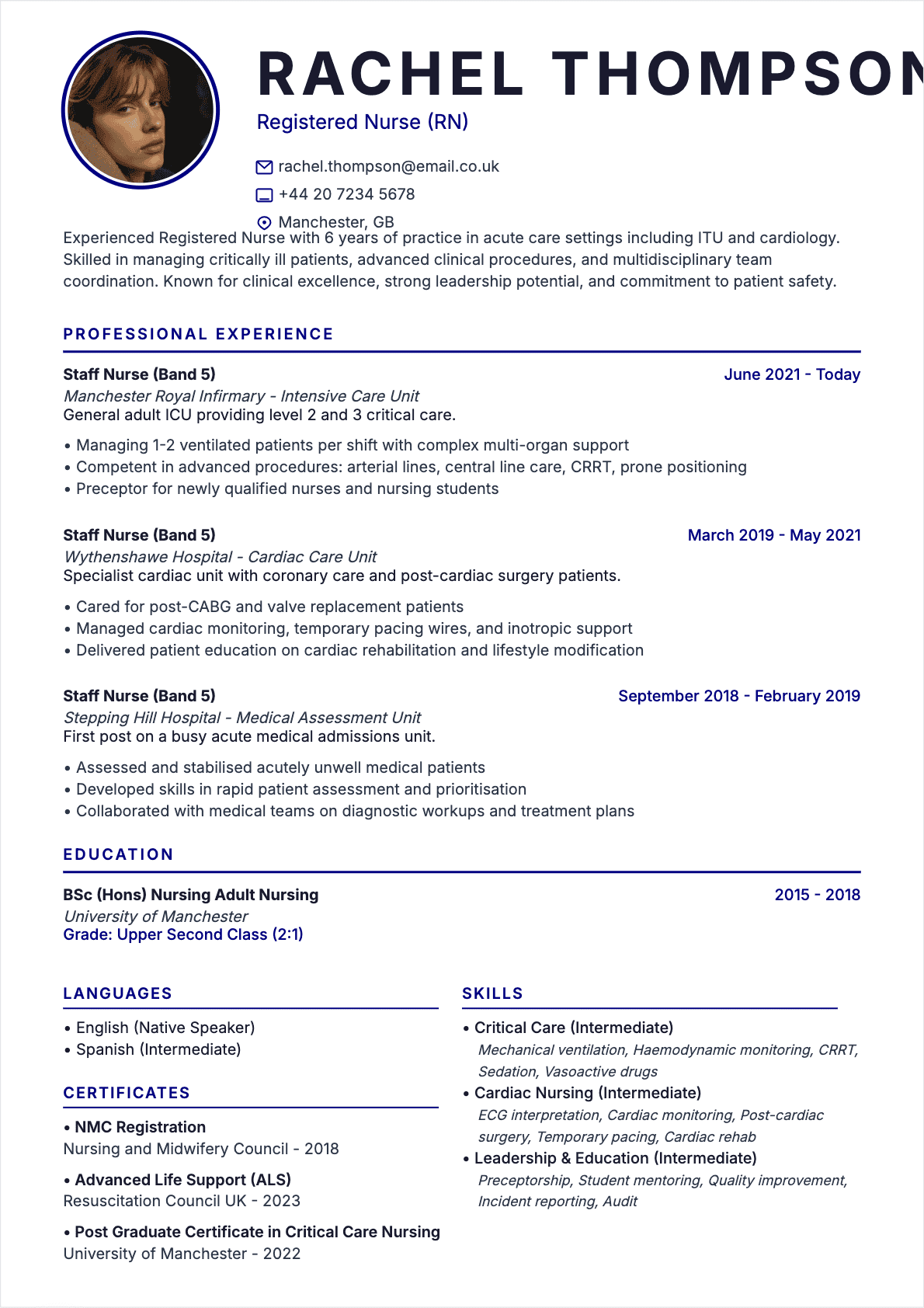
Rachel Thompson
Registered Nurse (RN)
rachel.thompson@email.co.uk
+44 20 7234 5678
Manchester, GB
Experienced Registered Nurse with 6 years of practice in acute care settings including ITU and cardiology. Skilled in managing critically ill patients, advanced clinical procedures, and multidisciplinary team coordination. Known for clinical excellence, strong leadership potential, and commitment to patient safety.
Work Experience
Staff Nurse (Band 5)
Manchester Royal Infirmary - Intensive Care Unit
- ●Managing 1-2 ventilated patients per shift with complex multi-organ support
- ●Competent in advanced procedures: arterial lines, central line care, CRRT, prone positioning
- ●Preceptor for newly qualified nurses and nursing students
Staff Nurse (Band 5)
Wythenshawe Hospital - Cardiac Care Unit
- ●Cared for post-CABG and valve replacement patients
- ●Managed cardiac monitoring, temporary pacing wires, and inotropic support
- ●Delivered patient education on cardiac rehabilitation and lifestyle modification
Staff Nurse (Band 5)
Stepping Hill Hospital - Medical Assessment Unit
- ●Assessed and stabilised acutely unwell medical patients
- ●Developed skills in rapid patient assessment and prioritisation
- ●Collaborated with medical teams on diagnostic workups and treatment plans
Education
BSc (Hons) Nursing
University of Manchester
Skills
Languages
English — Native Speaker
Spanish — Intermediate
Certifications
NMC RegistrationNursing and Midwifery Council
Advanced Life Support (ALS)Resuscitation Council UK
Post Graduate Certificate in Critical Care NursingUniversity of Manchester
Nurse role overview
Nursing is a demanding healthcare profession that combines clinical expertise with compassionate patient care. As a registered nurse, you'll assess patient conditions, administer medications and treatments, monitor vital signs, and coordinate care plans with physicians and other healthcare professionals. The role requires both technical medical knowledge and the ability to communicate effectively with patients and their families during vulnerable moments.
Your daily responsibilities vary significantly based on your specialty and work environment. Hospital nurses might rotate between day and night shifts in fast-paced emergency departments or intensive care units, while community nurses visit patients in their homes to provide ongoing care management. Regardless of setting, you'll document patient information meticulously, respond to medical emergencies, and advocate for patient needs within the healthcare system.
Career progression in nursing offers multiple pathways. Many nurses start in general medical-surgical units before specializing in areas like pediatrics, oncology, or critical care. With additional education, you can advance to nurse practitioner roles with prescribing authority, become a clinical nurse specialist, move into nurse management positions, or transition to education and research. Some nurses also pursue parallel careers in healthcare consulting, medical device companies, or health insurance organizations.
Salary ranges in the United States reflect experience and specialization. Entry-level registered nurses typically earn $58,000-$68,000 annually, while mid-career nurses with 5-10 years of experience average $72,000-$88,000. Senior nurses and those in specialized roles like nurse anesthetists or nurse practitioners can earn $95,000-$135,000 or more, particularly in high-cost urban areas or critical shortage specialties.
Typical daily tasks include:
- Assessing patient conditions through physical examinations, reviewing medical histories, and monitoring vital signs throughout shifts
- Administering medications, IV therapies, and treatments according to physician orders while monitoring for adverse reactions
- Documenting patient information, treatment responses, and care activities in electronic health record systems
- Collaborating with physicians, therapists, social workers, and other team members to coordinate comprehensive care plans
- Educating patients and families about diagnoses, medications, post-discharge care instructions, and disease management strategies
- Responding to medical emergencies, changes in patient status, and urgent care needs during shifts
Essential skills for a Nurse resume
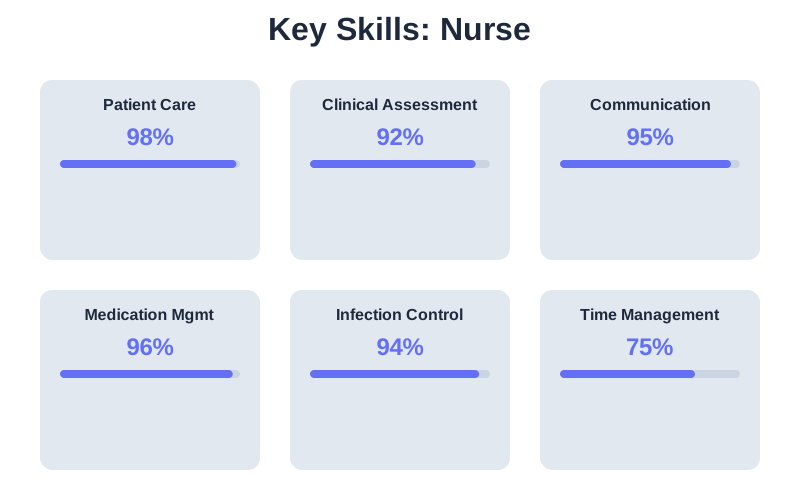
Your nursing resume must demonstrate both clinical competencies and interpersonal abilities. Healthcare recruiters scan for specific technical skills that match their unit needs while also evaluating whether you can handle the emotional and communication demands of patient care. The right balance of hard and soft skills signals that you're both clinically competent and able to thrive in team-based healthcare environments.
For ATS optimization, include exact skill names from the job posting, particularly electronic health record systems (Epic, Cerner, Meditech), specific clinical certifications (ACLS, PALS, BLS), and specialty areas. Many healthcare systems use applicant tracking software that filters for these precise terms before human recruiters see your application.
Critical nursing skills to highlight:
- Clinical assessment and diagnosis - Ability to recognize subtle changes in patient conditions, interpret symptoms, and escalate concerns appropriately saves lives and prevents complications
- Medication administration and pharmacology - Safe medication practices, dosage calculations, and understanding drug interactions are fundamental to preventing medical errors
- Electronic Health Records (EHR) proficiency - Experience with Epic, Cerner, or other major systems demonstrates you can document efficiently and access critical patient information quickly
- IV therapy and venipuncture - Technical competence in vascular access, from peripheral IVs to central line management, is essential in most acute care settings
- Patient education and health literacy - Translating complex medical information into understandable terms helps patients manage conditions and reduces readmission rates
- Critical thinking and clinical judgment - Making sound decisions under pressure, prioritizing multiple competing demands, and anticipating patient needs separates competent nurses from exceptional ones
- Wound care and infection control - Proper technique prevents hospital-acquired infections and promotes healing, directly impacting patient outcomes and facility metrics
- Telemetry and cardiac monitoring - Interpreting rhythm strips and recognizing dangerous arrhythmias is crucial in progressive care and critical care environments
- Crisis intervention and de-escalation - Managing agitated patients, substance withdrawal, and psychiatric emergencies safely protects both patients and staff
- Interdisciplinary collaboration - Working effectively with physicians, therapists, case managers, and support staff ensures coordinated care and smooth patient flow
- Time management and prioritization - Balancing care for multiple patients with varying acuity levels while completing documentation requires exceptional organizational skills
- Cultural competence and empathy - Providing respectful, individualized care to diverse patient populations improves satisfaction scores and health outcomes
How to write a Nurse resume step by step
1. Start with a targeted professional summary
Write 3-4 sentences that highlight your nursing specialty, years of experience, and key clinical strengths. Include specific patient populations you've served and measurable outcomes when possible. Instead of 'Dedicated nurse with excellent patient care skills,' write 'Registered Nurse with 6 years in medical-surgical and telemetry units, managing patient loads of 5-7 acute care patients per shift. Reduced medication errors by 34% through implementation of double-check protocols and staff education initiatives.'
2. List your nursing licenses and certifications prominently
Create a dedicated credentials section immediately after your summary or contact information. Include your RN license with state and number, BLS/ACLS/PALS certifications with expiration dates, and specialty certifications like CCRN or CEN. Recruiters need to verify these immediately, and many ATS systems search specifically for license numbers and certification acronyms.
3. Quantify your clinical experience with specific metrics
Transform vague responsibilities into achievement statements with numbers. Instead of 'Provided care to cardiac patients,' write 'Managed post-operative care for 200+ cardiac surgery patients annually, achieving 98% patient satisfaction scores and zero central line infections over 18-month period.' Include patient ratios, bed capacity, admission volumes, or quality metrics that demonstrate your workload and outcomes.
4. Highlight specialty-specific technical skills
Create a skills section that mirrors the job posting's requirements. If applying to an ICU, emphasize ventilator management, hemodynamic monitoring, and vasoactive drip titration. For an outpatient clinic, focus on patient education, chronic disease management, and care coordination. Match your skills to the specific unit's needs rather than listing every skill you've ever used.
5. Include relevant clinical rotations for new graduates
If you have less than two years of experience, dedicate space to your clinical rotations with specific details. Write 'Completed 180-hour critical care rotation at Metro General Hospital, caring for ventilated patients, managing multiple IV drips, and participating in 12 rapid response calls' rather than simply listing 'Critical care clinical rotation.' This demonstrates hands-on experience even without paid employment.
6. Demonstrate continuous professional development
Add a section for additional training, workshops, or specialized courses. Include hospital-specific training like trauma certification, stroke care, or sepsis protocols. Mention preceptor experience, committee participation, or quality improvement projects. These details show you're engaged in your profession beyond basic job duties.
7. Use action verbs specific to nursing practice
Begin bullet points with strong verbs that reflect nursing work: assessed, administered, monitored, educated, collaborated, advocated, triaged, stabilized, implemented, coordinated. Avoid overused generic verbs like 'responsible for' or 'helped with' that don't convey your actual clinical actions.
8. Tailor your resume for each application
Adjust your professional summary and top skills to match each job posting. If a position emphasizes patient education and discharge planning, move those experiences higher in your bullet points. If it's a fast-paced ER role, emphasize your triage experience and ability to handle high patient volumes. This customization helps you pass ATS filters and shows recruiters you understand their specific needs.
Before and after examples:
Weak: 'Took care of patients on medical floor. Gave medications and helped doctors.'
Strong: 'Provided comprehensive nursing care for 32-bed medical-surgical unit with average daily census of 28 patients. Administered medications to 6-patient assignment, collaborated with interdisciplinary team on daily rounds, and reduced fall rates by 22% through hourly rounding implementation.'
Weak: 'Good at starting IVs and working with families.'
Strong: 'Achieved 94% first-stick IV success rate across diverse patient populations including geriatric and oncology patients. Conducted family education sessions for 40+ newly diagnosed diabetic patients, resulting in 15% reduction in 30-day readmissions.'
Common mistakes on Nurse resumes
Listing duties instead of demonstrating impact
Many nurses simply describe their job responsibilities rather than showing what they accomplished. Writing 'Responsible for patient care on 28-bed unit' tells recruiters nothing about your capabilities. Instead, demonstrate your effectiveness: 'Managed care for up to 7 acute patients per shift on high-acuity medical-surgical unit, maintaining 96% patient satisfaction scores while mentoring 4 new graduate nurses.' Recruiters know what nurses do—they want to know how well you do it.
Omitting or burying critical certifications
Your RN license number and certifications should be immediately visible, not hidden at the bottom of page two. Some nurses forget to include expiration dates or list expired certifications, which raises red flags during verification. Create a clear 'Licenses & Certifications' section near the top with full details: 'RN License #123456 (California, expires 2027), BLS (AHA, expires 06/2026), ACLS (AHA, expires 09/2026), CCRN (AACN, expires 12/2027).'
Using inconsistent or unclear job titles
Healthcare organizations use varying titles for similar roles—Staff Nurse, Registered Nurse, RN II, Clinical Nurse. Always include your official title, but add clarification if needed: 'Clinical Nurse II (Charge Nurse Role)' or 'Staff RN - Pediatric Emergency Department.' This prevents confusion about your actual level and specialty, especially when applying across different healthcare systems.
Failing to specify clinical settings and patient populations
Writing 'Worked in hospital' is meaningless in nursing. Recruiters need to know: What type of unit? What patient acuity? What age groups? Be specific: 'Provided care in 16-bed surgical ICU serving post-operative cardiac, thoracic, and vascular surgery patients' or 'Delivered primary care in community health clinic serving predominantly Spanish-speaking pediatric population.' This specificity helps recruiters assess your fit for their particular environment.
Neglecting to address employment gaps
Nursing careers often include breaks for family care, travel nursing assignments, or additional education. Unexplained gaps create concerns about license status or skill currency. Address them briefly: 'Career break for family care (maintained active RN license, completed 30 CE hours)' or 'Travel nursing assignments across 6 facilities (details available upon request).' This transparency prevents assumptions and shows you remained professionally engaged.
Overloading with medical jargon or abbreviations
While clinical terminology demonstrates expertise, excessive abbreviations confuse ATS systems and non-clinical HR screeners who conduct initial reviews. Spell out acronyms on first use: 'Advanced Cardiac Life Support (ACLS)' or 'peripherally inserted central catheter (PICC) line management.' Balance clinical credibility with readability for various audiences in the hiring process.
Ignoring electronic health record systems
Many nurses assume clinical skills matter more than technical proficiency, but EHR experience is often a dealbreaker. Hospitals invest heavily in specific systems and prefer candidates who can start documenting efficiently immediately. Always list your EHR experience prominently: 'Epic (5 years - Inpatient modules including Flowsheets, MAR, Care Plans)' or 'Cerner PowerChart (3 years - ED documentation and order entry).' This single detail can move your resume to the top of the pile.
Nurse resume trends in 2026
Healthcare staffing shortages continue to reshape nursing recruitment in 2026, creating a candidate-driven market where nurses have increased negotiating power. Hospitals and health systems are emphasizing retention alongside recruitment, which means they're scrutinizing resumes not just for clinical skills but for indicators of long-term commitment and cultural fit. Resumes that demonstrate stability, professional growth within organizations, and engagement in workplace improvement initiatives stand out more than frequent job-hoppers, even in a profession where mobility has traditionally been common.
Telehealth and remote patient monitoring skills have transitioned from pandemic necessities to permanent competencies. Nurses who can demonstrate experience with virtual visits, remote triage, telephonic care coordination, or monitoring platform management have expanded opportunities beyond traditional bedside roles. If you've conducted video visits, managed chronic disease patients through remote monitoring, or provided telephonic nursing advice, highlight these experiences prominently. Many health systems now offer hybrid nursing roles that combine in-person and virtual care, particularly in specialties like diabetes education, case management, and post-discharge follow-up.
Artificial intelligence and clinical decision support tools are augmenting nursing practice rather than replacing it. Smart EHR systems now offer sepsis alerts, fall risk predictions, and medication interaction warnings that nurses must interpret and act upon. Resumes that mention experience with predictive analytics, clinical decision support systems, or AI-assisted documentation tools signal adaptability to evolving technology. Emphasize your ability to combine clinical judgment with technology-generated insights: 'Utilized Epic's sepsis prediction algorithm to identify at-risk patients 4 hours earlier on average, contributing to 28% reduction in sepsis-related mortality on unit.'
Mental health and behavioral health competencies have become essential across all nursing specialties, not just psychiatric settings. The ongoing mental health crisis means medical-surgical nurses, ER nurses, and even outpatient nurses regularly encounter patients with substance use disorders, suicidal ideation, or acute psychiatric symptoms. Certifications in crisis intervention, trauma-informed care, or mental health first aid strengthen resumes significantly. If you've received training in de-escalation techniques, motivational interviewing, or substance abuse screening, include these skills even if you're not applying to psychiatric positions.
Health equity and social determinants of health have moved from abstract concepts to practical nursing responsibilities. Employers want nurses who understand how housing instability, food insecurity, and transportation barriers affect patient outcomes. Resumes that demonstrate cultural competence, language skills, community health experience, or participation in health equity initiatives appeal to organizations focused on reducing disparities. Mention specific populations you've served, languages you speak, or community partnerships you've participated in: 'Collaborated with community food bank to connect 50+ diabetic patients with nutrition resources, reducing A1C levels by average of 1.2 points.'
Flexible work arrangements are now standard considerations in nursing recruitment. While patient care requires physical presence, many organizations offer self-scheduling, compressed workweeks, or flexible shift options to improve retention. If you're open to various schedules, mention this flexibility in your resume or cover letter. Conversely, if you're seeking specific arrangements like three 12-hour shifts or weekend-only positions, state these preferences clearly to avoid mismatched interviews. Travel nursing experience also carries more weight now, as it demonstrates adaptability and ability to quickly integrate into new environments.
Specialty certifications and advanced credentials differentiate candidates in competitive markets. With many qualified applicants for desirable positions, certifications like CCRN, CEN, OCN, or specialty-specific credentials from organizations like AACN or ENA provide measurable proof of expertise. If you're pursuing certification, include this on your resume: 'CCRN certification in progress (exam scheduled March 2026).' Many employers offer sign-on bonuses or pay differentials for certified nurses, making these credentials valuable both for getting interviews and negotiating compensation.
Further reading:
Frequently asked questions
Find answers to the most frequently asked questions.
CV stands for curriculum vitae. In nursing, a CV is typically longer and more detailed than a resume, often used for academic, research, teaching, or leadership roles. A resume is usually 1–2 pages and focuses on clinical work experience, key skills, and outcomes. In U.S. hospitals, most nurse positions ask for a resume.
Start with license and certifications, then a resume summary with your years of experience, unit type, and measurable outcomes. In the work experience section, add ratios, patient population, and 3–6 quantified achievements per role. Include EHR tools like Epic or Cerner, plus core skills (SBAR, infection prevention). Match your wording to the job description.
Most clinical nursing jobs use a resume, especially for bedside roles in hospitals, clinics, and home health. A CV is more common for nurse educator roles, research positions, grant-funded programs, or academic settings. If a job posting doesn’t specify, submit a resume template that is ATS-friendly and keep it focused on clinical impact and certifications.
Not exactly. A resume is a concise marketing document focused on relevant professional experience and key skills for a specific role. A CV is a comprehensive record that can include publications, presentations, research, teaching, and detailed training history. For registered nurse hiring, the resume is usually the default unless the employer requests a CV.
For new graduates and new nurses, a one-page resume is often enough if it includes clinical rotations, certifications, and a focused skills section. For experienced nurses, a two-page resume is acceptable when you have multiple roles, specialty credentials (CCRN, CMSRN), precepting, and quality projects. Keep every line relevant to the role.
Yes, it’s standard to list your name followed by credentials (for example, “Taylor Jordan, RN, BSN”) as long as you are currently licensed. Also add a separate license line with state, license number if requested, and expiration. This helps applicant tracking and recruiters verify eligibility quickly, especially for multi-state or compact license hiring.
Your career deserves a better resume
With CVtoWork, select a template, fill in the fields and download your resume as PDF.
Start creating