CV Physical Therapist : Physical Therapist Resume 2026
Use this guide to write a physical therapist resume that highlights patient outcomes, physical therapy specialties, and measurable clinical impact. Includes template ideas, skills, and cover letter guidance for faster shortlisting.
Key Takeaways
Physical therapists compete in a market where hiring managers scan a resume in under 10 seconds and expect proof of outcomes, not just tasks. In the U.S., the Bureau of Labor Statistics projects about 13% growth for physical therapy roles through 2032, and many clinics target productivity benchmarks of 10–14 patient visits per day in outpatient settings. That means your resume must quickly show that you can treat patients safely, document accurately, and improve functional scores.
Un bon CV de CV Physical Therapist doit démontrer :
- measurable patient outcomes (pain, function, return-to-work timelines)
- setting-specific clinical skills (acute care vs outpatient vs pediatrics)
- compliant documentation and teamwork across health care disciplines
This guide walks you through a practical structure, physical therapist resume examples, and a template mindset you can reuse for each application.
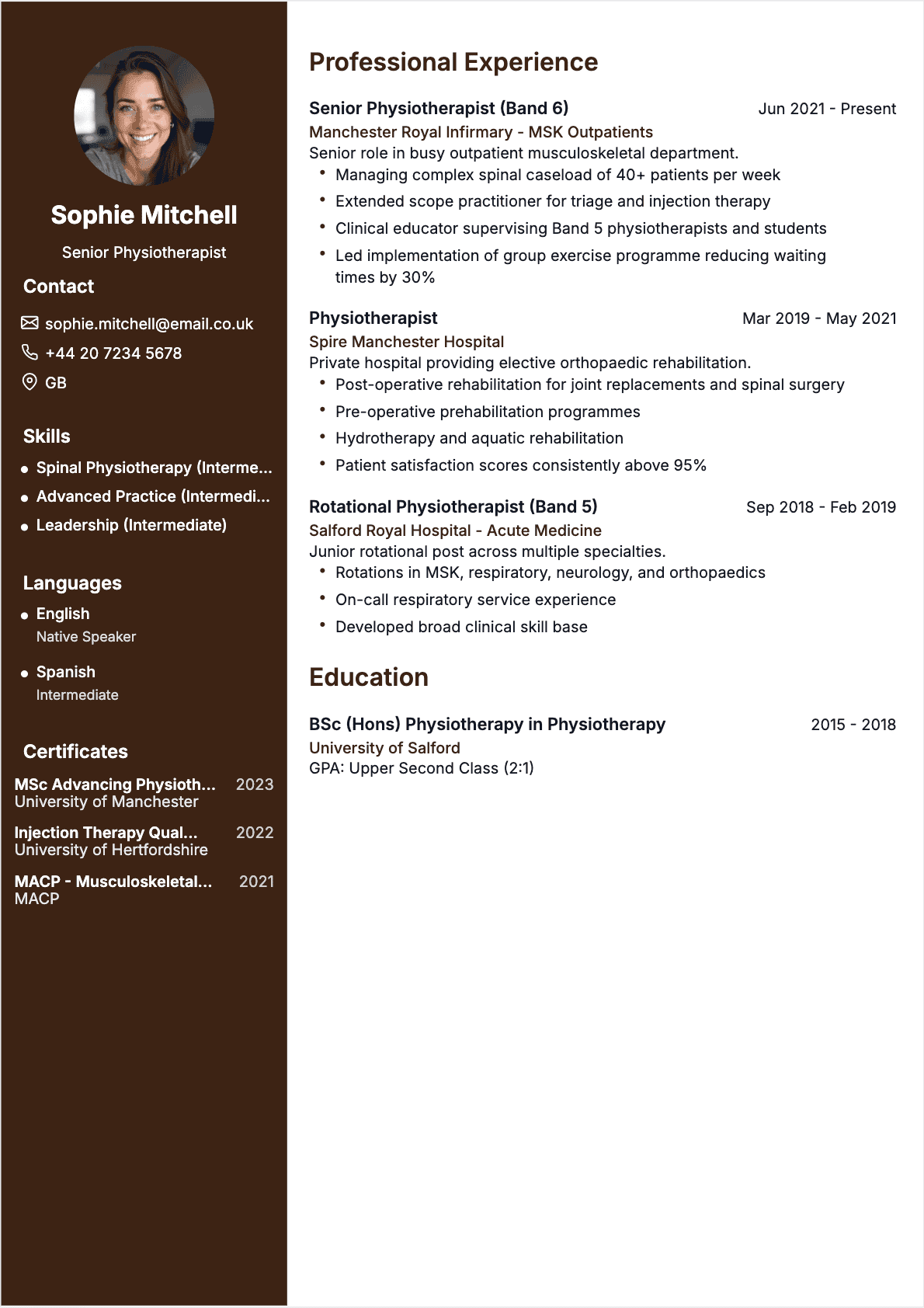
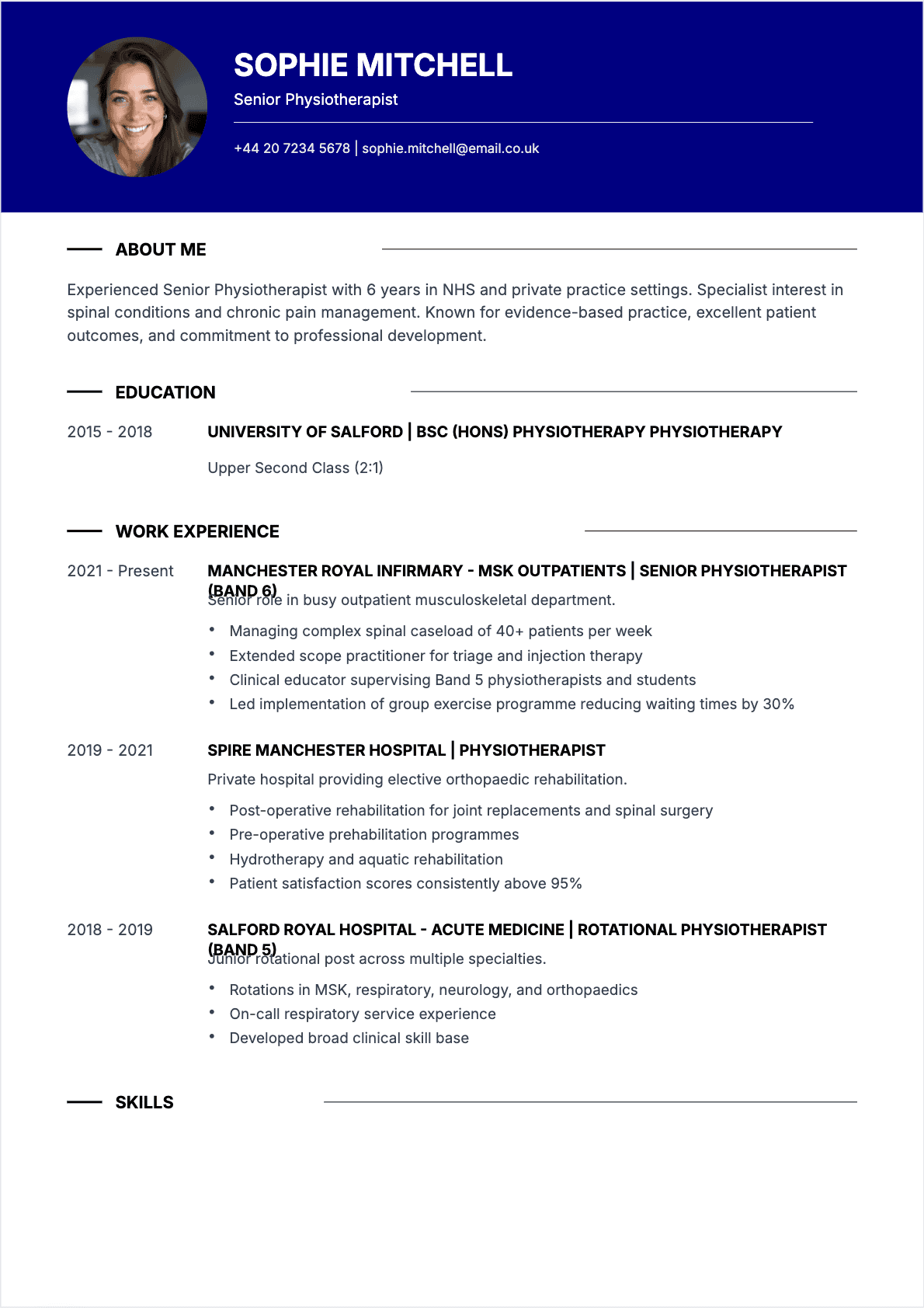
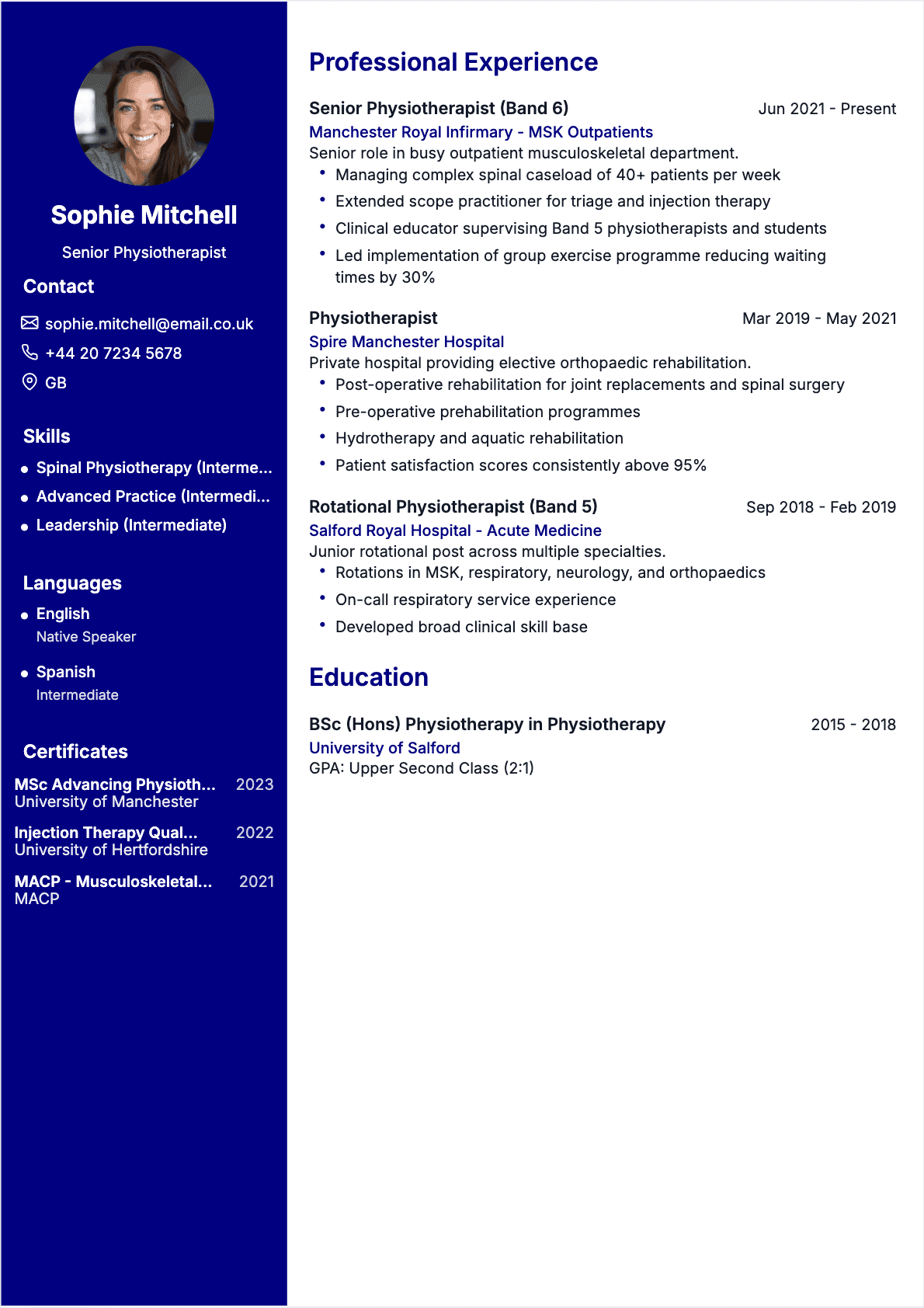
CV Examples - CV Physical Therapist
Discover our CV templates adapted to all experience levels. Each example is ATS-optimized.

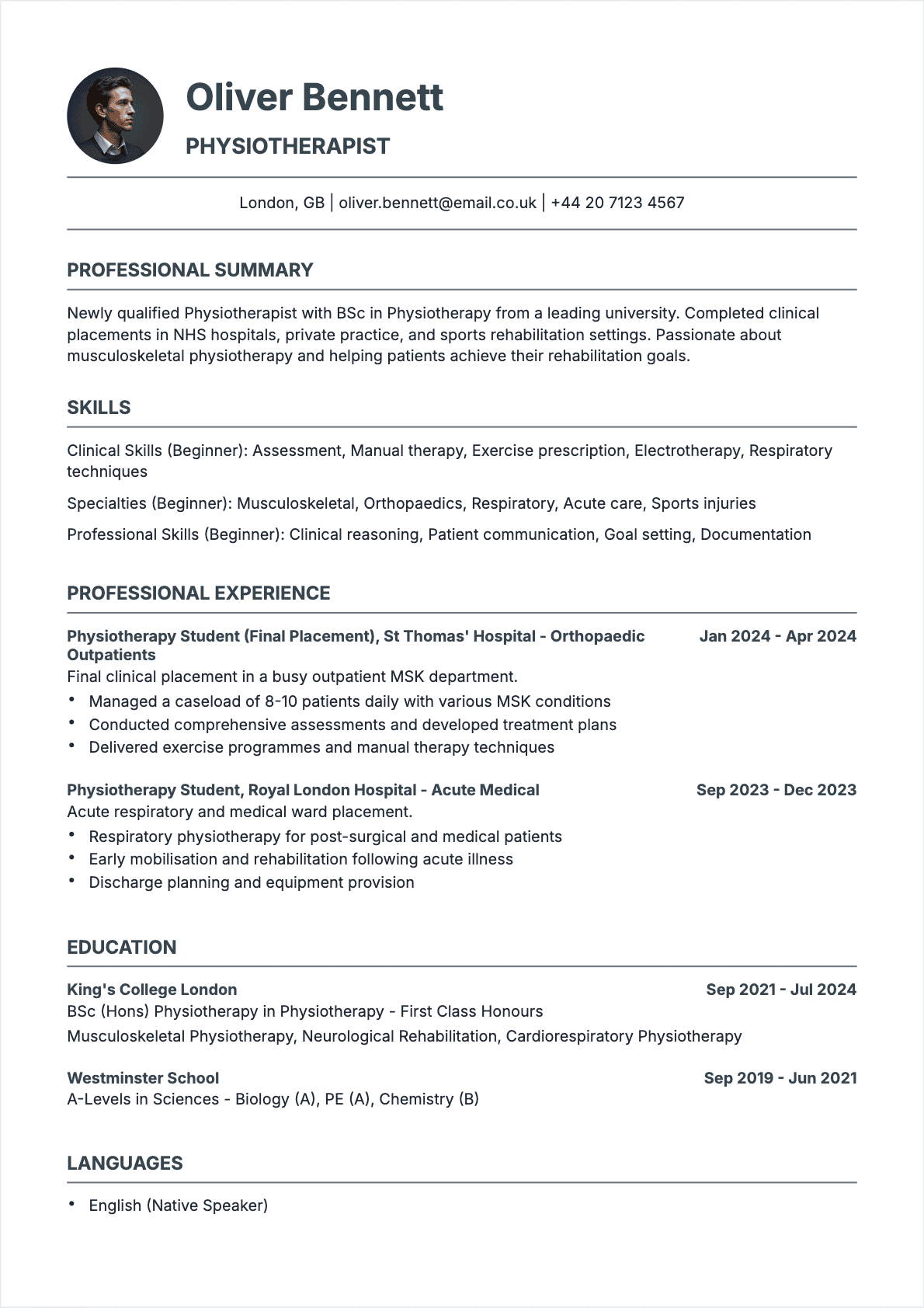
CV Physical Therapist Beginner
For recent graduate and entry-level profiles: emphasize clinical rotations, patient education, core therapeutic exercise plans, documentation accuracy, and measurable improvements using standardized outcome tools.
Utiliser
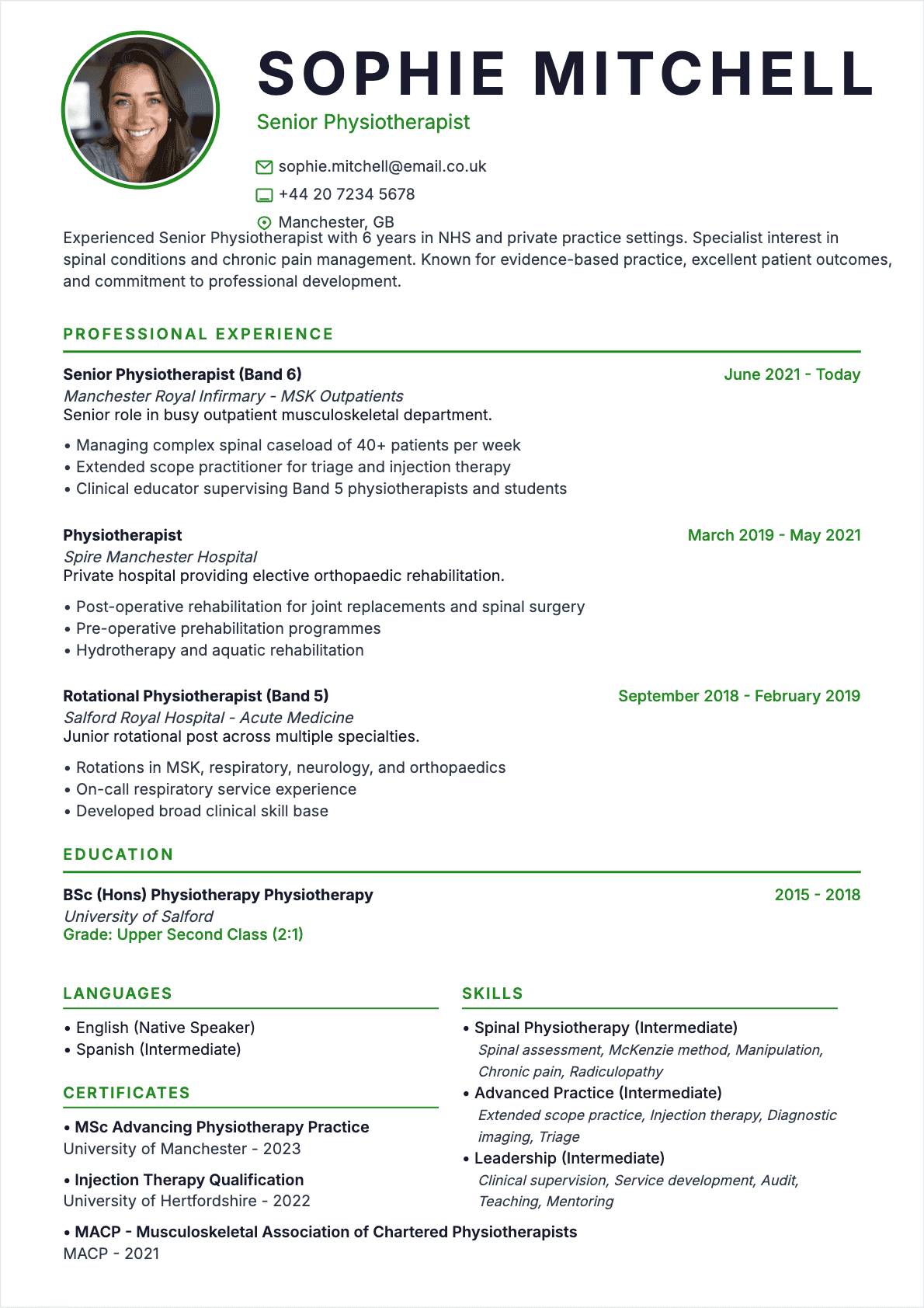
CV Physical Therapist Intermediate
For 3–7 years’ experience: highlight caseload volume, specialty populations, manual therapy techniques, injury prevention programs, EMR efficiency, and quantified patient outcomes across outpatient and acute settings.
Utiliser
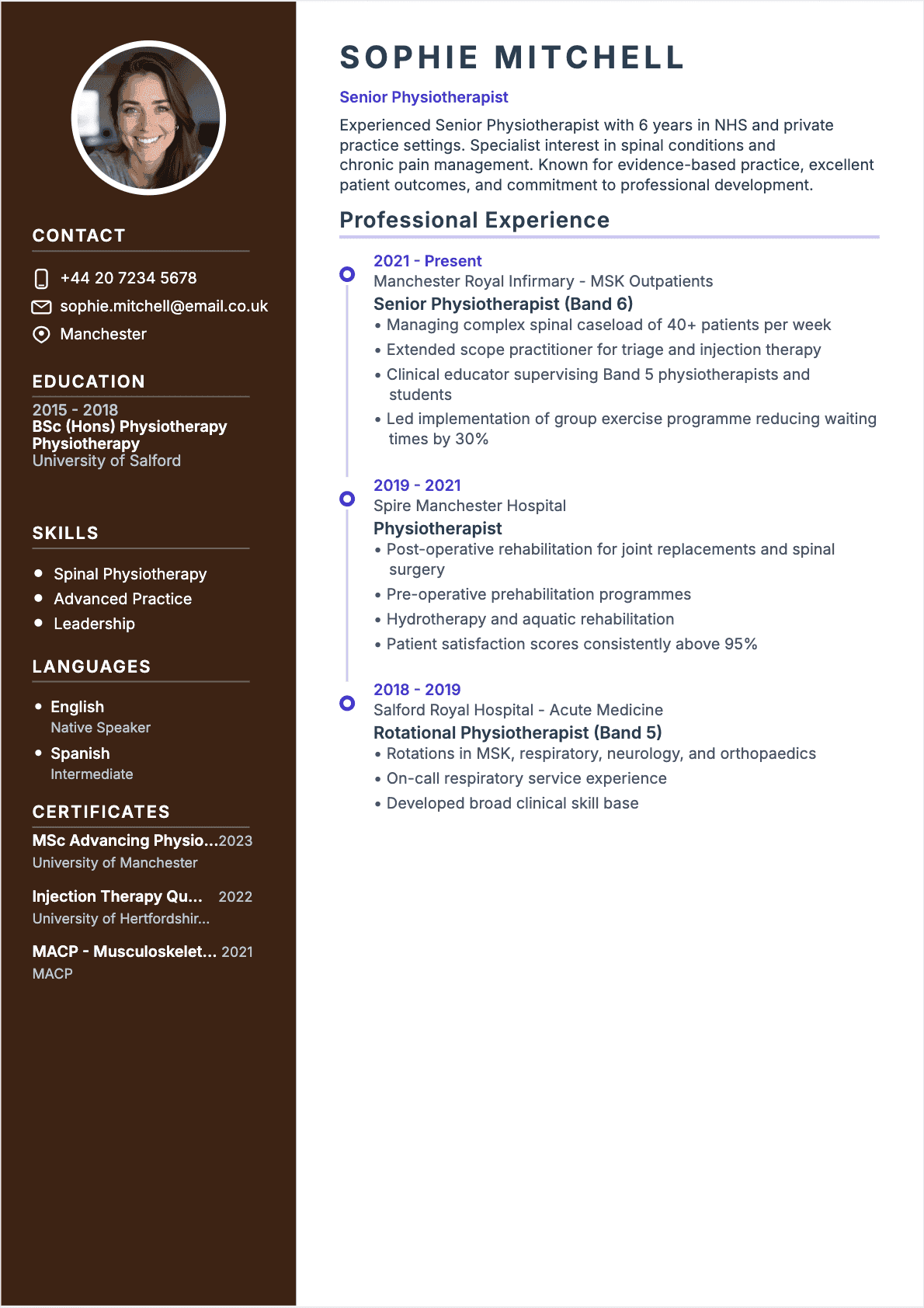
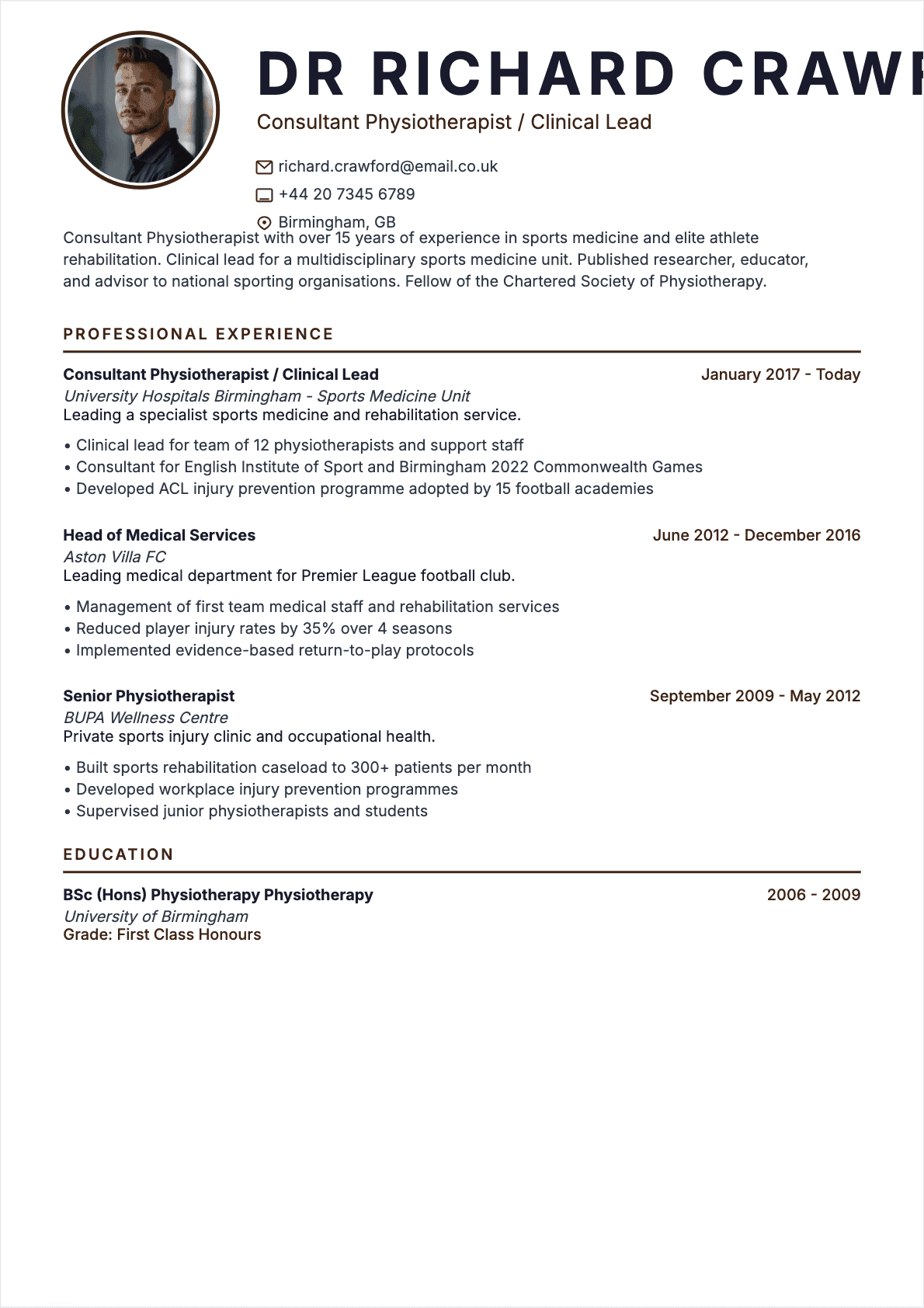
CV Physical Therapist Senior
For senior clinicians and leads: focus on service-line growth, interdisciplinary leadership, mentoring, quality metrics, payer-compliant documentation, and scalable programs that improve outcomes and throughput.
UtiliserPerfect CV Checklist - CV Physical Therapist
Check each item to ensure your CV is complete and optimized.
Professional Summary - CV Physical Therapist
The professional summary is the first thing recruiters see. It should summarize your profile in a few impactful lines.
“Licensed PT with 6+ years in outpatient orthopedics and sports rehab, managing 12–14 visits/day and improving LEFS scores by 18 points on average within 8 weeks. Skilled in differential diagnosis, therapeutic exercise, and manual therapy techniques; advanced EMR documentation in WebPT and Epic with <2% claim denials.”
“Motivated, dynamic, passionate physical therapist available immediately, ready to help patients and work hard in any clinic.”
Why is it effective?
Le bon exemple est efficace car il :
- states licensure, years, and setting (outpatient orthopedics) to anchor credibility in the field of physical therapy
- includes quantified patient outcomes (LEFS +18 points) rather than generic duties
- shows operational value (12–14 visits/day, <2% denials) aligned with health care expectations
- names real tools (WebPT, Epic) to reassure on documentation and workflow
Le mauvais exemple échoue car il :
- uses clichés without evidence of skill or impact
- provides no setting, specialty, or patient population
- omits metrics, outcomes, and tools
- doesn’t align with a job description or show what makes you different
Professional experience examples
Here are examples of professional experiences. Note how results are quantified.
Physical Therapist (Outpatient Orthopedics)
Select Physical Therapy, Austin, TX
High-volume outpatient clinic with 9 PTs and 4 PTAs providing physical therapy services for post-op, spine, and sports injuries. Managed evaluation-to-discharge care, coordinated with physicians, and supported clinic KPIs on outcomes and documentation quality.
Key Achievements
Key skills for your resume
Here are the technical and soft skills most sought after by recruiters.
Hard skills to include on a physical therapist resume
Technical Skills
- Orthopedic and neuro musculoskeletal assessment (ROM/MMT, special tests)
- Treatment planning and progression (plan of care, discharge criteria)
- WebPT (outpatient EMR and documentation)
- Epic (acute care documentation and orders)
- Therapeutic exercise programming (strength, mobility, return-to-sport)
- Manual therapy techniques (joint mobilization, soft tissue mobilization)
- Gait training and assistive device prescription
- Outcome measurement (LEFS, Oswestry, DASH, Berg, TUG)
Soft skills that hiring managers notice
Soft Skills
- Clear patient education and expectation-setting
- Clinical communication with physicians and case managers
- Prioritization under high-volume clinic flow
- De-escalation and pain-related reassurance with boundaries
- Team coordination across health care services
- Coaching mindset for adherence and home program follow-through
- Accurate handoffs and concise charting narratives
- Leadership skills in mentoring students and therapy techs
ATS Keywords to Include
ATS systems filter CVs based on specific keywords. Include these terms to maximize your chances.
ATS Tip
Click on a keyword to copy it. ATS systems filter CVs based on these exact terms.
Mots-clés importants
Hiring Sectors
Discover the most promising sectors for your career.
Outpatient orthopedic clinics
Hospitals (acute care and inpatient rehab)
Home health agencies
Skilled nursing facilities (SNF)
Sports medicine centers
Pediatric therapy clinics
Education & Degrees
For most U.S. roles, the standard education is a Doctor of Physical Therapy (doctor of physical therapy), plus passing the NPTE and holding an active state license. If you’re earlier in your career, your academic foundation matters: clinical rotations (acute care, outpatient, pediatrics), capstone projects, and relevant internships can compensate for limited independent caseload ownership.
There are also bridging and international pathways (credential evaluation + NPTE) depending on where you studied. On a resume, prioritize clinical results and setting fit over listing every course—Education should support the story your work history tells.
Recommended Degrees
- Doctor of Physical Therapy (DPT)
- Bachelor’s Degree in Kinesiology or Exercise Science
- Bachelor’s Degree in Biology or Health Sciences
- Master’s Degree in Physical Therapy (international equivalency)
- Post-professional residency (Orthopedics, Neurology, Sports)
- Fellowship training (e.g., Orthopedic Manual Physical Therapy)
Languages
Language skills can be a differentiator for physical therapists because adherence and safety depend on understanding. If you work in health care systems serving multilingual communities, bilingual communication can reduce no-shows, improve informed consent, and streamline home program coaching.
- useful in outpatient clinics with diverse communities and high patient turnover
- helpful in acute care where rapid discharge planning requires precise explanations
- valuable in pediatrics when caregivers prefer non-English communication
On a resume, present your level clearly and add context (clinical use, documentation vs conversation).
English
Native
Spanish
Proficient (clinical communication)
French
Intermediate
Recommended certifications
Certifications can be mandatory (BLS/CPR) or strong differentiators (board specialization). Include only credentials you currently hold and can verify. For some clinics, dry needling or strength and conditioning certifications are a bonus; for hospitals, acute-care readiness and safety training matter more. List certification body and status to build trust fast.
Mistakes to avoid
Listing duties instead of measurable patient outcomes
A resume that reads like a job posting (“performed evaluations,” “completed exercises”) blends into the pile. Hiring managers want evidence that your clinical reasoning improves function and that your care is efficient. Replace vague statements with outcomes tied to standardized measures and timelines, and show how you adapted the plan when progress stalled.
Toujours inclure :
- a baseline and a result (e.g., pain 7/10 to 2/10; LEFS +15)
- timeframe and volume (e.g., 8 weeks, 40 post-op knees/year)
- setting constraints (acute care, outpatient, pediatrics) and your role
Think “action + method + metric,” then add the measure you used.
Using an ATS-hostile layout or missing essential identifiers
Many clinics use an ATS before a human reads your resume. Columns, graphics, and tables can scramble your content. Also, omitting your license details forces recruiters to hunt for basic eligibility—often they won’t.
À éviter : "Creative two-column template with icons and no license number"
À privilégier : "Single-column layout with clear headings, license + NPI under your name, and consistent bullet point formatting"
The goal is scanability: the right keywords, readable dates, and fast verification.
A generic skills section that doesn’t match the setting
“Manual therapy, exercise, communication” is too broad. Your skills section should reflect relevant skills for the role and mirror the clinic’s job description. An orthopedic physical therapist should emphasize joint mobilization, return-to-sport progressions, and outcome tools; a pediatric physical therapist should emphasize caregiver coaching and developmental milestones.
À mentionner :
- patient population and specialty skills (post-op, vestibular, neuro, geriatrics)
- technical skills (EMR, outcome measures, assistive devices)
- documentation and payer compliance strengths
Skipping the cover letter or repeating the resume
A cover letter is often optional, but it’s a high-leverage way to explain fit: why this setting, why this population, and what results you typically deliver. The mistake is either not sending one at all for competitive roles, or writing a letter that repeats your resume with no specificity.
Checklist :
- mention the clinic’s focus (sports, acute care, pediatrics) and connect it to your track record
- add 2–3 quantified proof points not fully visible in bullets
- keep it to 200–300 words and mirror the posting language
Expert tips
- 1
Use a targeted resume summary : In 2–3 lines, state license, years, setting, key skills, and a quantified result. It acts as a filter for recruiters screening dozens of physical therapists.
- 2
Build bullet point evidence : Each bullet point should include method + metric (outcome measure, productivity, compliance). Avoid listing equipment unless you link it to patient outcomes.
- 3
Choose an ATS-safe template : A clean template with standard headings improves parsing. Save as PDF only if the employer allows; otherwise submit a .docx for better ATS readability.
- 4
Customize your resume to the job description : Pull 8–12 phrases from the posting (setting, populations, EMR) and integrate them naturally across summary, skills, and experience.
- 5
Show documentation and payer awareness : Mention EMR, timely notes, claim rework rate, and Medicare compliance. Clinics hire for care and rehabilitation plus operational reliability.
- 6
Add a focused cover letter : Use it to clarify career goals, explain a transition (e.g., transitioning into physical therapy settings), and highlight one case result with numbers.
- 7
Keep length intentional : A one-page resume works for early career; a two-page resume is acceptable for experienced clinicians if every line adds clinical or leadership value.
Frequently asked questions
Find answers to the most frequently asked questions.
A CV is a detailed academic-style document listing education, research, publications, and teaching. In many U.S. clinical jobs, employers ask for a resume instead: a 1–2 page summary focused on patient care results, physical therapy skills, and work history. If the posting says “CV,” check whether it’s a hospital, university, or research role.
Start with licensure, NPI, and contact details, then add education (DPT), clinical rotations, and measurable outcomes from internships or jobs. Use an ATS-safe template and include keywords from the job description (setting, populations, EMR). Add 3–5 quantified bullets per role to prove treatment planning impact and documentation quality.
In physical education, “CV” usually still means curriculum vitae, but the content emphasizes teaching credentials, coaching, curriculum design, and student outcomes rather than clinical patient outcomes. For a physical therapist role, use a resume focused on evaluation, therapeutic exercise, manual therapy, and healthcare documentation—different audiences and different performance metrics.
A cardiovascular physical therapist supports patients with cardiac and pulmonary conditions, often in acute care, inpatient rehab, or outpatient cardiac rehab. They focus on exercise tolerance, vitals monitoring, safety, education, and graded activity. On a resume, highlight telemetry awareness, functional capacity gains, discharge planning, and collaboration with physicians and nurses.
If the application allows it, a cover letter is a practical advantage—especially for competitive hospital roles or specialty clinics. Keep it short (200–300 words) and add 2–3 proof points: a patient outcomes metric, a productivity or compliance metric, and a setting match. Avoid repeating your resume; explain fit and priorities.
Entry-level and recent graduate candidates should aim for one page, prioritizing clinical rotations, key skills, and 6–10 high-quality bullets total. Experienced physical therapists can use two pages if they add measurable outcomes, leadership, and specialty training. Remove older, irrelevant roles and keep every line tied to the target setting.
Build your Physical Therapist resume in minutes
Use our resume builder to generate an ATS-friendly physical therapist resume template, tailor bullet points to your job description, and export a matching cover letter in a consistent layout.
Create my Resume