
I still remember the first week I spent screening resumes at a staffing agency in downtown Chicago. My manager dropped a stack of 300 printed applications on my desk and said, "Sort these into yes, maybe, and no. You have forty-five minutes." I had no formal training, no rubric, and no structured framework. What I did have was an instinct that developed within the first twenty minutes: I gravitated toward resumes where I could immediately see the candidate’s most recent and most impressive experience at the top of the page. Everything else felt like a puzzle I didn’t have time to solve.
That instinct, it turns out, was not unique to me. It is shared by virtually every recruiter, hiring manager, and Applicant Tracking System on the planet. The format that satisfies it has a name: the reverse chronological resume. It lists your work experience starting with your current or most recent position and works backward through your career history, placing your freshest and most relevant accomplishments exactly where eyes land first. 💼
Over my twelve years in talent acquisition—spanning agency recruiting, corporate HR at two Fortune 500 companies, and independent career coaching—I have reviewed well over 20,000 resumes. The pattern is overwhelming: roughly 85–90% of the resumes that result in interviews use the reverse chronological format. Not because it is the only valid structure, but because it aligns perfectly with how hiring decisions are actually made. Recruiters want to see what you are doing now, how long you have been doing it, and whether there is a clear progression. This format answers all three questions in the first five seconds.
This guide will walk you through everything you need to know to build a reverse chronological resume that works in the 2026 job market. You will learn the exact structure, see real examples, understand when this format is ideal versus when an alternative might serve you better, and get section-by-section writing instructions. Whether you are a recent graduate building your first professional resume or a senior executive updating yours after a decade, the principles here will give you a measurable advantage. For the foundational principles of resume writing, start with our comprehensive guide to writing a resume.
What Is a Reverse Chronological Resume?
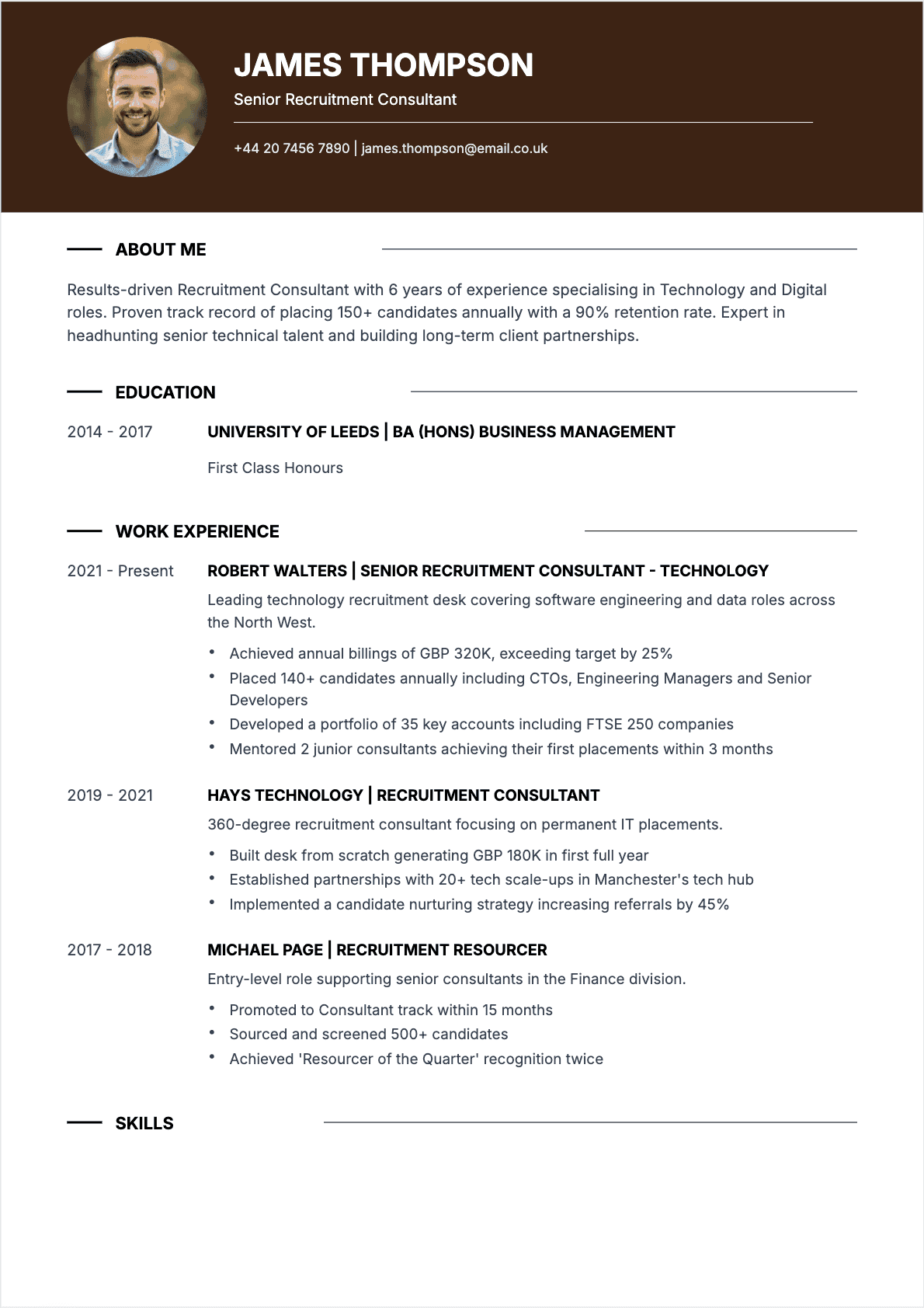
A reverse chronological resume is a resume format that organizes your work experience in reverse order of time: your most recent position appears first, your second most recent appears next, and so on, moving backward through your career. Education is typically listed after work experience and follows the same reverse-time logic, with your highest or most recent degree listed first.
This format is the dominant standard across virtually every industry in the United States, the United Kingdom, Canada, and Australia. It is the default expected by the vast majority of recruiters and hiring managers, and it is the format that Applicant Tracking Systems are designed to parse most accurately. When someone says "send me your resume," this is the format they are picturing. 🎯
The core logic behind the reverse chronological format is simple: what you have done most recently is the strongest predictor of what you will do next. A hiring manager evaluating you for a senior marketing role cares far more about the marketing director position you held last year than the marketing assistant role you started in a decade ago. By placing your most current experience at the top, you lead with your strongest and most relevant qualifications.
This is not a new concept. The reverse chronological format has been the dominant resume style since the mid-twentieth century. What has changed is how it interacts with modern hiring technology. ATS platforms like Greenhouse, Lever, Workday, and iCIMS are specifically optimized to extract data from reverse chronological resumes. They look for job titles, company names, and date ranges in a top-down sequence. Resumes that deviate from this expected structure often get parsed incorrectly, with skills attributed to the wrong role or dates misread entirely.
Structure of a Reverse Chronological Resume

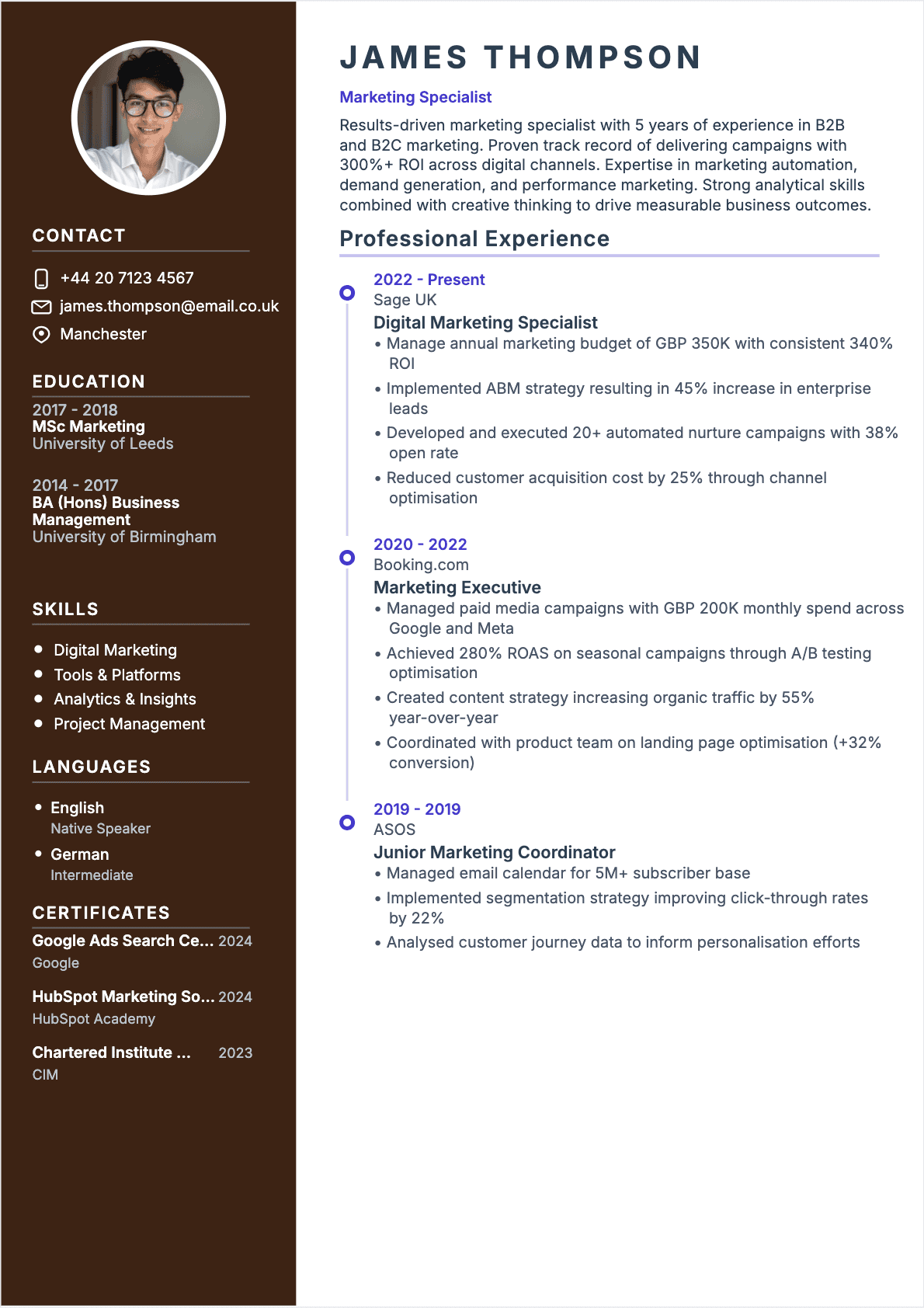
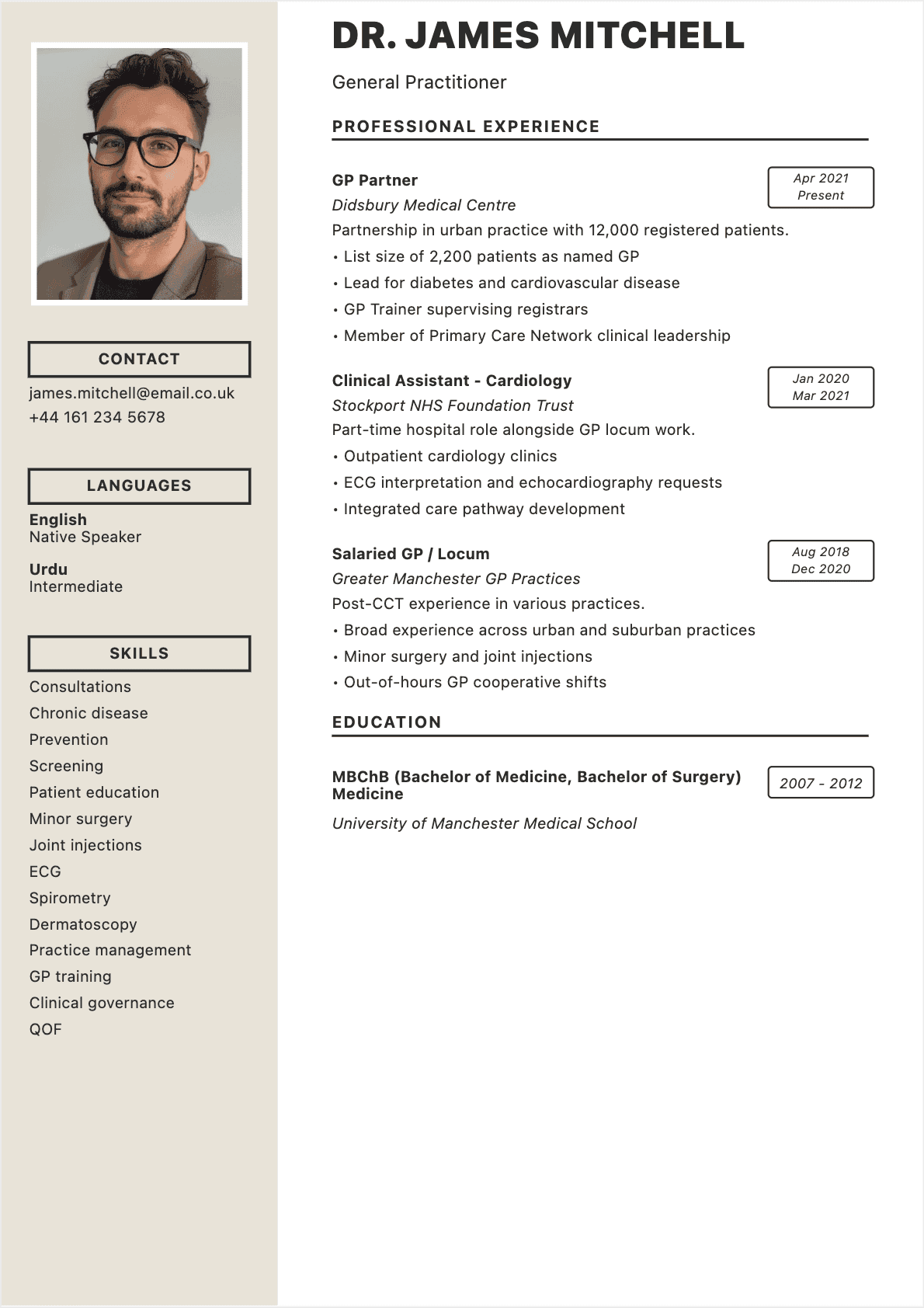
Reverse chronological CV structure - en
The power of the reverse chronological format lies in its predictable, logical structure. Every section has a specific purpose and a specific position on the page. Here is the section-by-section blueprint, in the exact order your content should appear. 📝
1. Header and Contact Information
Your full name in a slightly larger font (14–16pt), followed by your target job title, city and state, phone number, professional email address, and LinkedIn URL. Skip the full street address—city and state are sufficient for modern applications. If you have a portfolio site or GitHub profile relevant to the role, include it here. Keep this section to one or two lines.
2. Professional Summary
A concise 2–4 sentence block directly below your contact information. For experienced professionals, write a professional summary that states your title, years of experience, key expertise, and one headline achievement with a quantified result. For recent graduates, write a career objective that communicates what you bring and what you’re seeking. Either way, this section should be tailored to each application—a generic summary is worse than no summary at all.
Example of a strong professional summary:
"Senior Financial Analyst with 8 years of experience in corporate FP&A and strategic planning. Built automated forecasting models that improved budget accuracy by 23% and reduced monthly close time from 12 days to 7 at a $2B revenue manufacturer."
3. Work Experience (The Core Section)
This is the section that defines the reverse chronological format and should occupy the largest portion of the page. Each position includes:
- Job title — Bold, prominent, matching or closely aligned with the target role’s title
- Company name and location — City and state, plus a brief descriptor if the company is not well known
- Dates of employment — Month/Year – Month/Year (or "Present")
- 3–6 bullet points describing achievements, not duties, starting with the strongest
List your most recent role first, then work backward. Include the last 10–15 years of relevant experience. Roles older than that can be consolidated into a brief "Earlier Career" line or omitted entirely.
4. Education
Degree name, institution, graduation year. For recent graduates, this section can come before work experience. For anyone with more than 3–5 years of professional experience, education goes after the experience section. Include honors, relevant coursework, or certifications only if they add concrete value for the specific role.
5. Skills
A focused list of 8–15 hard skills and technical competencies relevant to the target role. Lead with the skills explicitly mentioned in the job posting. This section is heavily parsed by ATS, so use exact terminology from the posting. For comprehensive guidance on choosing the right skills, see our complete skills guide for 2026.
6. Optional Sections
Depending on your background, you may also include sections for certifications, professional affiliations, publications, volunteer work, or languages. Place these after the skills section. Only add them if they strengthen your candidacy for the specific role—every line on your resume should earn its spot.
Writing a Powerful Work Experience Section
The experience section is where reverse chronological resumes succeed or fail. The format gives your most recent experience prime real estate—but if that section is filled with vague job descriptions instead of concrete achievements, you’re wasting the advantage.
Lead with Impact, Not Responsibilities
The single most common mistake I saw as a recruiter was bullet points that described what the candidate was supposed to do rather than what they actually accomplished. "Responsible for managing a team of 12 engineers" tells me your job description—I can guess that from your title. "Led a team of 12 engineers to deliver a platform migration 3 weeks ahead of schedule, reducing infrastructure costs by $2.1M annually" tells me your impact. That’s the bullet that gets you an interview. 💪
The STAR-Lite Bullet Formula
Full STAR (Situation, Task, Action, Result) stories belong in interviews. On a resume, use a compressed version I call STAR-Lite:
- **Action: **Start with a strong verb (Led, Built, Redesigned, Negotiated, Launched)
- **Context: **Briefly describe what you worked on and the scope
- **Result: **End with a quantified outcome (percentage, dollar amount, time saved, users impacted)
Examples of strong bullets:
- "Redesigned the onboarding flow, increasing user activation by 34% within 90 days"
- "Negotiated vendor contracts across 3 regions, cutting procurement costs by $800K annually"
- "Built and deployed a real-time analytics dashboard that reduced executive reporting time from 4 hours to 15 minutes per week"
Quantify Everything You Can
Numbers are the universal language of resume impact. Revenue generated, costs saved, team sizes, completion timelines, percentage improvements, customer satisfaction scores—anything you can quantify, you should. If you can’t cite an exact number, estimate conservatively. "Improved response time by approximately 25%" is far more compelling than "Improved response time." Recruiters at data-driven companies like Amazon, Meta, and McKinsey are trained to look for metrics. Give them what they want.
Tailor Bullets for Each Application
Your work experience section shouldn’t be identical across every application. Rearrange your bullet points so the most relevant achievements for each specific role appear first. If a job posting emphasizes "cross-functional collaboration," move your collaboration-focused bullets to the top. If it emphasizes "revenue growth," lead with your revenue bullets. The reverse chronological format provides the structure—your tailoring provides the strategy. For deeper guidance on customizing your resume for each role, read our guide to crafting a targeted resume.
Reverse Chronological Resume Example: A Real-World Walkthrough

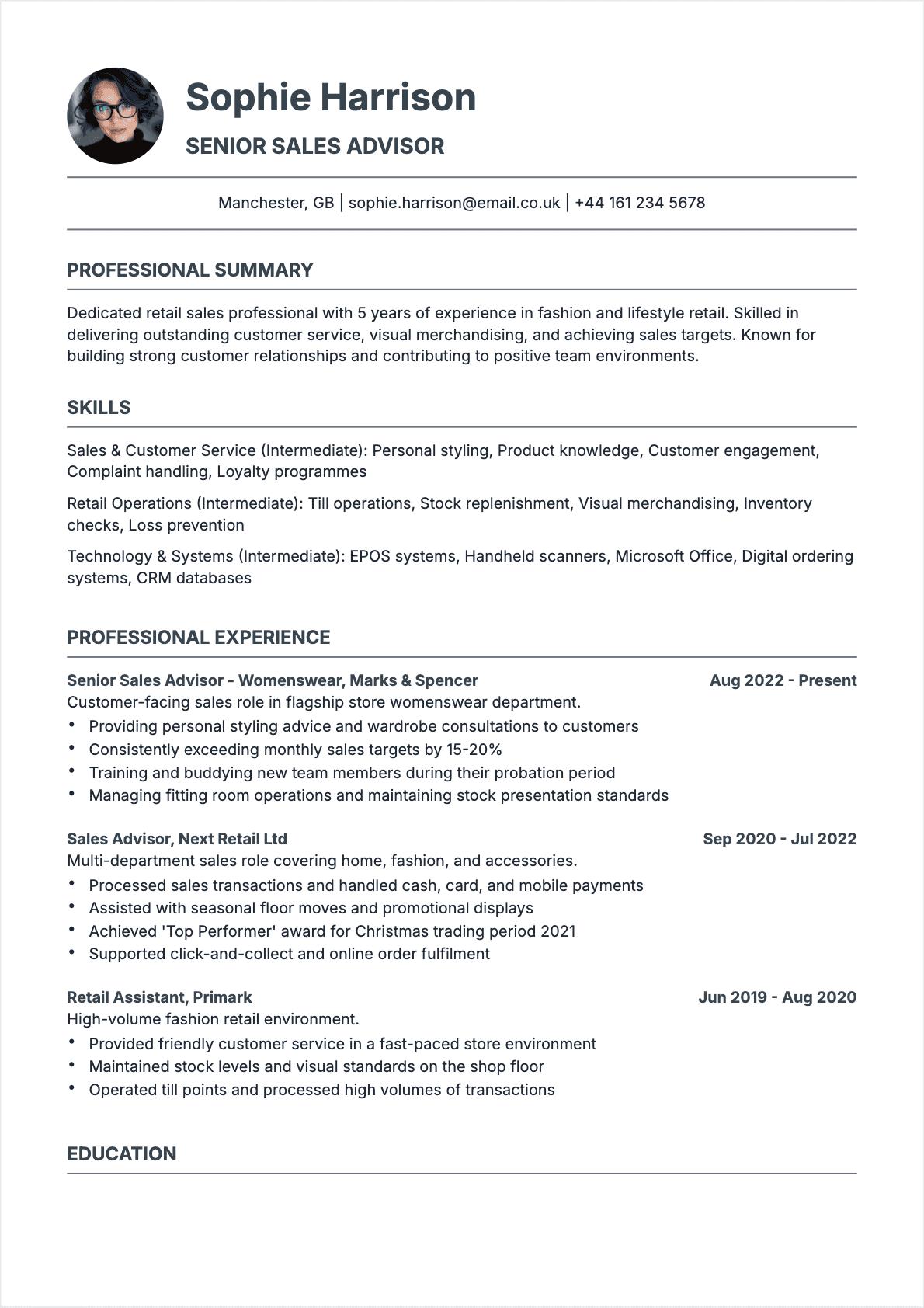
Reverse chronological experience example - en
Theory is useful, but seeing the format in action is what makes it stick. Below is an abbreviated example of a reverse chronological resume for a mid-career marketing professional. Notice how the structure flows logically and how each bullet point leads with a measurable result. 📄
SARAH MITCHELL
New York, NY | (555) 234-7890 | sarah.mitchell@email.com | linkedin.com/in/sarahmitchell
PROFESSIONAL SUMMARY
Senior Marketing Manager with 8+ years of experience driving growth for B2B SaaS companies. Specializing in demand generation, content strategy, and marketing automation. Led campaigns that generated $12M+ in pipeline revenue at a Series C startup. Seeking a Director-level role at a growth-stage technology company.
WORK EXPERIENCE
Senior Marketing Manager | CloudScale Technologies, New York, NY | Jan 2022 – Present
- Built and led a demand generation team of 6, increasing marketing-qualified leads by 145% year-over-year
- Designed a multi-channel campaign framework that generated $8.4M in attributed pipeline within 12 months
- Implemented HubSpot marketing automation workflows, reducing lead response time from 48 hours to under 2 hours
- Partnered with Product and Sales to launch 4 product lines, each achieving 120%+ of first-quarter revenue targets
Marketing Manager | DataBridge Solutions, Boston, MA | Jun 2019 – Dec 2021
- Managed a $1.2M annual marketing budget across paid search, content marketing, and events
- Grew organic search traffic by 210% through a targeted content strategy and SEO overhaul
- Launched the company’s first webinar series, generating 3,400+ registrations and 320 SQLs in the first year
Marketing Coordinator | BrightPath Agency, Boston, MA | Aug 2016 – May 2019
- Coordinated campaigns for 8 B2B clients across healthcare, fintech, and cybersecurity verticals
- Created monthly performance reports that improved client retention rate from 78% to 94%
EDUCATION
Bachelor of Science in Marketing | Boston University | 2016
SKILLS
Demand Generation • HubSpot • Salesforce • Google Analytics 4 • SEO/SEM • Content Strategy • Marketing Automation • A/B Testing • Budget Management • Team Leadership
Notice how the example follows every structural principle discussed above: most recent role first, quantified achievements in every entry, action verbs leading each bullet, and a clean top-to-bottom flow. The professional summary immediately communicates the candidate’s level, specialty, and headline metric. Each role has progressively fewer bullets as you move back in time. For more examples across different industries and career stages, browse our resume examples gallery.
When to Use a Reverse Chronological Resume (and When Not To)

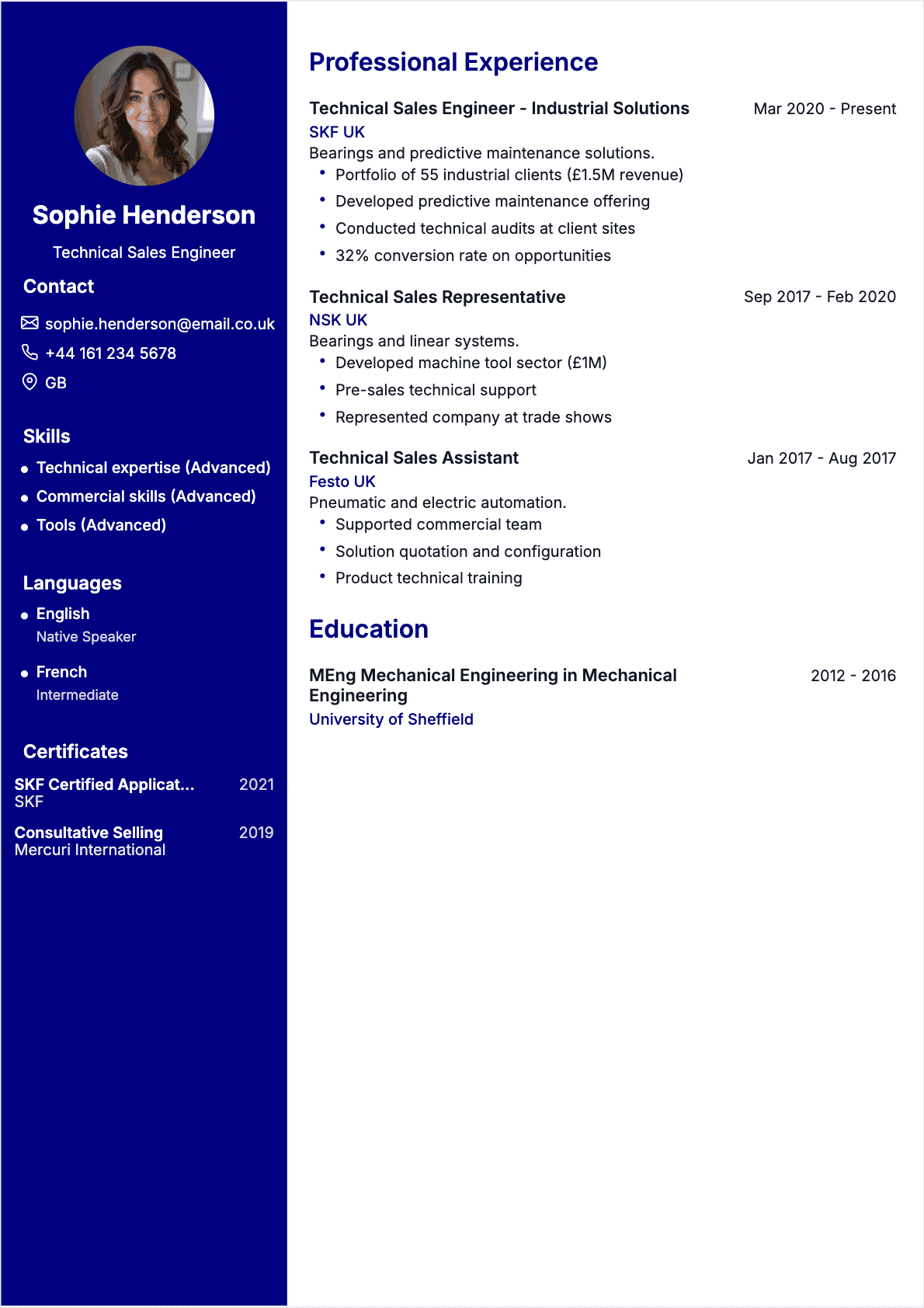
When to use reverse chronological format - en
The reverse chronological format is the right choice for the vast majority of job seekers—but not every single one. Understanding when it works best and when you might want an alternative will help you make the strongest possible choice for your situation. 🔍
Use This Format When...
- **You have a steady work history. **If your career shows clear progression from one role to the next without major gaps, the reverse chronological format showcases that trajectory beautifully.
- **You’re staying in the same industry. **When your past experience directly relates to the role you’re applying for, this format lets you demonstrate relevance immediately.
- **You’re applying through ATS. **Which is almost every online application in 2026. This format is the most ATS-friendly because it uses predictable section labels and linear date structures.
- **You’re targeting traditional industries. **Finance, law, healthcare, engineering, government, and corporate management overwhelmingly prefer chronological resumes.
- **You want the safest, most widely accepted format. **When in doubt, go chronological. You will never be penalized for using this format.
Consider an Alternative When...
- **You have significant employment gaps. **Gaps of a year or more will be highly visible in a chronological format. A combination resume can help by leading with skills before dates.
- **You’re making a major career change. **If your most recent experience is in a completely different field, leading with it may confuse rather than convince. A functional or combination format lets you highlight transferable skills first.
- **You’re a freelancer with many short engagements. **Listing 15 different three-month contracts in chronological order looks chaotic. A project-based or functional format often reads more clearly.
- **Your most relevant experience isn’t recent. **If your strongest qualifications come from a role you held 8–10 years ago, a skills-first format can elevate that experience.
Even in the scenarios above, many recruiters still prefer to see a chronological resume—they’ll simply expect you to address the gaps or transitions in your cover letter. My advice: unless you have a compelling, strategic reason to use an alternative, default to the reverse chronological format. It’s the known quantity, and known quantities reduce hiring friction.
Optimizing Your Reverse Chronological Resume for ATS
A reverse chronological resume already has a structural advantage with ATS—but structure alone isn’t enough. You need to actively optimize for the algorithms that stand between your resume and a human reader. In 2026, over 98% of Fortune 500 companies and roughly 75% of all mid-to-large employers use Applicant Tracking Systems to filter resumes. Here is how to make sure yours passes. 🤖
Keyword Matching Strategy
ATS platforms compare the text of your resume against the keywords in the job posting. The closer the match, the higher your relevance score. To maximize that score:
- Mirror the exact phrases from the job posting. If they say "project management," use "project management"—not "PM," not "managing projects."
- Include keywords in multiple sections: your summary, your skills list, and your experience bullets. ATS systems that evaluate context reward keywords appearing alongside real accomplishments.
- Use both the spelled-out version and the abbreviation when space allows: "Search Engine Optimization (SEO)" covers both variants.
- Prioritize required qualifications over nice-to-haves. The required keywords carry the most weight in scoring algorithms.
Formatting for Parseability
- **Use standard section headings: **"Work Experience," "Education," "Skills," "Certifications." Creative alternatives like "My Journey" or "Where I’ve Made an Impact" confuse ATS parsers.
- **Avoid tables, text boxes, and multi-column layouts. **These often get scrambled during parsing, with content from different columns merged or skills attributed to the wrong role.
- **Save as PDF unless told otherwise. **Modern ATS platforms handle PDFs well. Avoid image-based formats (.jpg, .png) that cannot be parsed at all.
- **Do not embed content in headers or footers. **Many ATS systems ignore header and footer areas entirely.
- **Use standard fonts: **Calibri, Arial, Garamond, or Lato at 10–11pt. Decorative or uncommon fonts may not render correctly.
A quick ATS compatibility test: copy your resume PDF into a plain text editor. If the content appears in the correct order and is fully readable, your formatting is likely ATS-safe. If sections are jumbled or text is missing, revise your layout before submitting. For tools that automate this process, explore our AI-powered resume builder.
Reverse Chronological vs. Functional vs. Combination: A Direct Comparison
Understanding the strengths and weaknesses of all three major resume formats helps you confirm that the reverse chronological format is right for you—or identify the rare situations where another format might serve you better. 📊
Reverse Chronological
- **Strengths: **Clear career progression, highest ATS compatibility, universally accepted by recruiters, easy to scan in 6–7 seconds, shows exactly what you’ve done and when
- **Weaknesses: **Exposes employment gaps immediately, less effective for career changers, can feel repetitive for candidates with similar consecutive roles
- **Best for: **90%+ of job seekers—anyone with a linear career path and relevant recent experience
Functional (Skills-Based)
- **Strengths: **Highlights transferable skills, downplays gaps and career changes, focuses on capabilities rather than timeline
- **Weaknesses: **Widely distrusted by recruiters (raises red flags about what you’re hiding), poorly parsed by most ATS, hard to verify claims without dates and employer context
- **Best for: **Career changers with very limited relevant experience, candidates re-entering after 5+ year gaps—but use with extreme caution
Combination (Hybrid)
- **Strengths: **Balances skills prominence and timeline transparency, good for candidates with diverse experience, more flexibility in emphasis
- **Weaknesses: **Can become too long, harder to structure well, may confuse ATS if the layout isn’t clean
- **Best for: **Senior professionals with 15+ years of experience, candidates with both deep technical skills and leadership experience
A critical point about the functional format: many recruiters view it with active suspicion. When I was hiring, a functional resume immediately made me wonder what the candidate was hiding. No dates? Why? No clear employer names tied to accomplishments? That makes verification difficult. The functional format has legitimate uses, but you should know that it starts you at a disadvantage with many reviewers.
The combination format is a reasonable middle ground. It opens with a skills summary, then follows with a standard reverse chronological work history. This gives you the keyword density of a functional resume with the transparency and ATS compatibility of a chronological one. For a full breakdown, see our complete guide to resume formats.
Common Mistakes That Sink Reverse Chronological Resumes
Even with the right format, specific mistakes can undermine your resume’s effectiveness. These are the errors I encountered most frequently during my recruiting career, and every single one is preventable.
- **Listing duties instead of achievements. **This is the number one resume mistake across all industries and career levels. "Managed social media accounts" is a duty. "Grew Instagram following from 12K to 89K in 18 months, driving a 23% increase in website referral traffic" is an achievement. Every bullet point should answer the question: "So what?" 🚫
- **Inconsistent date formatting. **"January 2022 – March 2024" on one entry and "2024–Present" on the next looks careless. Choose a format (I recommend "Mon YYYY – Mon YYYY") and use it consistently across every single role.
- **Including every job you’ve ever held. **Your summer job at a pizza shop when you were sixteen does not belong on your resume when you’re applying for a Director of Engineering position. Include only the last 10–15 years of relevant experience.
- **Making the resume too long. **One page for early-career candidates (under 10 years of experience). Two pages maximum for senior professionals. A three-page resume signals that you can’t prioritize information. For tips on trimming effectively, check our guide to the one-page resume.
- **Burying your strongest achievements. **Within each role, your most impressive bullet should be first. Recruiters read top-to-bottom and often stop after the first two bullets per position. If your best work is hiding at bullet number five, it may never be read.
- **Neglecting the visual hierarchy. **Job titles should be the most prominent element in each entry—bold, possibly slightly larger. Company names and dates should be clearly visible but secondary. If everything is the same size and weight, the recruiter’s eye has no guidance. For font and typography choices, see our guide to resume fonts.
- **Forgetting to tailor for each application. **Sending the same resume to every job posting is a missed opportunity. Reorder your bullets to highlight the most relevant achievements, adjust your summary to echo the posting’s language, and lead your skills section with the keywords the employer is searching for.
- **Using an unprofessional email address. **gamerguy99@hotmail.com immediately undermines an otherwise strong resume. Use firstname.lastname@gmail.com or a similar professional format.
Adapting the Reverse Chronological Format for Different Career Levels
The reverse chronological format works at every career stage, but the emphasis and balance of sections should shift depending on where you are in your professional journey. 🎓
Entry-Level and Recent Graduates (0–3 Years)
- Lead with your education section if your degree is recent and from a strong program. Your education can come before work experience at this stage.
- Include internships, co-ops, and significant academic projects as work experience entries, formatted with the same bullet structure as full-time roles.
- Your professional summary should focus on your degree, relevant coursework, and the type of role you are targeting. Skip generic objective statements.
- One page is almost always sufficient. If your resume extends to two pages at this stage, you are including too much irrelevant content.
Mid-Career Professionals (4–12 Years)
- Work experience should dominate the resume, with 3–5 bullets per role emphasizing progressive responsibility and quantified achievements.
- Education moves below work experience. Drop your GPA unless it was exceptional.
- Your professional summary should highlight your area of specialization and a signature metric that captures your value.
- One strong page or a full two pages are both appropriate. Never go to one and a half pages—commit to one or two.
Senior Professionals and Executives (12+ Years)
- Two pages is standard and expected. A one-page resume at this level can look suspiciously thin.
- Your professional summary should read as an executive narrative: years of leadership, scope of responsibility, and enterprise-level impact metrics.
- Focus on the last 3–4 roles in detail. Older positions can be listed with title, company, and dates only, or consolidated into an "Earlier Career" section.
- Include leadership roles, board positions, certifications, publications, or speaking engagements if they strengthen your candidacy.
Step-by-Step: Tailoring Your Reverse Chronological Resume for Each Application
A reverse chronological resume is not a static document. The candidates who get the most interviews treat their resume as a living template that gets customized for every application. This does not mean rewriting from scratch each time—it means making strategic adjustments that take 15–20 minutes and dramatically increase your relevance score. ✅
Step 1: Decode the Job Posting
Print the job description (or open it side by side with your resume) and highlight every required skill, preferred qualification, and recurring keyword. Pay attention to the exact phrasing: if they say "stakeholder management" and your resume says "client relations," you need to adjust. ATS keyword matching is often literal.
Step 2: Rewrite Your Summary
Your professional summary should echo the job posting’s priorities. If the role emphasizes data-driven decision making and team leadership, your summary should feature those exact phrases alongside a quantified achievement that proves you deliver on them.
Step 3: Reorder Your Bullets
For each work experience entry, move the 2–3 bullets most relevant to the target role to the top of the list. Recruiters read the first bullet of each role carefully and skim the rest. Make sure your most relevant achievements are in the position that gets the most attention.
Step 4: Restructure Your Skills Section
Place the required skills from the posting at the top of your skills list, followed by preferred skills, then supplementary competencies. This ensures the most critical keywords are immediately visible to both ATS algorithms and human reviewers.
Step 5: Review and Submit
Run through a quick quality check: Does your title match the posting? Are the required keywords present in multiple sections? Are your bullets quantified? Is the formatting clean and ATS-compatible? If all boxes are checked, save as PDF with a professional file name (FirstName-LastName-Resume.pdf) and submit. For a full pre-submission walkthrough, see our targeted resume guide.
This process becomes faster with practice. After your third or fourth tailored application, you will find that you can customize a strong reverse chronological resume in under 15 minutes. The candidates who invest this time consistently outperform those who send the same generic document to every opening.
Final Checklist Before You Hit Submit
Before submitting any application, run your resume through this checklist. Every item has a direct impact on whether your resume advances to the interview stage. 🛡️
- **Format: **Work experience is listed newest to oldest. Each entry has title, company, location, dates, and bullet points.
- **Summary: **Professional summary is at the top, tailored to the target role, and includes at least one quantified achievement.
- **Achievements: **At least 80% of bullet points include a measurable result (number, percentage, dollar amount, timeframe).
- **Keywords: **Required keywords from the job posting appear in your summary, skills section, and experience bullets.
- **Length: **One page for early-career candidates, two pages maximum for senior professionals.
- **Consistency: **Same font, same date format, same bullet style throughout the entire document.
- **ATS-safe: **No tables, text boxes, columns, or embedded images. Standard section headings. Saved as PDF.
- **Proofread: **Zero spelling or grammar errors. Read aloud, then have someone else review it.
- **Links: **Every hyperlink (LinkedIn, portfolio, GitHub) works and leads to updated, professional content.
- **File name: **Saved as FirstName-LastName-Resume.pdf, not "resume_final_v3_FINAL.docx."
When you’re ready to build a polished, ATS-optimized reverse chronological resume without worrying about formatting details, our AI resume builder handles the design automatically—just focus on your content and let the tool take care of structure, spacing, and keyword optimization. And for more design inspiration and real-world examples, browse our resume examples gallery to see what top-performing resumes look like in 2026.
FAQ: Reverse Chronological Resume
These are the questions candidates ask me most frequently about the reverse chronological resume format:
What is a reverse chronological resume?
A reverse chronological resume is a resume format that lists your work experience starting with your most recent or current position and works backward in time. Each role includes your job title, company name, dates of employment, and bullet points describing your achievements. It is the most widely used resume format in the US and UK, and the format that ATS platforms are designed to parse most accurately.
Why is the reverse chronological format preferred by recruiters?
Recruiters prefer it because it immediately shows your most recent and relevant experience at the top of the page. During the 6–7 second initial scan, recruiters look for your current job title, company, and recent achievements. This format delivers that information instantly. It also clearly shows career progression, which is a strong signal of professional growth and reliability.
How far back should a reverse chronological resume go?
For most professionals, 10 to 15 years of work history is sufficient. Include detailed bullet points for your most recent 3–4 roles, and consolidate or omit older positions unless they are directly relevant to the target role. You can group early career positions under an "Earlier Career" line with just titles, companies, and dates.
Is the reverse chronological format good for ATS?
Yes—it has the highest ATS compatibility of any resume structure. ATS platforms like Greenhouse, Lever, Workday, and iCIMS are specifically designed to extract job titles, company names, dates, and skills from top-down chronological layouts. Functional resumes and creative formats often get parsed incorrectly, with content attributed to the wrong role or sections.
Should I use this format if I have employment gaps?
It depends on the size of the gaps. Small gaps of a few months are rarely noticed. For gaps of a year or more, the reverse chronological format will make them visible since dates are the organizing principle. You can address gaps proactively in your cover letter or summary. If the gaps are extensive, a combination format that leads with a skills section may present your qualifications more favorably.
How many bullet points should each job have?
For your most recent role, include 4–6 bullet points. For the role before that, 3–5 bullets. For older positions, 2–3 bullets are sufficient. The general principle is that more recent roles get more detail because they represent your current capability level. Every bullet should include a measurable outcome.
Can I use a reverse chronological resume for my first job?
Yes, and it is the recommended format for most recent graduates. The key adjustment is that your education section may come before your work experience section if your degree is your strongest qualification. Include internships, co-ops, and significant academic projects formatted like work experience entries with bullet points describing achievements.
What is the difference between a reverse chronological resume and a CV?
A reverse chronological resume is typically 1–2 pages and focuses on your most relevant recent experience tailored to a specific job application. A CV (curriculum vitae) is a comprehensive document that can run many pages and includes your complete academic and professional history: publications, research, grants, conferences, and teaching experience. In the US, resumes are standard for most private-sector jobs, while CVs are used in academia, research, and medicine. In the UK, "CV" is often used interchangeably with "resume."
— Eleanor Ashford, former tech recruiter and career strategist