![Resume Keywords: 80+ Words That Get You Hired [2026]](/_next/image/?url=https%3A%2F%2Fmedia.cvtowork.com%2Fmedia%2Fmots-courants-cv-hero.jpg&w=2048&q=75)

I spent four years screening resumes at a London recruitment agency before moving stateside, and if there’s one thing that separates the applications that land interviews from the ones that disappear into the void, it’s language. Not grammar or spelling—though those matter too—but the actual words candidates choose to describe their experience.
Here’s the uncomfortable truth: most resumes sound identical. "Responsible for managing a team." "Assisted with project delivery." "Helped improve processes." These phrases are so overused that recruiters’ eyes glaze right over them. They communicate nothing specific, nothing memorable, and nothing that makes a hiring manager think, "I need to talk to this person." 📝
The solution isn’t to stuff your resume with jargon or corporate buzzwords. It’s to use resume keywords strategically—the specific action verbs, industry terms, and skill descriptors that both human recruiters and Applicant Tracking Systems (ATS) are actively looking for. The right keywords act as signals: they tell a recruiter you speak the language of your industry, and they tell the ATS that your profile matches the job requirements.
In this guide, I’ve compiled over 80 of the most powerful resume keywords for 2026, organized by category so you can find exactly what you need. You’ll learn which action verbs carry real weight, which industry-specific terms trigger ATS matches, which soft skills actually resonate with hiring managers, and which words you should ban from your resume immediately. I’ve also included before-and-after examples so you can see the difference strong keywords make in practice.
Whether you’re writing your first resume or overhauling one that isn’t generating callbacks, this is the vocabulary upgrade that can change everything. For the complete framework on building your resume from scratch, start with our comprehensive guide to writing a resume.
Why Resume Keywords Are Your Secret Weapon in 2026
The job market in 2026 operates on two parallel tracks. The first is human: a recruiter or hiring manager scanning your resume for evidence that you can do the job. The second is algorithmic: an ATS parsing your document for specific terms that match the job description. Resume keywords are the bridge between both tracks.
When a recruiter at a company like Amazon, Deloitte, or NHS Trust posts a role, the job description is essentially a keyword blueprint. Every required skill, every preferred qualification, every responsibility listed is a term the ATS will search for in your resume. If those terms aren’t there—even if you have the experience—your application may never reach a human reviewer. 🔍
But keywords aren’t just about beating the algorithm. They’re about communicating competence efficiently. A recruiter spending six seconds on your resume needs to see the right signals instantly. "Spearheaded a cross-functional product launch" tells a completely different story than "helped with a product release." Both describe the same experience, but the first version uses keywords that convey leadership, collaboration, and initiative.
The data backs this up. Studies from Jobscan and similar platforms consistently show that resumes with keyword optimization are 40–60% more likely to pass ATS screening. And once they reach human eyes, keyword-rich resumes are perceived as more qualified because they mirror the language the company itself uses.
The key is using keywords naturally, not robotically. Stuffing your resume with terms that don’t reflect your actual experience will backfire in the interview. The goal is to find the intersection between what you’ve genuinely done and the language that resonates with your target employers. For a complete list of the skills employers value most, see our guide to skills to put on your CV in 2026.
Action Verbs: The 30 Most Powerful Words for Your Resume
Action verbs are the engine of every strong resume bullet point. They replace passive, vague language with words that communicate exactly what you did and how well you did it. Here are the 30 most effective action verbs for resumes in 2026, grouped by the type of accomplishment they convey: 💪
Leadership & Management
- Spearheaded — Led an initiative from concept to completion
- Orchestrated — Coordinated multiple people or resources to achieve a goal
- Directed — Managed a team, project, or department
- Championed — Advocated for and drove adoption of an idea or process
- Mentored — Guided junior staff or team members in their professional growth
Achievement & Results
- Delivered — Completed a project or result on time and to specification
- Accelerated — Sped up a process, timeline, or growth metric
- Generated — Created revenue, leads, or measurable output
- Exceeded — Surpassed a target, quota, or benchmark
- Transformed — Fundamentally changed a process, team, or outcome for the better
Problem-Solving & Innovation
- Resolved — Fixed a problem or eliminated a recurring issue
- Optimized — Improved efficiency, performance, or quality
- Redesigned — Overhauled a system, process, or workflow
- Pioneered — Introduced something new that didn’t exist before
- Streamlined — Simplified or made a process more efficient
Communication & Collaboration
- Negotiated — Reached agreements that benefited your organization
- Presented — Communicated ideas to stakeholders, clients, or executives
- Collaborated — Worked across teams or departments to achieve shared goals
- Facilitated — Led meetings, workshops, or cross-functional discussions
- Influenced — Shaped decisions or outcomes through persuasion
Analysis & Strategy
- Analyzed — Examined data to extract insights and inform decisions
- Forecasted — Predicted trends, budgets, or outcomes using data
- Identified — Discovered opportunities, risks, or inefficiencies
- Evaluated — Assessed performance, vendors, or strategic options
- Architected — Designed the structure of a system, strategy, or framework
Execution & Implementation
- Implemented — Put a plan, system, or strategy into action
- Launched — Introduced a new product, service, or initiative
- Automated — Replaced manual processes with technology or systems
- Consolidated — Combined resources, teams, or processes for efficiency
- Scaled — Grew a system, team, or operation to handle increased demand
The key to using action verbs effectively is pairing them with quantified results. "Optimized" alone is vague. "Optimized the onboarding workflow, reducing new-hire ramp-up time by 35%" is a bullet point that gets interviews.

30 powerful action verbs for your resume
Industry-Specific Keywords by Sector
Generic keywords get generic results. The resume keywords that really move the needle are the ones specific to your industry—the terms that signal you’re not just any candidate, but someone who understands the language and priorities of your field. Here are the highest-impact keywords by sector: 🏢
Technology & Software Engineering
Agile, Scrum, CI/CD, cloud architecture, microservices, API integration, full-stack development, DevOps, machine learning, data pipeline, sprint planning, code review, technical debt, scalability, containerization (Docker/Kubernetes). These terms appear in the vast majority of tech job descriptions at companies like Google, Microsoft, and Stripe.
Finance & Banking
Financial modeling, risk assessment, regulatory compliance, portfolio management, P&L analysis, due diligence, derivatives, underwriting, Basel III, SOX compliance, audit, variance analysis, forecasting, Bloomberg Terminal, reconciliation. Wall Street and City of London firms filter heavily on these terms.
Marketing & Digital
SEO/SEM, conversion rate optimization, A/B testing, marketing automation, customer segmentation, brand strategy, content marketing, demand generation, CRM (Salesforce/HubSpot), attribution modeling, CAC/LTV, programmatic advertising, social media strategy, influencer marketing.
Healthcare & Life Sciences
Patient outcomes, HIPAA compliance, clinical trials, electronic health records (EHR), evidence-based practice, care coordination, FDA regulations, pharmacovigilance, GCP/GMP, patient safety, quality assurance, ICD-10 coding, population health management.
Human Resources & People Operations
Talent acquisition, employee engagement, succession planning, HRIS (Workday/SAP), diversity and inclusion, performance management, organizational development, workforce planning, employer branding, compensation benchmarking, retention strategy, onboarding.
Project Management & Operations
Stakeholder management, resource allocation, risk mitigation, process improvement, Six Sigma, Lean methodology, change management, KPIs/OKRs, cross-functional collaboration, budget management, vendor management, milestone tracking, Gantt charts, RACI matrix.
The trick is not to dump every keyword onto your resume. Pick the 8–12 terms most relevant to the specific role you’re applying for, then weave them into your bullet points naturally. For more on selecting the right skills for your resume, check our guide to the best resume skills employers look for.
Soft Skills: Words That Resonate With Recruiters
Hard skills get you past the ATS. Soft skills get you past the interview. While technical keywords prove you can do the job, soft skill keywords prove you’ll thrive in the team and culture. But here’s the catch: simply listing "communication" or "teamwork" on your resume is almost meaningless. Every candidate claims these skills. The difference is how you present them.
Soft skills that actually carry weight:
- Cross-functional collaboration — Shows you work effectively across departments, not just within your own silo
- Stakeholder management — Proves you can navigate competing priorities and keep decision-makers aligned
- Conflict resolution — Demonstrates emotional intelligence and the ability to maintain productive relationships
- Adaptability — Critical in 2026’s rapidly evolving workplace; shows you handle change without losing effectiveness
- Strategic thinking — Signals you see the bigger picture, not just your immediate tasks
- Active listening — Underrated but highly valued, especially in client-facing and management roles
- Mentorship — Shows leadership potential and investment in team development
- Emotional intelligence — Increasingly cited in leadership job descriptions at companies like Salesforce and Unilever
How to show soft skills instead of just listing them:
Instead of writing "Strong communication skills," write: "Presented quarterly strategy updates to C-suite executives, translating complex technical data into actionable business recommendations." Instead of "Team player," write: "Collaborated with engineering, design, and marketing teams to launch a product feature used by 50,000+ users in the first month." 🤝
The pattern is simple: verb + context + result. This structure transforms generic soft skills into concrete evidence of how you’ve applied them. Recruiters at top firms like McKinsey and PwC specifically look for this kind of behavioral evidence because it predicts future performance far better than a list of adjectives.
ATS Keywords: How to Beat the Automated Filters
Let’s get specific about how ATS software actually processes your resume, because understanding the mechanics is the key to beating the system without gaming it. 🤖
How ATS keyword matching works
Most modern ATS platforms—Workday, Greenhouse, Lever, iCIMS, Taleo—use a combination of exact keyword matching and semantic analysis. When a recruiter posts a job, the ATS creates a profile of required and preferred terms based on the job description. Your resume is then scored against this profile. A strong match (typically 70%+ keyword overlap) moves you to the "review" pile. Anything below that threshold may never be seen by a human.
The types of keywords ATS looks for
- Hard skills — Specific technical abilities: "Python," "financial modeling," "Adobe Creative Suite"
- Certifications — Professional credentials: "PMP," "CPA," "AWS Certified," "SHRM-CP"
- Job titles — Both your current title and the title of the role you’re applying for
- Tools and platforms — Software you’ve used: "Salesforce," "Jira," "Tableau," "SAP"
- Industry terminology — Sector-specific terms that signal domain expertise
- Education keywords — Degree types, institutions, and relevant coursework
ATS optimization tactics that actually work
- Mirror the job description — If the posting says "project management," use "project management," not "PM" or "managing projects"
- Include both acronyms and full terms — Write "Search Engine Optimization (SEO)" so the ATS catches both versions
- Use standard section headings — "Experience," "Education," "Skills"—not creative alternatives like "My Journey" or "What I Know"
- Avoid tables and columns — Many ATS platforms still struggle to parse multi-column layouts
- Don’t use headers or footers — Some ATS ignores content in document headers/footers entirely
- Submit as PDF or DOCX — These are the two universally accepted formats; avoid images, infographics, or unusual file types
A common mistake is keyword stuffing—hiding white text full of keywords behind the scenes. Modern ATS detects this, and it’s an instant rejection. The smarter approach is to weave keywords into genuine accomplishment statements. For a tool that handles ATS optimization for you, try our AI resume builder.
Words to Ban From Your Resume Immediately
Not all words help your resume. Some actively hurt it by making you sound vague, passive, or unoriginal. If any of these appear on your resume right now, replace them today: 🚫
Words that add no value
- "Responsible for" — The laziest phrase in resume writing. It describes a job description, not an achievement. Replace with a strong action verb: "Managed," "Led," "Delivered."
- "Helped" — Minimizes your contribution. If you helped, you did something specific—say what it was. "Helped improve sales" becomes "Increased regional sales by 18% through targeted outreach campaigns."
- "Assisted with" — Same problem as "helped." It sounds like you watched from the sidelines. Describe your actual contribution.
- "Duties included" — Another job-description phrase that tells the recruiter nothing about what you actually accomplished.
- "Various" / "Multiple" — Vague quantifiers that could mean 2 or 200. Use real numbers instead.
Buzzwords that have lost all meaning
- "Go-getter" — Self-proclaimed personality traits carry zero credibility. Show initiative through actions, not adjectives.
- "Synergy" — Corporate jargon that makes recruiters cringe. Say "cross-functional collaboration" or just describe the teamwork.
- "Think outside the box" — The most inside-the-box phrase possible. Describe the creative solution you actually implemented.
- "Results-driven" — Everyone claims to be results-driven. Prove it with numbers instead.
- "Hard worker" — This is a baseline expectation, not a differentiator. Replace with evidence of going above and beyond.
Passive language that undermines authority
- "Was tasked with" — Makes you sound like someone who takes orders rather than someone who takes initiative.
- "Participated in" — What did you actually do? "Participated in a product launch" could mean anything from leading the strategy to making coffee for the team.
- "Exposure to" — This means you saw something happen near you. It’s not a skill or an achievement.
Every word on your resume should justify its space. If a phrase doesn’t communicate a specific skill, achievement, or qualification, cut it. For more on the mistakes that cost candidates interviews, read our guide to the top 10 most common resume mistakes.

Resume words to avoid and alternatives
How to Extract Keywords From a Job Posting
The most reliable source of resume keywords is the job posting itself. Every job description is essentially a cheat sheet telling you exactly what the employer wants to see on your resume. Here’s how to mine it systematically: 📜
Step 1: Highlight the requirements
Copy the job posting into a document and highlight every noun phrase that describes a skill, tool, qualification, or responsibility. These are your primary keywords. Pay special attention to terms that appear in the "Required Qualifications" section—these are non-negotiable for ATS matching.
Step 2: Identify repeated terms
If a keyword appears more than once in the posting, the employer considers it critical. A posting that mentions "stakeholder management" three times is telling you that this skill should appear prominently on your resume—ideally in your summary, your skills section, and at least one bullet point.
Step 3: Note the exact phrasing
ATS matching is often literal. If the posting says "project management," use that exact phrase rather than "managing projects" or "PM." If it says "customer relationship management," don’t abbreviate to "CRM" without also including the full term. Mirror the employer’s language precisely.
Step 4: Check the "nice to have" section
Preferred qualifications are bonus keywords. Including these terms can push your ATS score above candidates who only match the required skills. Even if you have limited experience with a preferred skill, mentioning genuine exposure gives you an edge.
Step 5: Research similar postings
Look at 3–5 similar job postings from different companies for the same role. The keywords that appear across multiple postings are industry standards—they should be on every version of your resume for this role type, not just for one specific application.
This process takes about 15 minutes per application, and it’s the single highest-ROI activity in your job search. A resume tailored to each posting consistently outperforms a generic one. For 10 more proven strategies to strengthen your resume, see our 10 essential resume tips.
Where to Place Keywords for Maximum Impact
Having the right keywords is only half the battle. Where you place them determines how effectively they work for both ATS scoring and human readability. Here’s the strategic placement hierarchy:
1. Professional summary (top of resume)
Your summary is the first thing both ATS and recruiters read. Front-load it with your most important keywords: your target job title, your top 2–3 hard skills, and a defining achievement. A strong summary might read: "Senior Product Manager with 8 years of experience in Agile product development, cross-functional leadership, and data-driven decision-making. Launched 12 features generating $4.2M in annual recurring revenue." Every keyword in that sentence is intentional. 🎯
2. Skills section
This is your keyword power zone. List 10–15 of your most relevant hard skills using the exact terms from the job description. Organize them by category (Technical Skills, Tools & Platforms, Methodologies) for easy scanning. The skills section is where ATS does its heaviest matching, so accuracy matters here.
3. Work experience bullet points
Embed keywords naturally into your achievement statements. "Implemented a CI/CD pipeline using Jenkins and Docker, reducing deployment time by 65%" is far more powerful than listing "CI/CD" in isolation. Context transforms keywords from checkboxes into evidence of expertise.
4. Job titles and section headings
If your official title was vague (like "Associate"), you can add a clarifying subtitle: "Associate — Digital Marketing & Analytics." This helps ATS connect your experience to the role without misrepresenting your position.
5. Education and certifications
Don’t overlook these sections. Including relevant coursework, certifications, and training programs adds keyword density in a natural way. "AWS Solutions Architect — Professional" is a keyword-rich credential that ATS identifies immediately.
The golden rule: every keyword should appear at least once in context (a bullet point or summary) and may optionally appear again in the skills section. This dual placement ensures ATS catches it while humans see the evidence behind it. For candidates just starting out, our guide on writing a resume with no experience shows how to build keyword-rich bullet points from non-traditional experience.
Keywords by Experience Level: Adapting Your Vocabulary
The keywords that work for a senior director won’t work for a recent graduate, and vice versa. Your vocabulary should match your experience level—here’s how to calibrate it: 📈
Entry-level and early career (0–3 years)
Focus on learning and contribution keywords: developed, contributed, supported, coordinated, researched, analyzed. Emphasize transferable skills gained from internships, coursework, volunteering, and part-time work. Keywords like "data analysis," "customer service," "team collaboration," and specific tools (Excel, Python, Canva) carry more weight than inflated titles or vague claims of leadership.
Mid-career professionals (3–10 years)
This is where ownership and impact keywords shine: managed, delivered, improved, launched, optimized, led. At this level, recruiters expect you to demonstrate progression—not just doing tasks, but owning outcomes. Quantified results become essential. "Led a team of 8 to deliver a platform migration 3 weeks ahead of schedule" uses mid-career keywords effectively.
Senior and executive level (10+ years)
Strategy and vision keywords dominate at this tier: spearheaded, transformed, scaled, established, drove, envisioned. Executives need keywords that convey business impact—revenue growth, market expansion, organizational restructuring, P&L ownership, board-level communication. The language should reflect that you shaped strategy, not just executed it.
Career changers
If you’re pivoting industries, prioritize transferable keywords that work across sectors: project management, data analysis, process improvement, stakeholder communication, budget management. Avoid jargon from your old industry that won’t resonate in the new one. Instead, translate your experience into the language of your target field.
The overarching principle is authenticity. Use keywords that accurately represent your level of responsibility. A recruiter who interviews you will quickly discover whether your resume language matches your actual experience—and that gap is far more damaging than a slightly less keyword-optimized resume.
Before and After: Sentences Transformed by Better Words
Theory is useful, but seeing the transformation in practice makes the concept click. Here are real before-and-after examples showing how better keyword choices turn forgettable bullet points into interview-winning statements: ✨
Example 1: Marketing Role
❌ Before: "Was responsible for the company’s social media accounts and helped increase followers."
✅ After: "Spearheaded social media strategy across Instagram, LinkedIn, and TikTok, growing combined audience from 12K to 85K followers in 14 months through data-driven content optimization and influencer partnerships."
Example 2: Software Engineering
❌ Before: "Worked on the backend team and helped fix bugs and improve performance."
✅ After: "Optimized API response times by 40% through database query refactoring and caching implementation, reducing server costs by $28K annually while supporting a 3x increase in daily active users."
Example 3: Project Management
❌ Before: "Managed multiple projects at the same time and made sure they were delivered on time."
✅ After: "Orchestrated 6 concurrent product launches with a combined budget of $1.2M, delivering all milestones on schedule through Agile methodology and cross-functional stakeholder alignment."
Example 4: Sales
❌ Before: "Was in charge of getting new clients and meeting sales targets."
✅ After: "Generated $3.4M in new business revenue by prospecting and closing 47 enterprise accounts, exceeding annual quota by 132% and earning President’s Club recognition."
Example 5: Human Resources
❌ Before: "Helped with the hiring process and did onboarding for new employees."
✅ After: "Designed and implemented an end-to-end talent acquisition process that reduced time-to-hire by 28%, onboarding 120+ employees annually with a 94% first-year retention rate."
Notice the pattern: every "after" version starts with a powerful action verb, includes specific numbers, and embeds industry keywords naturally. The "before" versions use passive, generic language that could describe anyone in any role. The "after" versions describe a specific person with specific achievements—and that’s who gets the interview.

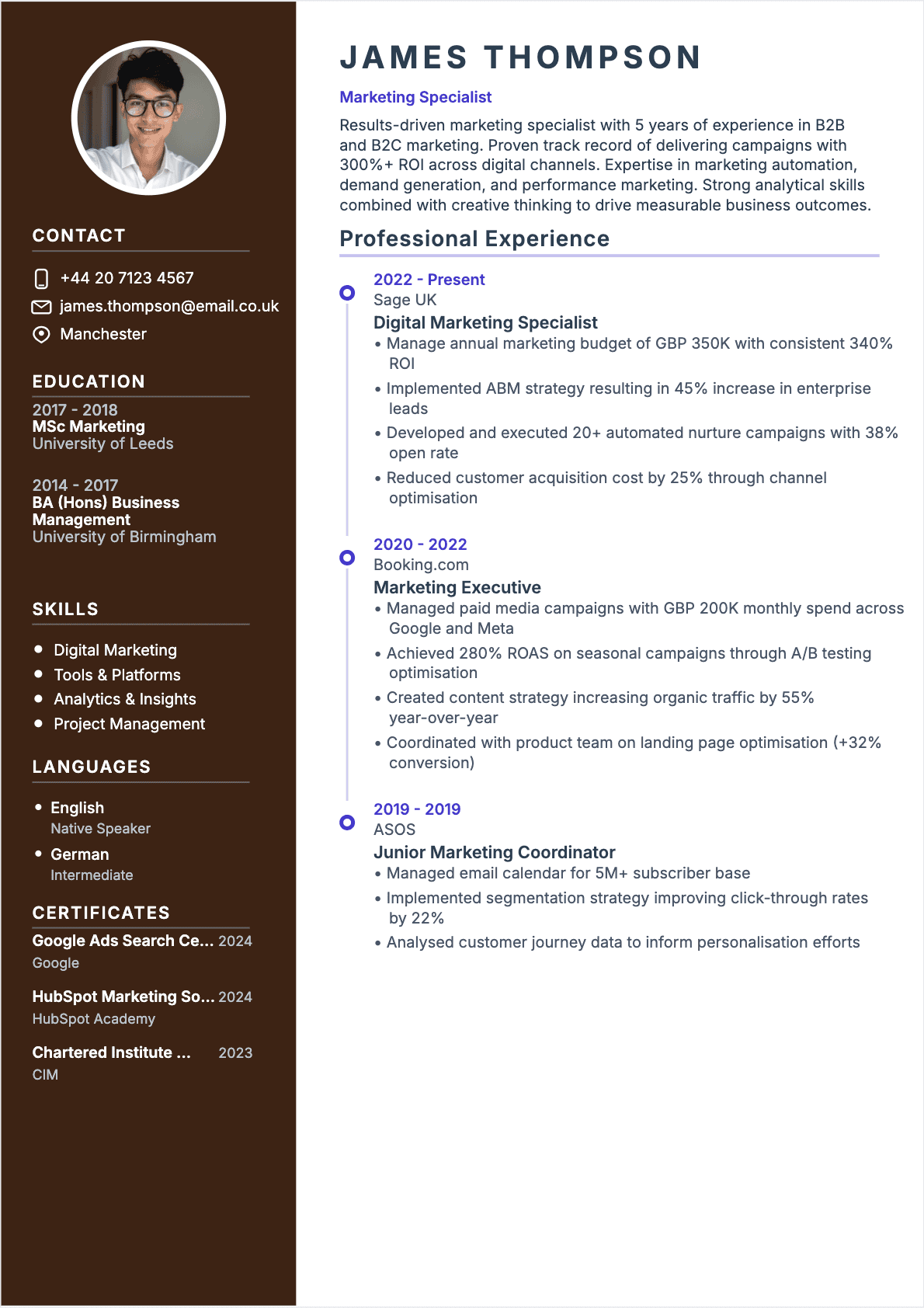
Before/after: resume sentences transformed
Your Essential Resume Keywords Cheat Sheet
Here’s your quick-reference toolkit. Save this section and use it every time you update your resume or tailor it for a new application: 🚀
Top 10 universal action verbs (work for any industry):
Delivered, Managed, Improved, Led, Developed, Implemented, Created, Analyzed, Increased, Reduced
Top 10 power verbs (for impact and leadership):
Spearheaded, Transformed, Orchestrated, Pioneered, Championed, Generated, Accelerated, Scaled, Architected, Negotiated
Soft skills worth including (shown, not listed):
Cross-functional collaboration, stakeholder management, strategic thinking, mentorship, conflict resolution, adaptability, data-driven decision-making, client relationship management
Words to delete today:
Responsible for, helped, assisted with, duties included, various, synergy, go-getter, hard worker, think outside the box, results-driven
Your keyword placement checklist:
- Professional summary: 3–5 primary keywords
- Skills section: 10–15 hard skills matching the job description
- Each bullet point: at least 1 keyword + quantified result
- Job titles: clarified with relevant keywords where needed
- Certifications: listed with full names and acronyms
Your 15-minute tailoring process:
- Read the job posting and highlight every keyword (5 min)
- Compare against your resume and note missing terms (3 min)
- Integrate missing keywords into existing bullet points (5 min)
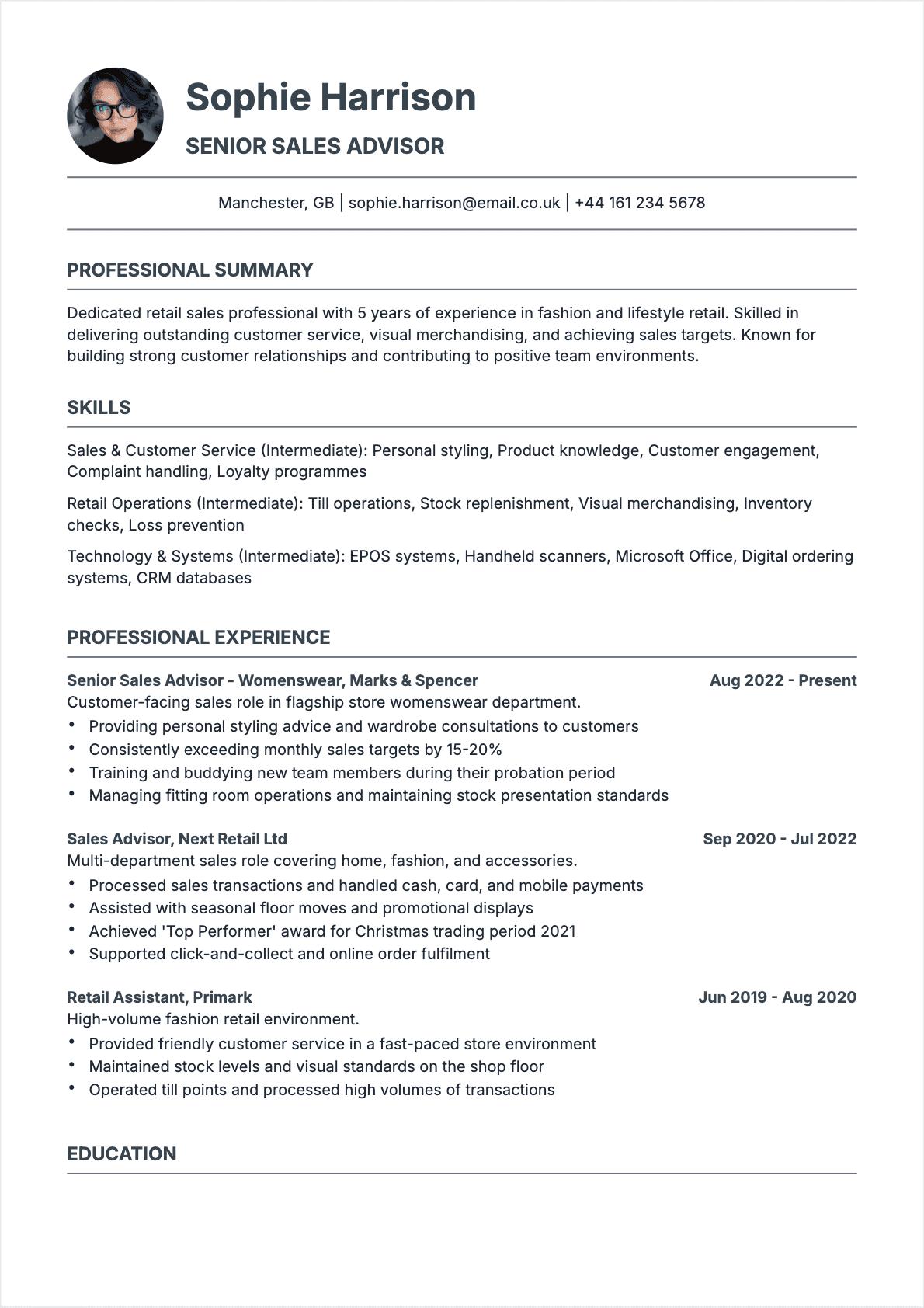
- Run a final check: do your top 5 keywords appear in context? (2 min)
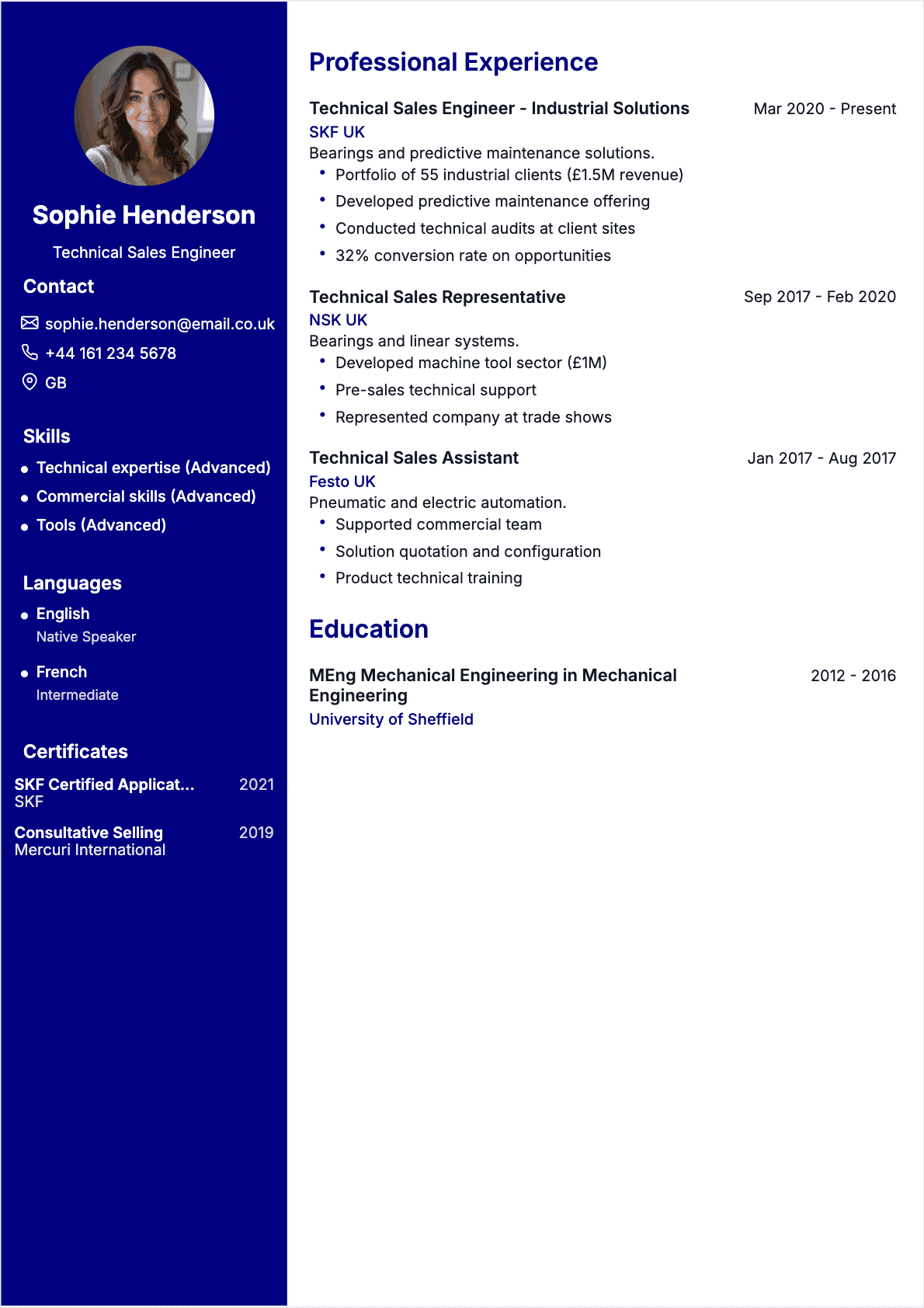
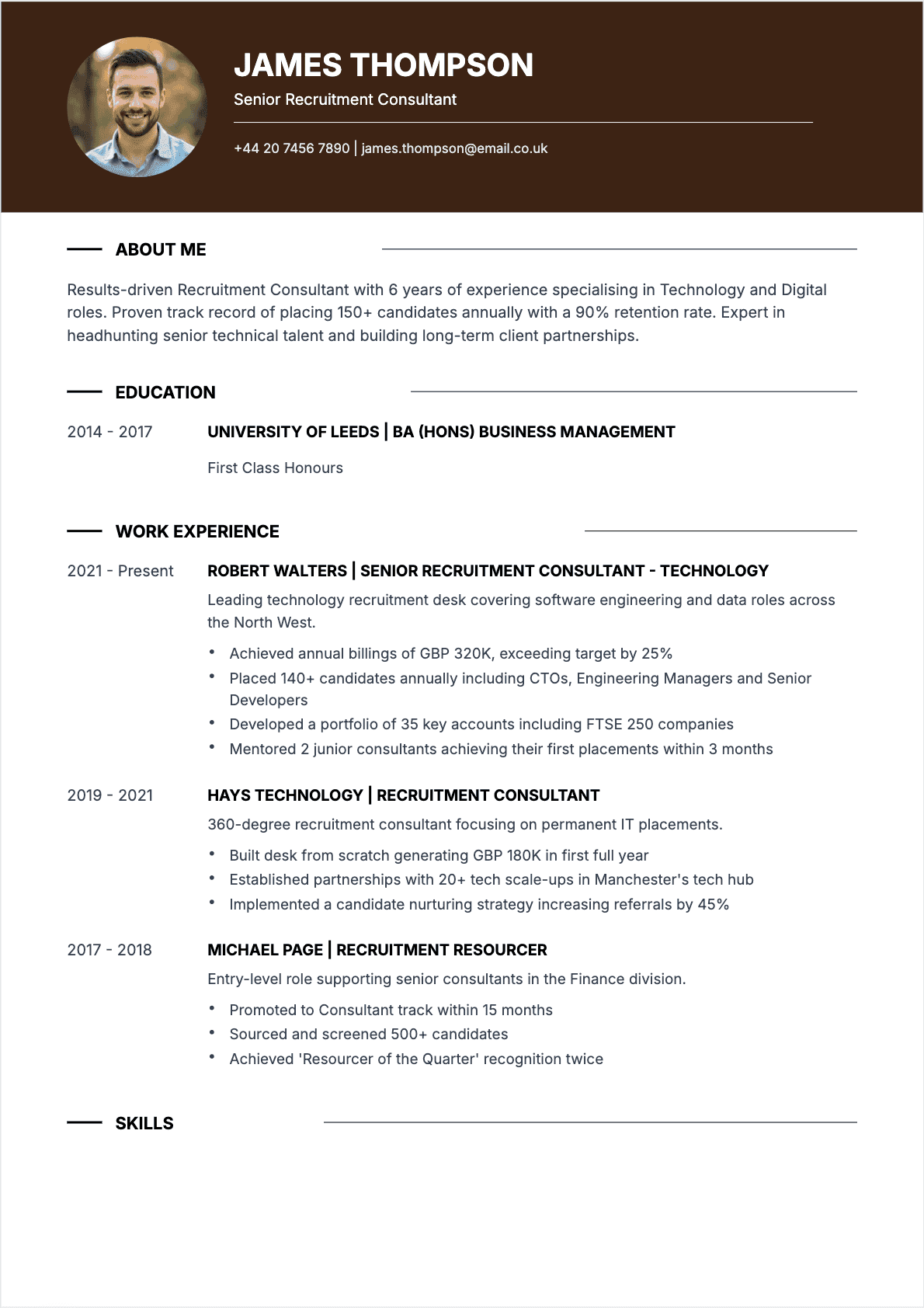
This system works whether you’re applying for your first internship or your next executive role. The vocabulary changes, but the strategy stays the same: match the language of the job you want, back it up with evidence, and let strong keywords carry your message. Before submitting, run through our resume checklist to make sure everything is polished. And for visual inspiration on how to present your keywords in a well-designed layout, explore our resume examples gallery.
FAQ: Resume Keywords
Here are the questions about resume keywords I hear most often from candidates at every career stage:
What are resume keywords and why do they matter?
Resume keywords are the specific words and phrases—action verbs, hard skills, industry terms, certifications, and tool names—that both ATS software and human recruiters scan for when evaluating your resume. They matter because most large employers use ATS to filter applications before a recruiter ever sees them. Resumes that lack the right keywords get automatically screened out, regardless of the candidate’s actual qualifications.
How many keywords should I include on my resume?
There’s no magic number, but a well-optimized resume typically includes 20–30 relevant keywords distributed across the summary, skills section, and work experience. The key is relevance: 20 well-placed keywords that match the job description will outperform 50 generic terms stuffed into a skills section. Always prioritize quality and context over quantity.
Can I use the same keywords for every job application?
You should have a core set of 10–15 keywords that reflect your fundamental skills and experience, but you must tailor your resume for each application. Different companies use different terminology for similar roles, and ATS matching is often literal. A resume tailored to each job posting consistently outperforms a generic one sent to hundreds of positions.
What’s the difference between hard skills and soft skills as keywords?
Hard skill keywords are specific, measurable abilities: "Python," "financial modeling," "Salesforce," "HIPAA compliance." Soft skill keywords describe how you work: "cross-functional collaboration," "stakeholder management," "conflict resolution." ATS primarily matches on hard skills, but human recruiters weigh both. The best resumes demonstrate soft skills through achievement statements rather than listing them as standalone terms.
How do I find the right keywords for a specific job?
Start with the job posting itself—it’s the most reliable keyword source. Highlight every skill, tool, qualification, and responsibility mentioned. Then look at 3–5 similar postings from different companies for the same role. The terms that appear across multiple postings are your industry-standard keywords. LinkedIn job listings and professional association websites are also excellent sources.
Is keyword stuffing a good strategy for getting past ATS?
No. Modern ATS platforms like Workday and Greenhouse can detect keyword stuffing—including the old trick of hiding white text behind white backgrounds. Stuffing keywords also backfires with human reviewers, who will immediately notice unnatural language. The winning strategy is to weave keywords into genuine accomplishment statements with specific, quantified results.
Which action verbs should I use instead of "responsible for"?
Replace "responsible for" with specific action verbs that communicate what you actually did: Managed (teams or processes), Delivered (projects or results), Developed (strategies or products), Led (initiatives or teams), Implemented (systems or processes). The right verb depends on the nature of the accomplishment—choose one that accurately reflects your level of ownership.
Do resume keywords differ between industries?
Significantly. A tech resume needs keywords like "Agile," "CI/CD," and "microservices," while a finance resume needs "financial modeling," "risk assessment," and "regulatory compliance." Even the same skill can have different preferred terms: tech companies say "sprints" while consulting firms say "workstreams." Research the specific vocabulary of your target industry and mirror it precisely on your resume.
— Eleanor Ashford, former recruitment agency screener and career language strategist