

Three years ago, I was coaching a senior software engineer—let’s call her Priya—for a final-round interview at Amazon. She had twelve years of experience, a stellar portfolio, and glowing references. Her technical skills were never in question. But forty minutes into a mock session, I asked her, "Tell me about a time you failed," and she froze. Not because she lacked an answer, but because she had never thought about how to frame one. She stammered, backtracked, and accidentally painted herself as someone who blamed her team. In that moment, I watched a future offer evaporate in rehearsal—and we had just enough time to fix it before the real thing.
Priya got the job. But the experience crystallized something I’d seen hundreds of times in my decade as a tech recruiter: tricky interview questions aren’t designed to trick you—they’re designed to reveal you. The candidates who stumble aren’t less qualified. They’re simply unprepared for questions that test self-awareness, composure, and strategic thinking rather than technical knowledge. 🎯
According to LinkedIn’s 2025 Global Talent Trends report, 73% of hiring managers now use behavioral and situational questions as their primary evaluation tool—up from 58% just three years earlier. The shift is dramatic, and it means that your ability to navigate tricky questions is no longer a nice-to-have—it’s the single most important interview skill you can develop.
This guide covers the 25+ tricky interview questions you’re most likely to encounter in 2026, organized by category. For each one, you’ll understand why interviewers ask it, what they’re really evaluating, and exactly how to structure a response that leaves them impressed. Whether you’re preparing for your first professional interview or gearing up for a C-suite conversation, this is the playbook. And if your resume needs to be as sharp as your interview performance, start with our complete guide to writing a resume.
Why Interviewers Ask Tricky Questions (And What They Really Want)
Before diving into specific questions, you need to understand the psychology behind them. Interviewers don’t ask difficult questions to make you uncomfortable—they ask them because comfortable questions produce rehearsed, useless answers. When everyone claims to be "a team player with strong communication skills," the only way to find out who actually is one is to create a moment that forces genuine reflection.
The Three Things Every Tricky Question Tests
After reviewing thousands of interview scorecards, I’ve found that virtually every tricky question evaluates one or more of these three dimensions:
- **Self-awareness. **Can you honestly assess your own strengths, weaknesses, and growth areas? Candidates who lack self-awareness are a management liability—they can’t improve because they don’t know what to improve.
- **Composure under pressure. **When caught off-guard, do you panic, ramble, or get defensive? Or do you pause, think, and respond thoughtfully? Your reaction to an unexpected question mirrors your reaction to unexpected challenges on the job. 💡
- **Strategic thinking. **Can you organize your thoughts quickly, prioritize what matters, and communicate a coherent narrative? The structure of your answer often matters more than the content.
The Hiring Manager’s Perspective
I spent seven years on the other side of the table, and I can tell you that interviewers are rarely listening for a "right answer." They’re listening for red flags: blame-shifting, inability to admit mistakes, vague generalities that suggest the candidate is making things up, or defensiveness when challenged. The absence of red flags, combined with a thoughtful and structured response, is what gets you the offer. A 2024 Harvard Business Review analysis found that structured behavioral interviews predict job performance 2x more accurately than unstructured conversations—which is why companies are investing so heavily in them.
The 5 Personality and Motivation Questions You Must Nail
These are the questions that open most interviews. They seem simple on the surface, but each one is a minefield for candidates who haven’t prepared. Here’s how to handle all five. 📝
1. "Tell Me About Yourself"
This is not an invitation to recite your resume. It’s a test of whether you can deliver a concise, compelling narrative about your professional identity. The best answers follow what I call the Present-Past-Future framework:
- **Present: **What you’re doing now and what you excel at. One or two sentences.
- **Past: **How you got here—the key experiences that shaped your current expertise. Two or three sentences.
- **Future: **Why this role is the logical next step in your trajectory. One sentence.
Example: "I’m currently a product manager at a mid-stage fintech startup where I lead a team of eight building our consumer lending platform. Before that, I spent four years at JPMorgan in their digital transformation group, where I learned how to navigate large-scale enterprise product development. I’m drawn to this role because it combines the enterprise complexity I understand with the startup pace I thrive in."
Keep it under 90 seconds. Practice it until it sounds natural, not memorized.
2. "Why Do You Want to Work Here?"
This question tests whether you’ve done your homework. Generic answers ("I admire your company’s mission") are transparent and forgettable. Strong answers reference specific, recent information about the company:
- A recent product launch, earnings report, or strategic initiative
- Something from the company’s engineering blog, culture page, or leadership team’s public statements
- A connection between your skills and a specific challenge the company faces
Example: "I read that your team is expanding into the European market this year, and my experience building compliant financial products for the UK and EU would be directly relevant. I’m also impressed by the engineering culture—your tech blog on microservices migration was one of the best case studies I’ve read on that topic."
3. "Why Should We Hire You?"
This is your closing argument. Don’t be modest, but don’t be arrogant either. The best strategy is to match your three strongest qualifications directly to the role’s three biggest needs, then add something that differentiates you from other qualified candidates. Think of it as: "I have what you need, plus something you didn’t know you needed."
4. "Where Do You See Yourself in Five Years?"
Interviewers ask this to assess whether your ambitions align with the role’s growth trajectory. The trap: being too specific ("I want your job") or too vague ("I just want to grow"). The sweet spot: describe the type of challenges you want to be tackling in five years, not a specific title.
Example: "In five years, I want to be leading a product strategy that impacts millions of users, mentoring junior PMs, and contributing to the broader product community through writing or speaking. The exact title matters less to me than the scope of impact."
5. "Why Are You Leaving Your Current Job?"
The cardinal rule: never badmouth your current employer. Even if your boss is terrible and the culture is toxic, criticizing them makes you look petty and disloyal. Instead, frame your departure around what you’re moving toward, not what you’re running from.
Strong framing: "I’ve accomplished what I set out to do in my current role—we launched three major products and doubled our user base. Now I’m looking for a new challenge where I can apply that experience at a larger scale." For more on how to present career transitions positively, see our guide on crafting a targeted resume.
How to Answer the Dreaded Weakness Question
No question causes more anxiety than "What is your greatest weakness?" And no question is bungled more often. The reason: candidates treat it as a trap when it’s actually an opportunity to demonstrate the self-awareness that separates great professionals from average ones. 🔍
"What Is Your Greatest Weakness?"
The classic non-answers—"I’m a perfectionist" or "I work too hard"—haven’t fooled a recruiter since 2005. Here’s what actually works: name a real weakness that is not core to the role, explain how it has affected you, and—critically—describe the specific steps you’ve taken to address it.
Example: "Early in my career, I struggled with delegation. I’d take on too much myself because I felt I could do it faster. But I realized that was limiting my team’s growth and burning me out. Over the past two years, I’ve worked on this deliberately—I now use a responsibility matrix for every project and have weekly one-on-ones specifically to coach my direct reports through tasks I would have previously hoarded. My team’s velocity has increased 30% since I started letting go."
This answer works because it’s honest, specific, shows growth, and ends on a measurable achievement.
"Tell Me About Your Biggest Professional Failure"
This question terrifies candidates because they think admitting failure equals disqualification. The opposite is true: refusing to name a real failure is the actual red flag. Use the STAR method (more on this in section 7) to structure your answer:
- **Situation: **Set the context briefly.
- **Task: **What were you responsible for?
- **Action: **What did you do, and where did it go wrong?
- **Result: **What was the outcome, what did you learn, and how have you applied that lesson since?
The key is spending 70% of your answer on the learning and the changes you made, not on the failure itself. Interviewers want to see that you can extract growth from adversity.
"Describe a Conflict You Had With a Colleague"
This is a behavioral question disguised as a vulnerability question. The interviewer wants to know whether you handle conflict constructively or destructively. The answer should demonstrate empathy, communication, and resolution—never victory. Even if you were objectively right, frame the story as a collaboration that reached a better outcome because both perspectives were heard.
Example: "My lead designer and I disagreed strongly on the UX flow for a key feature. Rather than escalating, I suggested we each build a quick prototype and test both with five users. The data showed that a hybrid approach—combining elements of both designs—performed best. We shipped that version and it outperformed our original target by 15%. That experience taught me that strong disagreements often lead to better outcomes when you create a framework for testing both sides."
Google famously stopped using brainteasers in interviews years ago after internal data showed they had zero correlation with job performance. But many companies still use stress questions and hypothetical scenarios to observe how candidates think on their feet. Here’s how to handle them without breaking a sweat. 🧠
The Classic Brainteasers
"How many golf balls fit in a school bus?" or "How many piano tuners are in Chicago?" These questions aren’t about the right answer—they’re about your problem-solving process. Interviewers want to hear you think out loud, break a complex problem into smaller pieces, state your assumptions, and arrive at a reasonable estimate.
Framework: (1) Clarify the question and state your assumptions. (2) Break it into sub-problems. (3) Estimate each sub-problem. (4) Combine and sanity-check. (5) Acknowledge uncertainty and suggest how you’d verify your answer with real data.
Hypothetical Scenarios
"What would you do if your manager asked you to do something unethical?" or "How would you handle a project with an impossible deadline?" These test your values, prioritization skills, and communication under pressure. The key is to avoid giving a "hero" answer where you single-handedly save the day. Instead, demonstrate that you’d:
- Seek to understand the full context before reacting
- Communicate concerns clearly and professionally
- Propose alternative solutions rather than simply refusing
- Escalate appropriately when necessary
The Silence Test
Some interviewers deliberately create awkward silences after your answer to see if you’ll fill the void with nervous rambling. The technique: finish your answer, make eye contact, and wait. If the silence continues for more than five seconds, you can add, "Would you like me to elaborate on any part of that?" But don’t backtrack, qualify, or add caveats to a strong answer just because the room is quiet.
Salary Negotiation: Dodge the Trap, Get What You Deserve
The salary question remains one of the most anxiety-inducing moments in any interview process. But the landscape has shifted significantly in recent years, and understanding the current rules will help you navigate it with confidence. 💰
The Changing Legal Landscape
As of 2026, salary transparency laws have transformed negotiation dynamics in the US. States including California, Colorado, New York, Washington, and Illinois now require employers to disclose salary ranges in job postings. Several other states have passed laws prohibiting employers from asking about your salary history. This is a major advantage for candidates: in many cases, you no longer have to name a number first.
Before any interview, research whether the employer is in a jurisdiction with pay transparency requirements. If they are, the salary range should already be public, and you can frame your answer around that range rather than volunteering a number out of context.
When They Ask: "What Are Your Salary Expectations?"
If you’re in a state with transparency laws, reference the posted range: "I saw the range listed at $120K–$150K. Based on my experience and the scope of this role, I’d expect to be in the upper portion of that range. But I’m open to discussing total compensation—salary, equity, benefits, and growth trajectory all matter to me."
If no range is posted, the best approach is to redirect: "I’d love to learn more about the full scope of the role before discussing specific numbers. Could you share the budgeted range for this position?" If pressed further, provide a range (never a single number) based on your market research, and always anchor slightly above your true target.
Common Salary Traps to Avoid
- **Naming a number too early. **Whoever names a number first typically has less leverage. Delay the discussion until after you’ve demonstrated your value.
- **Underselling yourself. **Women and underrepresented candidates are statistically more likely to name a lower number. Research market rates on Glassdoor, Levels.fyi, and Payscale before every negotiation.
- **Ignoring total compensation. **Base salary is only one component. Equity, bonuses, 401(k) matching, PTO, remote flexibility, and learning stipends all have real dollar value.
- **Accepting on the spot. **Always ask for 24–48 hours to consider an offer. This is standard practice and any employer who pressures you for an immediate answer is a red flag.
Resume Gaps and Career Pivots: Turn Liabilities Into Strengths
If you have a gap on your resume, a non-linear career path, or a history of short tenures, you’re going to be asked about it. The good news: these questions are far less threatening than they feel, and the stigma around gaps has diminished significantly since 2020. Here’s how to handle each scenario. 🛡️
"I See a Gap on Your Resume. Can You Explain?"
The era of apologizing for resume gaps is over. LinkedIn’s 2025 data shows that 62% of employees have taken a career break at some point, and hiring managers are increasingly empathetic. The key is to be honest, brief, and forward-looking:
- Name the reason without over-explaining (caregiving, health, education, travel, personal project)
- Mention anything productive you did during the gap (freelancing, certifications, volunteering, learning)
- Pivot quickly to what you bring to the table now and why you’re energized about this opportunity
Example: "I took eight months off to care for a family member. During that time, I completed two AWS certifications and stayed current by contributing to open-source projects. I’m fully re-engaged now and excited about this role because it aligns with exactly where I want to take my career." For detailed strategies on presenting gaps and unconventional backgrounds, see our guide to writing a resume with limited experience.
"You Seem Overqualified for This Position"
This question is really asking: "Will you get bored and leave?" Address the concern directly: explain what specifically excites you about the role, why it aligns with your current career goals, and what value your additional experience brings without making the role seem beneath you.
Example: "I understand why it might look that way on paper. But this role appeals to me specifically because I want to move from strategy into execution. My experience gives me context that will help me contribute faster, but I’m genuinely energized by the hands-on work this position involves."
"You’ve Changed Jobs Frequently. Why?"
If you’ve had several short tenures, don’t get defensive. Acknowledge the pattern and reframe it: each move was intentional and driven by growth. Emphasize that you’re now looking for stability and long-term impact—and explain why this company is the right place for that.
The STAR Method: Your Secret Weapon for Behavioral Questions
If there’s one framework that separates prepared candidates from unprepared ones, it’s STAR. This method transforms rambling, unfocused answers into tight, compelling stories that give interviewers exactly what they need. ⭐
Breaking Down the Framework
- **S – Situation: **Set the scene in 1–2 sentences. Where were you, what was happening, and why did it matter?
- **T – Task: **What were you specifically responsible for? Be clear about your role, not the team’s.
- **A – Action: **What did you do? This is the longest part of your answer. Use "I," not "we." Be specific about your decisions and reasoning.
- **R – Result: **What happened? Quantify the outcome whenever possible. Revenue, time saved, users impacted, efficiency gained.
STAR in Action: A Tech Industry Example
Question: "Tell me about a time you had to make a decision with incomplete information."
**Situation: **"Our payment processing vendor had a critical outage during Black Friday, and our checkout flow was failing for approximately 30% of transactions."
**Task: **"As the senior engineer on call, I needed to decide whether to switch to our backup processor—which had never been tested at this volume—or wait for the primary vendor’s fix."
**Action: **"I pulled transaction data from the last 20 minutes, estimated the revenue we were losing per minute, and compared it to the risk of the backup processor failing under load. I decided to route 10% of traffic to the backup as a canary test. When it handled that cleanly for 5 minutes, I gradually shifted all traffic over the next 15 minutes."
**Result: **"We recovered within 25 minutes and saved an estimated $340,000 in revenue that would have been lost if we’d waited for the vendor’s fix, which took another 3 hours. The experience also led us to implement quarterly failover drills, which I now lead."
Prepare 8–10 STAR Stories Before Any Interview
Build a bank of stories covering: leadership, failure, conflict, innovation, working under pressure, cross-functional collaboration, handling ambiguity, and delivering results. Each story can often be adapted to answer multiple question types. Write them out, practice them out loud, and time yourself—each STAR answer should take 60–90 seconds. For a well-structured resume that complements your interview preparation, explore our complete skills guide for 2026.
Body Language: What You Say Without Words
Research from the University of California suggests that up to 55% of communication is non-verbal. In an interview, your body language either reinforces your words or contradicts them. Here’s how to make sure it works for you, not against you. 🧑💼
In-Person Interview Essentials
- **Handshake: **Firm but not crushing. Make eye contact and smile as you shake. A weak handshake still undermines first impressions in many corporate cultures.
- **Posture: **Sit up straight and lean slightly forward to signal engagement. Avoid crossing your arms, which can read as defensive or closed-off.
- **Eye contact: **Maintain natural eye contact 60–70% of the time. Looking away constantly suggests nervousness; unbroken staring feels aggressive. In panel interviews, direct your answers primarily to the person who asked the question while periodically including other panelists.
- **Hand gestures: **Use them naturally to emphasize points, but keep them controlled. Avoid fidgeting, touching your face, or playing with a pen.
- **Mirroring: **Subtly matching the interviewer’s energy level and body language builds rapport unconsciously. If they’re relaxed and leaning back, a rigidly formal posture will feel awkward.
Video Interview Specifics (2026 Reality)
With remote and hybrid interviews now standard, video-specific body language matters more than ever:
- **Camera position: **Position your camera at eye level. Looking down at a laptop camera makes you appear disengaged or condescending.
- **Background: **A clean, professional background or a subtle virtual background. Avoid distracting clutter, bright windows behind you, or novelty virtual backgrounds.
- **Look at the camera, not the screen: **This is the video equivalent of eye contact. It feels unnatural but makes an enormous difference in how engaged you appear.
- **Audio quality: **Invest in a decent external microphone or headset. Poor audio creates a subconscious negative impression even when the content is excellent.
- **Lighting: **Face a window or use a ring light. Avoid overhead lighting that casts shadows on your face.
Questions You Should Ask the Interviewer
When the interviewer asks, "Do you have any questions for me?" the only wrong answer is "No." This is your chance to demonstrate genuine interest, evaluate whether the company is right for you, and leave a lasting positive impression. Here are questions that consistently impress hiring managers. 📣
Questions About the Role
- "What does success look like in this role in the first 90 days?"
- "What are the biggest challenges the person in this role will face?"
- "How is performance measured and reviewed?"
- "Can you walk me through a typical project or sprint cycle for this team?"
Questions About the Team and Culture
- "How would you describe the team’s working style?"
- "What’s the team’s approach to feedback and professional development?"
- "What do people who thrive here have in common?"
- "How does the company support work-life balance in practice, not just in policy?"
Questions About Growth
- "Where do you see this team or department heading over the next 2–3 years?"
- "What career paths have people in this role typically followed?"
- "Is there a budget or culture around continued learning and development?"
Questions to Avoid
- Anything you could easily find on the company’s website
- Salary and benefits (save for later in the process unless they bring it up)
- "When can I expect to hear back?" (unless it’s your final question)
- Questions that suggest you’re already planning your exit ("What’s the policy on sabbaticals?")
Your Pre-Interview Preparation Checklist
Preparation is where interviews are won or lost. The candidates who seem "naturally" confident in interviews are almost always the ones who prepared the most thoroughly. Here is a complete checklist to follow 48 hours before any interview. 📋
Company Research
- Read the company’s latest earnings report, press releases, or blog posts
- Review the LinkedIn profiles of your interviewers (look for shared connections, interests, or experiences)
- Understand the company’s products, competitors, and market position
- Check Glassdoor for interview-specific feedback and common questions
- Look at the company’s values page—interviewers often evaluate alignment with stated values
Personal Preparation
- Prepare and rehearse 8–10 STAR stories covering key competencies
- Practice your "Tell me about yourself" answer until it feels natural (90 seconds max)
- Prepare 5–7 thoughtful questions for the interviewer
- Review the job description line by line and prepare examples for each key requirement
- Do a mock interview with a friend, mentor, or career coach
Logistics
- Confirm the interview time, location (or video link), and format
- For in-person: plan your route, arrive 10–15 minutes early, bring printed copies of your resume
- For video: test your camera, microphone, and internet connection the day before
- Prepare a professional outfit appropriate to the company culture
- Have a glass of water, a notepad, and a pen within reach
Your resume is an extension of your interview performance. If it needs updating, our guide to writing a winning cover letter will help you pair it with an application that gets noticed.
Interview Killers: Mistakes That Cost You the Job
In my years as a recruiter, I’ve seen brilliant candidates eliminate themselves with avoidable mistakes. These are the interview killers that come up again and again in post-interview debriefs—the reasons hiring managers say "no" to otherwise qualified people. 🚫
- **Badmouthing a previous employer. **Nothing disqualifies a candidate faster. Even if your last boss was genuinely terrible, criticizing them makes the interviewer wonder what you’ll say about them in your next interview.
- **Failing to prepare specific examples. **Vague answers like "I’m a good team player" without a concrete story to back it up tell the interviewer you didn’t prepare. Every claim must have evidence.
- **Talking too much or too little. **Rambling for five minutes on a single question is as damaging as giving one-word answers. Aim for 60–90 seconds per answer, and watch for cues that the interviewer wants you to expand or wrap up.
- **Not asking questions. **When you say "No, I think you covered everything," the interviewer hears "I’m not that interested." Always have at least three questions prepared.
- **Lying or exaggerating. **Reference checks, technical assessments, and experienced interviewers will catch fabrications. One dishonest answer can negate an otherwise strong interview.
- **Being late without communication. **Things happen—traffic, transit delays, tech failures. Being late is forgivable. Being late without a proactive heads-up call or message is not.
- **Displaying poor listening skills. **Interrupting the interviewer, answering a different question than the one asked, or repeating information they’ve already shared all signal that you’re not truly listening.
- **Forgetting to follow up. **A thoughtful thank-you email within 24 hours is expected. Reference something specific from the conversation to show you were engaged. Failing to follow up suggests a lack of interest or professionalism.
For a comprehensive list of mistakes that extend beyond the interview to the resume itself, read our guide to the most common resume mistakes.
Your Interview Success Roadmap: Key Takeaways
Tricky interview questions aren’t obstacles—they’re opportunities to demonstrate the qualities that set you apart. Here’s your action plan:
- **Understand the "why." **Every tricky question tests self-awareness, composure, or strategic thinking. When you know what’s being evaluated, you can tailor your response accordingly.
- **Master the STAR method. **Build a bank of 8–10 stories covering leadership, failure, conflict, innovation, and results. Practice them until they’re natural, not robotic.
- **Prepare your five core answers. **"Tell me about yourself," "Why this company," "Why hire you," "Five-year plan," and "Why leaving." These come up in nearly every interview.
- **Research the company deeply. **Reference specific, recent information to show you’ve done your homework.
- **Negotiate salary strategically. **Know your market value, leverage transparency laws, and never name a number first if you can avoid it.
- **Mind your body language. **Non-verbal cues account for over half of communication. Make them work for you in both in-person and video settings.
- **Always ask questions. **Thoughtful reverse questions demonstrate genuine interest and help you evaluate the opportunity.
- **Follow up within 24 hours. **A personalized thank-you email referencing specific conversation points is not optional—it’s expected.
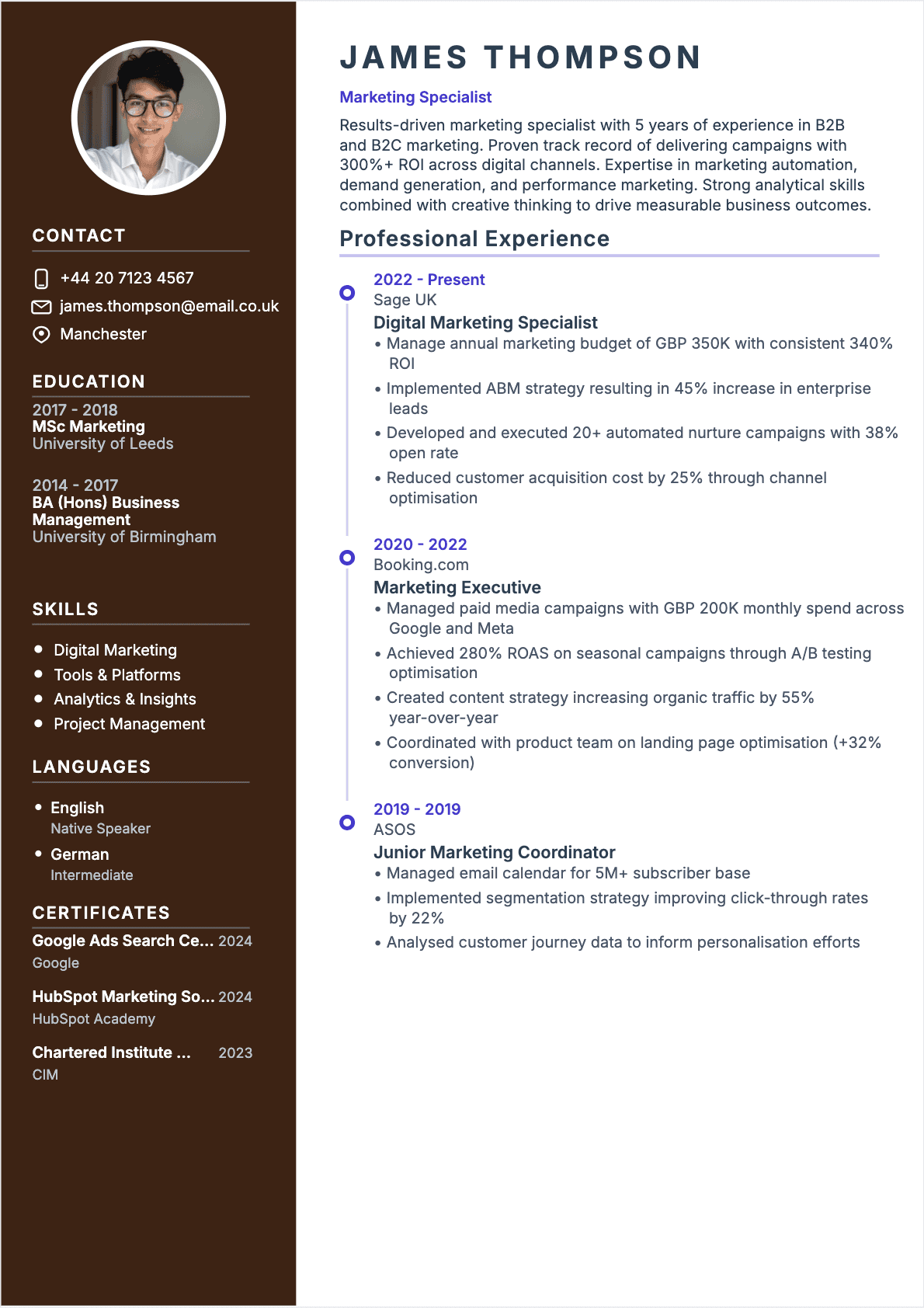
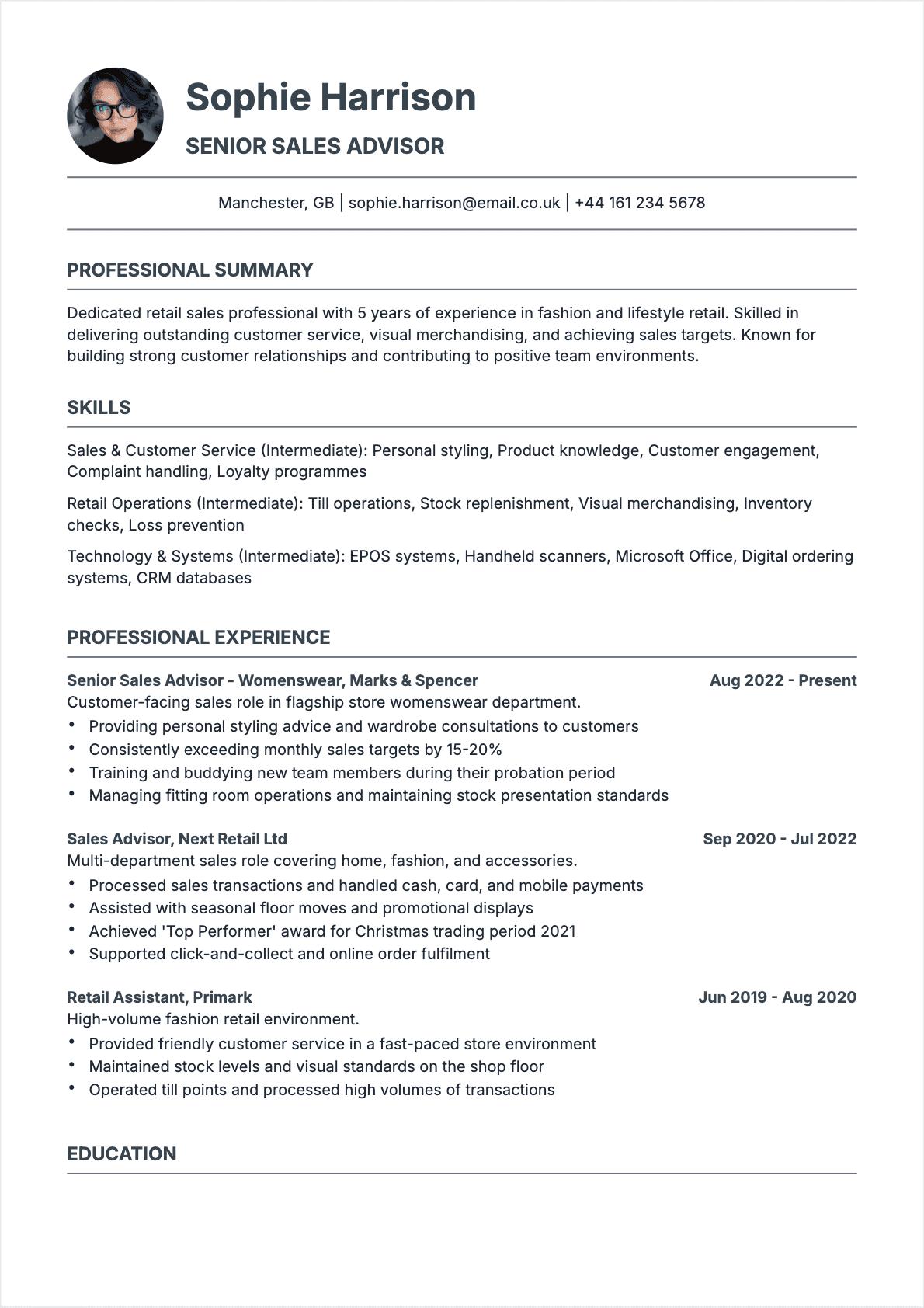
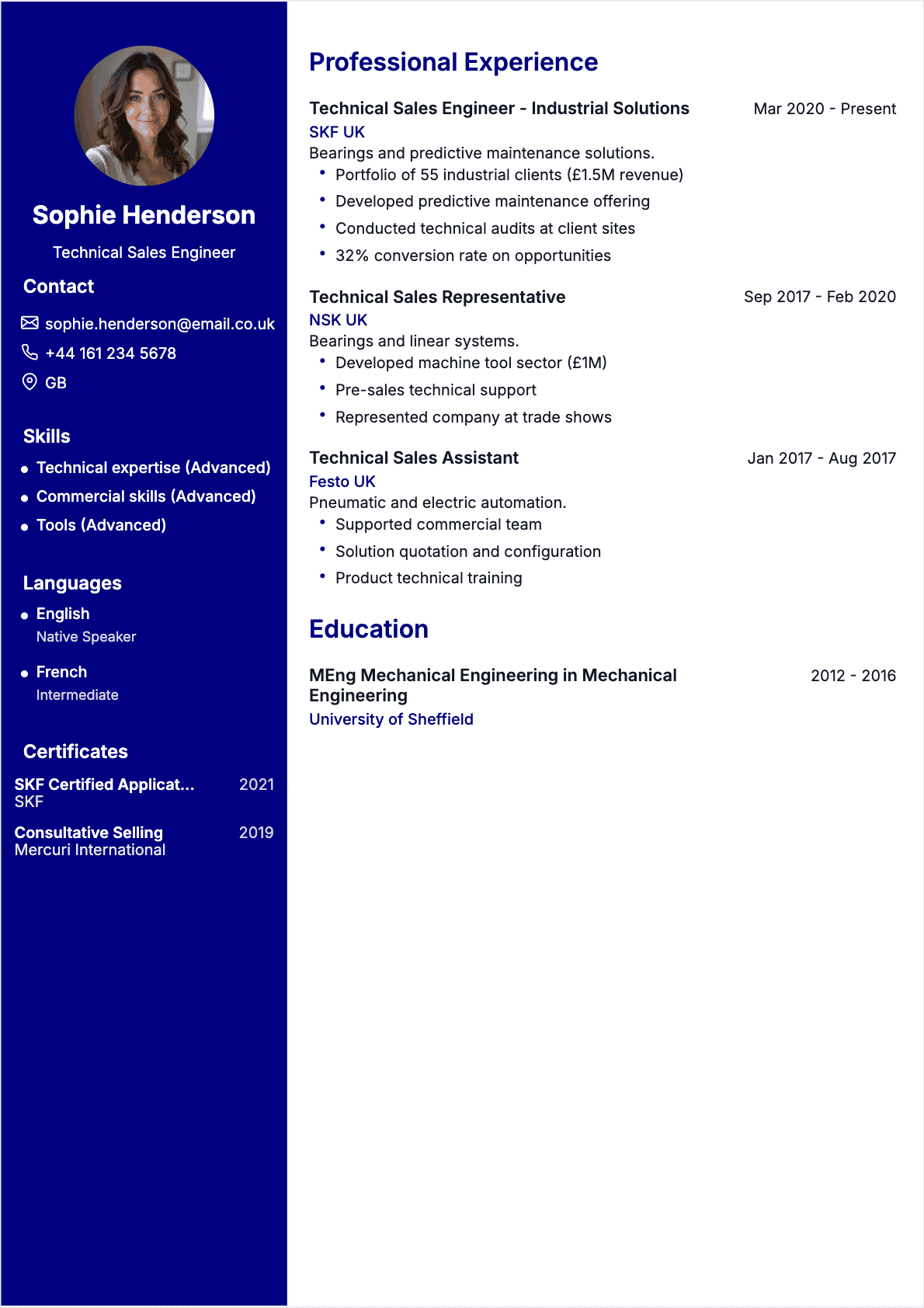
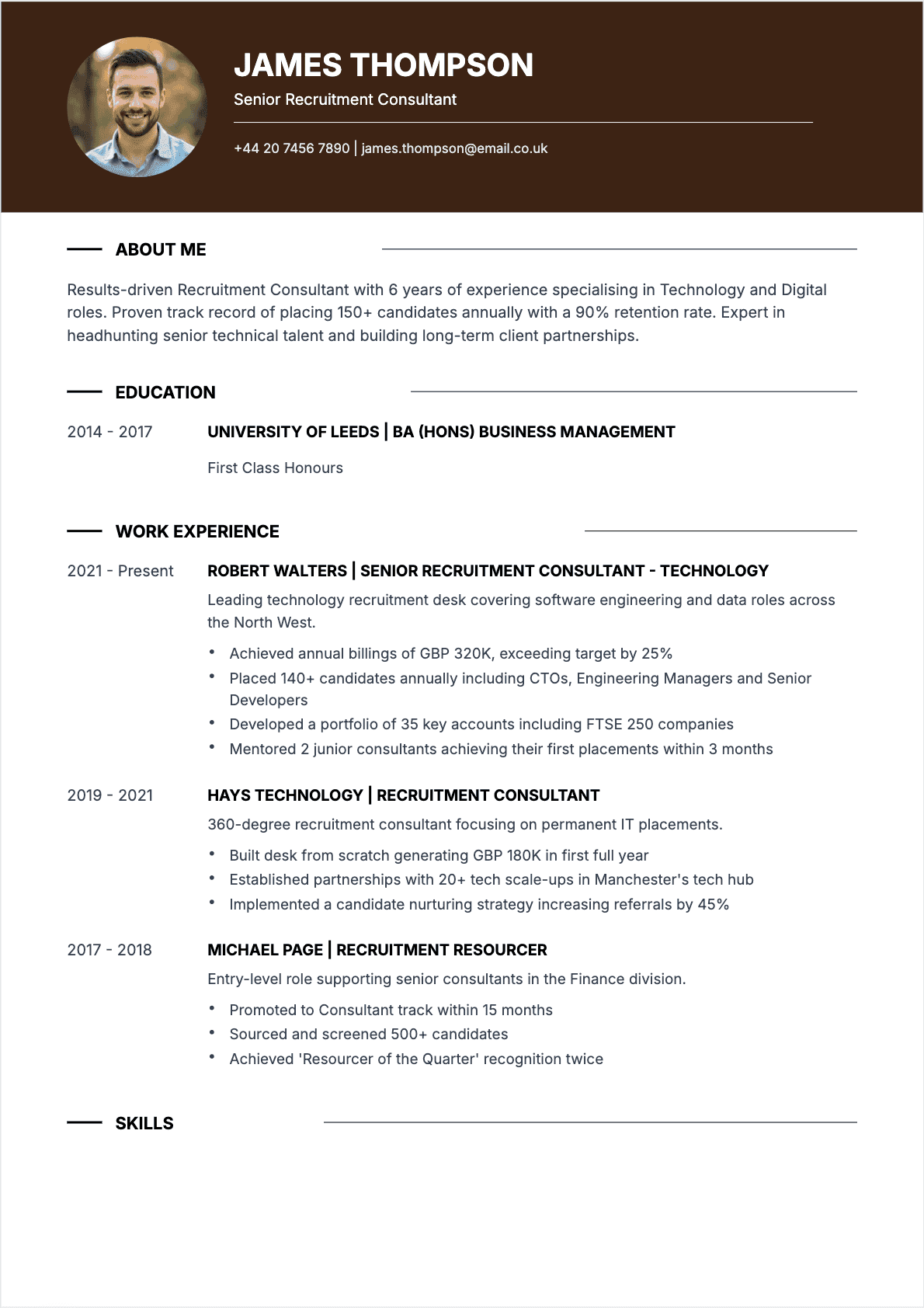
Your interview starts before you walk into the room—it starts with a resume that gets you there. Make sure yours is as strong as your interview skills by building it with our professional resume templates. From formatting to content, a polished resume sets the tone for everything that follows.
— Eleanor Ashford, former tech recruiter and career strategist


![Resume Keywords: 80+ Words That Get You Hired [2026]](/_next/image/?url=https%3A%2F%2Fmedia.cvtowork.com%2Fmedia%2Fmots-courants-cv-hero.jpg&w=2048&q=75)